
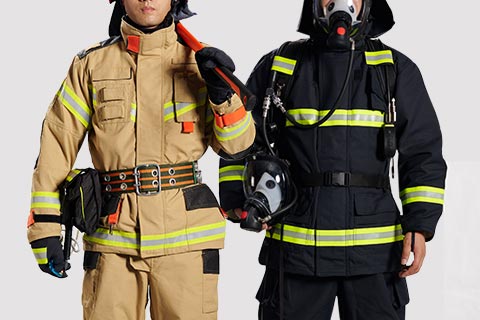

What to Check Before Choosing a Firefighter PPE Supplier
Firefighting personal protective equipment is the core safety guarantee for firefighters to deal with high-risk scenarios such as high temperature, flames, and shocks. Its compliance, quality stability, and adaptability are directly related to the life safety of rescuers.At present, there is a widespread misunderstanding of heavy low price and light comprehensive strength in the procurement of firefighting PPE. It is easy to purchase equipment with substandard protection, unstable quality, and missing after-sales by simply competing for unit price. It is not only difficult to resist actual combat risks, but it will also cause various problems such as equipment scrap, repeated procurement, and compliance penalties.The procurement of firefighting PPE is extremely professional. The selection of models requires comprehensive verification of core dimensions such as qualification, protection performance, production strength, supply chain and after-sales, and abandons the extensive procurement model of low-cost priority.
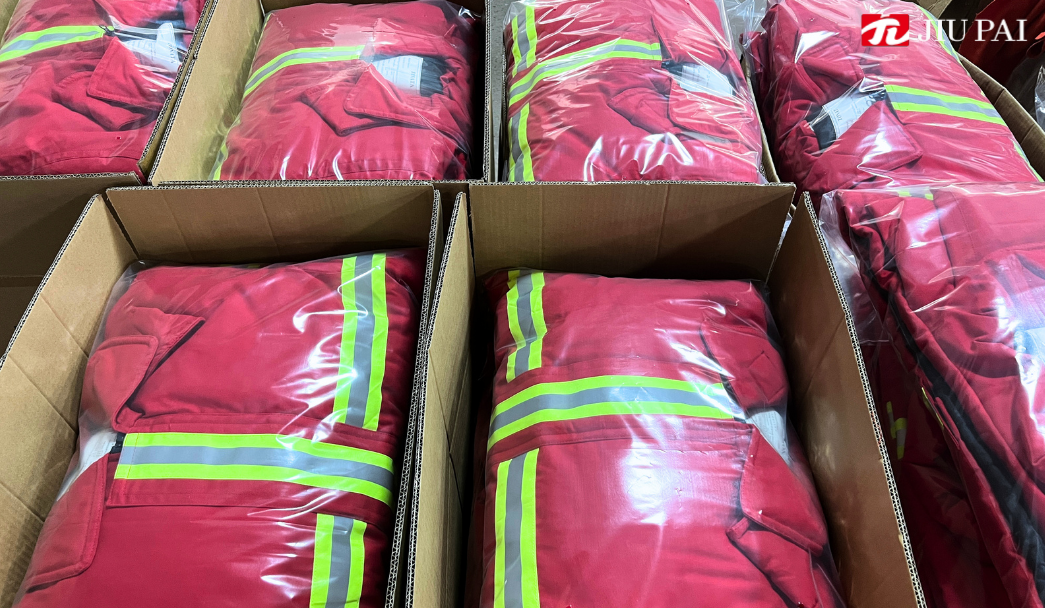
Non-conforming and unstable quality firefighting PPE hides multiple risks, which are not only likely to cause safety accidents such as burns, scratches, and physical overdrafts of firefighters, but also cause project acceptance failures and compliance penalties due to non-conforming qualifications and inspection fraud.At the same time, the weather resistance and wear resistance of inferior equipment are extremely poor, the replacement frequency is high and the supply of accessories is lacking, and the long-term operation and maintenance costs have risen sharply.Professional procurement needs to abandon the extensive model of low-cost priority, and select high-quality cooperative suppliers from the seven dimensions of qualification certification, material protection, wear adaptation, production strength, supply chain, full-cycle cost and after-sales comprehensive verification.
Why Choosing a Firefighter PPE Supplier Is More Than Comparing Prices
Firefighting PPE is a special professional equipment related to life safety. The procurement and selection cannot be based solely on price as the core standard. Safety compliance and actual combat protection performance are the primary considerations.Many low-cost products in the market have reduced fabric thickness, adopted inferior accessories, simplified production processes, and applied expired qualifications to reduce costs. There are generally problems such as substandard protection, short service life, and failure to pass compliance sampling inspections.Compared with the short-term advantages of low-cost procurement, reliable suppliers can provide stable protection, compliance qualifications, continuous supply and perfect after-sales service to avoid security risks and long-term losses from the root cause.Non-conforming and unstable quality firefighting PPE hides multiple risks, which are not only likely to cause safety accidents such as burns, scratches, and physical overdrafts of firefighters, but also cause project acceptance failures and compliance penalties due to non-conforming qualifications and inspection fraud.At the same time, the weather resistance and wear resistance of inferior equipment are extremely poor, the replacement frequency is high and the supply of accessories is lacking, and the long-term operation and maintenance costs have risen sharply.Professional procurement needs to abandon the extensive model of low-cost priority, and select high-quality cooperative suppliers from the seven dimensions of qualification certification, material protection, wear adaptation, production strength, supply chain, full-cycle cost and after-sales comprehensive verification.
Check Firefighter PPE Standards and Certifications
Verify the required PPE standards
The procurement of fire-fighting PPE mainly checks regional compliance standards, and different markets have clear mandatory access regulations, which directly determine whether the equipment can be accepted for customs clearance and legally put into use.The North American market needs to strictly follow the full set of NFPA fire protection standards, and has quantitative and hard requirements for key indicators such as heat insulation, flame retardant, waterproof, and mechanical damage resistance.The core basis of the European market is the EN 469 fire protection clothing standard. At the same time, it is necessary to match EN 388, EN 13034 and other subdivided special standards, and confirm whether the product has effective CE certification.Procurement needs to be accurately benchmarked in combination with the project landing area and specific scenarios such as fire fighting, chemical rescue, emergency rescue, etc., to eliminate compliance loopholes and use risks caused by inconsistent standards.Check certificates for the exact product
There is a widespread chaos in the industry of certificate application, expired reuse, and multiple products sharing one certificate. When purchasing, it is necessary to verify the exclusive valid certificate of a single product to avoid the risk of false compliance.It is necessary to check the product model, core material and protection level marked in the certificate one by one to ensure that it exactly matches the purchased product, so as to eliminate the problem of counterfeiting of high-quality certificates and low-quality physical products.At the same time, verify the qualification of the issuing institution and the validity period of the certificate, and reject invalid documents that have expired, have not been filed, and have no authority to endorse.Resolutely eliminate suppliers who only provide common templates, incomplete information, and cannot publicize the filing materials, and ensure that the product protection performance truly meets the standards from the source of qualification.Ask for test reports and technical documents
The qualification certificate is only the basic access certificate, and the complete test report and technical data can truly support the actual protection performance of firefighting PPE.Formal procurement requires a full set of compliance documents, including authoritative measured test reports covering indicators such as flame retardant, heat insulation, waterproofing, wear resistance, and tear resistance, which can visually verify product performance compliance.At the same time, it is necessary to check the official product specification, the detailed parameters of the core fabrics and hardware components, and clarify the scope of application and process standards of the product.For exports and special projects, compliance declaration documents are also required to ensure that the equipment can successfully complete the filing, acceptance and customs clearance process.Evaluate PPE Quality, Materials, and Protection
Examine materials and construction
The upper limit of protection of firefighting PPE is determined by the material and production process. High-quality products use permanent flame-retardant professional fabrics, which are high-temperature resistant, do not melt and drip, and can withstand open flames and high-temperature thermal radiation for a long time.The industry-standard multi-layer composite structure is the core guarantee. The outer layer is flame-retardant, the middle layer is heat-insulating, and the inner layer is waterproof and breathable. It can not only block the intrusion of high-temperature water vapor and chemical liquids, but also quickly discharge operating moisture to avoid wearing stuffy and stagnant water.At the same time, high-quality equipment has a fine car line, a complete glue pressing process, and corrosion-resistant and high-elasticity hardware accessories. The joints are firm, not easy to fall off and crack, and long-term repeated use can still maintain a stable protective state.Check protection performance
The procurement and verification of firefighting PPE needs to focus on the four core protective properties of actual combat, and eliminate products with false parameters and substandard performance.High-quality equipment has excellent heat-resistant and flame-retardant capabilities, can effectively resist open flame burning and high-intensity thermal radiation, and avoid the risk of high-temperature burns.Stable waterproof performance can withstand continuous water erosion and rainwater soaking, block water vapor from penetrating into the interior, and does not affect the heat insulation and protection effect.At the same time, it has good tear-resistant, wear-resistant, and puncture-resistant mechanical protection capabilities, and is suitable for high-intensity scenarios such as ruin operations and complex terrain rescue.The product needs to have excellent durability. After multiple cleaning and high temperature use, the core protective performance will not quickly decay, reducing long-term replacement costs.Request samples before bulk orders
Bulk procurement of firefighting PPE must implement sample measurement and verification to eliminate the chaos in the industry of high-quality samples and shrinking batches.After receiving the sample, it is necessary to carefully check the fabric texture, car line technology, glue sealing and accessories quality, and check for defects in workmanship.At the same time, actual combat actions such as climbing, creeping, and weight-bearing are simulated to test the fit of wearing and the freedom of physical movement, so as to avoid tight equipment and restrict rescue operations.Professional procurement not only checks the appearance, but also verifies the thermal management capabilities and actual combat performance of the products through on-site measurements, and strictly checks the technical parameters one by one to ensure that the products supplied in bulk are exactly the same as the sample standards, performance, and materials, and ensure the unified and stable quality of the batches.Check Fit, Comfort, and Compatibility
Evaluate size and fit options
The fit of firefighting PPE directly affects rescue safety and operational efficiency. A single version and incomplete size can easily cause protection loopholes and restricted movement.Reliable suppliers are equipped with a complete size system, covering all kinds of heights and body types, and completely solving problems such as size faults and adaptation difficulties.At the same time, taking into account the differentiated wearing needs, the version is optimized for the burly and thin special body shape. Some series are equipped with gender-specific versions to adapt to the differences in the body shape of male and female firefighters.The precisely fitted version can closely fit the contours of the body, without unnecessary shaking and tight compression, eliminate protective blind spots in all directions, and ensure that all kinds of wearers can get a comfortable, safe and suitable wearing experience.Check mobility and heat management
High-intensity, long-term fire rescue has extremely high requirements for the physical flexibility and thermal management capabilities of equipment.High-quality PPE adopts three-dimensional elastic splicing technology in key moving parts such as shoulders, elbows, waist, knees, etc., which greatly enhances the range of limb extension and does not restrict rescue actions such as climbing, crawling, and weight-bearing.Under the premise of ensuring protective performance, the lightweight design is realized, which effectively reduces the wear load and reduces the physical energy consumption of the operation.The multi-layer breathable structure can quickly export sweat and internal heat, efficiently balance heat insulation and breathable properties, avoid stuffy sweat accumulation and high temperature overdraft problems, and ensure that firefighters maintain a comfortable state and stable combat effectiveness in long-term combat.Confirm compatibility with existing firefighter gear
Firefighting equipment is a complete set of systematic configuration, and the newly purchased PPE must be highly compatible with the existing full set of equipment to avoid protection loopholes and operational conflicts.The neckline and neck protection structure of the new high-quality protective clothing can be perfectly adapted to the mainstream fire helmets, and the fit is tight and there are no gaps. The design of the cuffs and hems can be seamlessly connected to the fire gloves and protective boots to eliminate the risk of skin exposure.The version structure is suitable for the wearing and disassembly of air respirators, and does not interfere with the normal use of the air supply system.At the same time, peripheral adaptation points such as walkie-talkies and lighting are reserved, and the complete set of equipment is adapted in concert and does not conflict with each other, so as to fully meet the supporting needs of actual combat rescue.
Assess the Supplier's Manufacturing Capability
Is the supplier a real manufacturer?
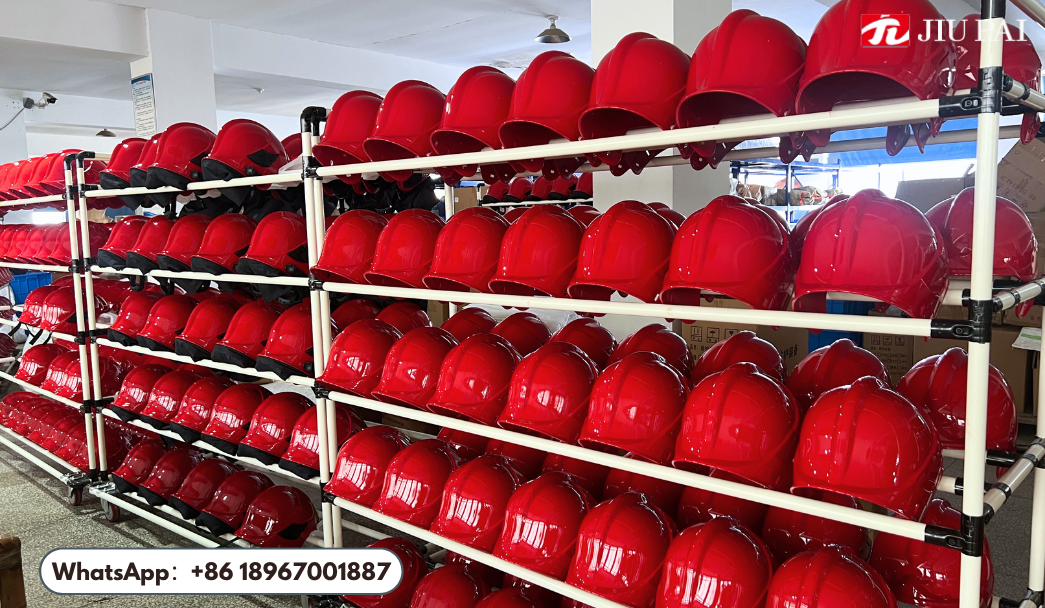
Priority is given to the source entity manufacturer for firefighting PPE procurement, which can effectively avoid problems such as price increases by middlemen, uncontrolled quality, and after-sales disconnection.Regular manufacturers have their own standardized production workshops, complete production lines and warehousing systems, and have independent production capacity for the whole process of cutting, laminating, sewing, gluing, testing, and packaging. There is no need for external OEM, and the process details can be controlled throughout the process.A manufacturing enterprise that has been deeply engaged in the field of fire protection for many years. It is familiar with national industry standards and first-line actual combat pain points. It has a mature R&D and production system and industry reputation. It is different from miscellaneous merchants that temporarily OEM and OEM sales, and guarantees product quality and supply stability from the source.Can the supplier maintain consistent quality?
Unstable batch quality is the core hidden danger of bulk procurement of firefighting PPE. High-quality manufacturers rely on a perfect quality control system to ensure the uniform performance of each batch of products.Strictly screen the quality of fabrics, accessories and hardware accessories from the storage of raw materials to prevent inferior raw materials from being put into production.Multiple process inspections are set up throughout the production process, the production process is calibrated in real time, and workmanship errors are strictly controlled.Complete a full set of protective performance tests before the finished product is shipped out of the warehouse, and all unqualified products are prohibited from being shipped.Unified raw material standards, process parameters and testing processes can effectively avoid differences in batch color, thickness, and protection parameters, achieve stable long-term supply quality and consistent batches, and eliminate the problem of cutting corners.Can the supplier handle large and repeat orders?
The procurement of government-enterprise projects and firefighting units is mostly large-volume, normalized repurchase orders, and the supplier's production capacity and supply capacity directly determine the efficiency of the project.High-quality manufacturers have large-scale monthly production capacity, can easily undertake large-scale orders, and at the same time publicize a clear standard delivery cycle to ensure that conventional projects are fulfilled on time.For emergency procurement and emergency replenishment scenarios, expedited production channels can be opened to quickly respond to sudden needs.A stable supply chain of raw materials and sufficient production capacity reserves can undertake annual framework cooperation and long-term repurchase orders, effectively avoid out-of-stock and delivery delays during peak season, and provide a reliable guarantee for long-term equipment renewal and normalized replenishment.Check Delivery, Customization, and Supply Reliability
Review production and delivery lead times
The delivery timeliness is the key assessment index of firefighting PPE procurement, which directly affects the progress of team facelift, project acceptance and emergency support.High-quality suppliers have standardized production processes, which can clearly publicize the full cycle time of regular order production, quality inspection, and delivery, and accurately match the project time planning.At the same time, it has sufficient peak season production capacity reserves, which can effectively resolve the pressure of capacity saturation during peak procurement periods and avoid delays in bulk orders.Supporting a mature logistics and distribution system, the whole process can be controlled and traceable. For special projects with strict nodes, the construction period can be locked in advance and the delivery time limit can be agreed in writing to ensure efficient and punctual delivery of orders in all directions.Evaluate customization capabilities
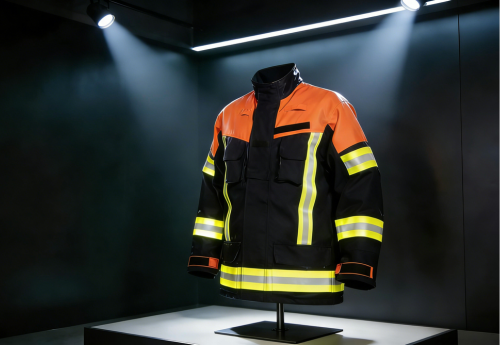
There are generally exclusive customization needs for fire fighting teams and government and enterprise projects, and mature manufacturers can provide a full range of personalized PPE customization services.At the appearance level, it supports exclusive color matching and high-brightness reflective strip style adjustment to adapt to the unified image of the team and the visual needs of night rescue.The marking process is mature, and the unit LOGO, number and warning mark can be accurately printed, which is firm and wear-resistant and not easy to fall off and fade.At the same time, it supports fine-tuning of size, version optimization, and increase or decrease of accessories to meet the needs of special operating scenarios.Complete OEM/ODM private standard customization capabilities, independent research and development and production according to customer drawings and parameters, fully adapted to project customization, brand cooperation, differentiated procurement and other diverse needs.Check replacement parts and product availability
Most purchases only focus on the delivery of the first order, ignoring the subsequent supply of accessories and the stability of long-term supply, which can easily cause equipment to be idle and wasted.Firefighting PPE is a long-term reuse equipment, and the aging and wear of vulnerable accessories is the norm. High-quality suppliers can provide a full set of replacement accessories such as zippers, reflective strips, and fasteners, and support individual replenishment and replacement, greatly reducing operation and maintenance costs.At the same time, sufficient finished products and spare parts are always available, which can quickly respond to small-batch emergency replenishment needs.Maintain stable mass production of the same product for a long time, ensure that the old and new equipment are adapted to the general purpose, eliminate the problem of product discontinued and out of stock, and provide customers with continuous, stable and worry-free full-cycle supply chain supporting services.Compare Total Cost, Not Just the PPE Unit Price
Look beyond the initial purchase price
Don't just look at the unit price of a single purchase for firefighting PPE procurement. Low-cost equipment seems to save money, but the overall cost of the whole life cycle is higher.Inferior equipment adopts cheap materials and rough technology, which has a fast aging and damage rate and a short service life. It needs to be replaced frequently, which greatly increases replacement costs.At the same time, most low-cost products have no supporting vulnerable accessories, and cannot be repaired after failure, so they can only be replaced as a whole.In addition, non-compliance with protection standards will also lead to hidden losses such as acceptance and rework, compliance penalties, and compensation for safety accidents. Additional expenditures for follow-up logistics and after-sales will be superimposed. After long-term accounting, the comprehensive cost of low-cost and low-quality equipment is much higher than that of high-quality compliance products.Compare value across suppliers
Professional firefighting PPE procurement pays attention to cost-effective balance, rather than blindly pursuing low prices. It is necessary to compare the product value and pricing of suppliers horizontally in multiple dimensions.Reasonable quotations are preferred under the same qualifications, materials and protection standards to avoid unreasonable products with high prices and low allocations and low prices and poor quality.Focus on comparing the quality assurance cycle, warranty scope and after-sales compensation mechanism of each company, and a perfect quality assurance system can effectively reduce the risk of late operation and maintenance.Although the initial purchase price of high-quality compliance products has a slight advantage, with stronger durability, lower replacement frequency and stable long-term supply capacity, it can achieve safe, worry-free and money-saving long-term cooperation value, and the comprehensive price ratio far exceeds that of miscellaneous low-cost products.Calculate the total cost of ownership
The whole life cycle cost of ownership is the most scientific accounting method for the procurement of firefighting PPE, which can truly restore the overall investment in the long-term use of equipment.The complete cost includes four dimensions, namely the initial investment in the first purchase and logistics acceptance, the operation and maintenance costs of daily maintenance, parts replacement, and fault repair, the replacement costs after the equipment is aging and scrapped, and the long-term procurement expenses for team expansion and annual facelift.After comprehensive accounting, it is not difficult to find that PPE products with high-quality compliance, stable supply, and perfect after-sales service can significantly reduce iteration and operation and maintenance losses, lower long-term comprehensive costs, and less procurement risks. It is the best choice for long-term procurement by government and enterprises.Evaluate Customer Support and After-Sales Service
Check technical support
High-quality firefighting PPE suppliers not only export products, but also provide closed-loop professional technical support for the whole process.A complete set of information such as qualification certificates, test reports, and product specifications can be provided before the sale, to assist in the completion of project filing and acceptance data collation, and to provide accurate selection plans based on operation scenarios and procurement needs.Respond to technical inquiries in real time during the sale, synchronize process parameters and customization details, and solve the confusion of selection.After-sales can provide professional training on wearing specifications, maintenance skills, troubleshooting, etc. to help users scientifically maintain equipment, effectively extend product service life, and maximize the actual combat protection value of firefighting PPE.Review warranty and replacement policies
A clear and perfect quality assurance and return policy is the core line of defense to protect the rights and interests of procurement and avoid quality risks.Regular suppliers will clearly publicize the standardized warranty cycle, and clearly divide the warranty scope of each component and the compensation standards for natural wear and quality problems.In view of factory defects, substandard performance, abnormal batch quality and other issues, we promise to replace the goods free of charge and return the goods unconditionally.At the same time, build a simple and efficient after-sales claims process, quickly respond to fault declaration, problem verification and replenishment and maintenance needs, eliminate after-sales prevarication, delay and other issues, and protect the legitimate rights and interests of buyers in all directions, so that procurement is more at ease and more secure.Look for a long-term PPE partner
The procurement of firefighting PPE is a long-term continuous demand, and the screening of suppliers is essentially a long-term safety partner with deep cultivation and reliability.High-quality partners communicate efficiently and respond quickly, and can quickly implement various needs such as customization, replenishment, and after-sales, and solve various problems in the delivery and use process in a timely manner.At the same time, pay attention to terminal use feedback, continue to collect first-line actual combat experience, and continuously iteratively optimize product technology, version and protection performance.Long-term cooperation can achieve unified product standards, stable supply links, and perfect after-sales system, effectively reduce procurement communication costs, selection risks, and operation and maintenance investment, and build a safe and stable long-term equipment supply system.Conclusion
As the core equipment to protect the life and safety of firefighters, firefighting PPE must not be purchased and selected with low prices as the core standard. The supplier with the lowest price is by no means the most cost-effective choice. The simple pursuit of low prices will only be exchanged for substandard equipment with non-compliance, low protection, high risk, and high loss, laying major safety risks and compliance risks. The core value of high-quality firefighting PPE lies in protecting the safety of front-line firefighters with compliance qualifications, hard-core protection performance, and actual combat adaptation experience. Reliable suppliers never rely on low-cost competition, but rely on stable quality, mature production capacity, flexible customization capabilities and full-cycle service to create cost-effective products. JIUPAI firefighter PPE supplier is deeply engaged in the field of firefighting PPE manufacturing, has always adhered to strict production and testing standards, taking into account wearing comfort, equipment compatibility and long-term supply stability, can be fully adapted to various firefighting operation scenarios, and helps the procurement team easily select high-quality and reliable professional protective equipment.
Last Article:
Request A Quote
Related News
Quick Consultation
We are looking forward to providing you with a very professional service. For any
further information or queries please feel free to contact us.