
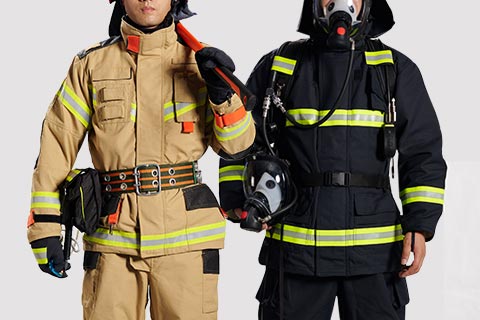

The Structural Fire Suit: Layers of Protection That Save Lives
Fire is an extremely dangerous battlefield, where thousands of degrees of heat, scalding steam, sharp debris, and corrosive chemical liquids threaten firefighters' lives every second. In such an environment, the structure of the fire suit is not ordinary clothing, but a set of sophisticated multi-layer life-saving system, is the firefighters face the blaze of the most reliable life line of defense. Each layer of a firefighter's protective clothing has an irreplaceable role to play, and if one layer fails, the overall protection will be greatly reduced, and only four layers of synergies, in order to hold the bottom line of safety in extreme environments.
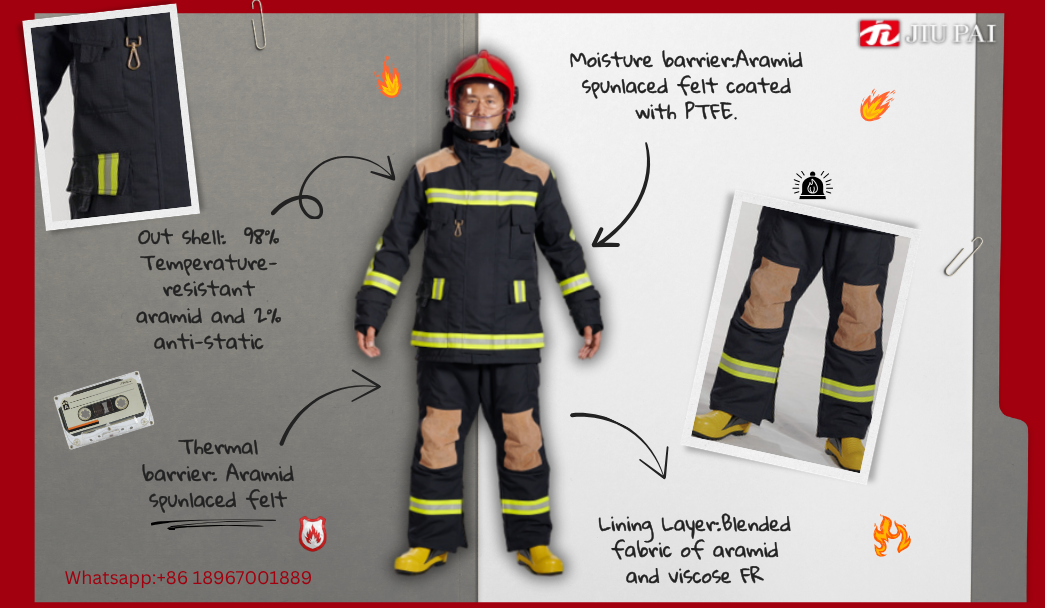
Structure fire suit is designed to deal with this extreme scene of multi-layer protection system. It does not rely on a single fabric to resist high temperatures, but through the outer layer, moisture-proof layer, heat insulation layer, comfort layer of four layers of division of labor, to build up a fire-retardant, waterproof, heat insulation, comfort of the complete protection of the closed loop.
The core of the reason why the best four-layer firefighting clothing can guarantee the safety of firefighters lies in the synergy of multiple layers. Any missing or damaged layer will directly expose firefighters to the threat of heat radiation, vapor, and chemicals. It can be said that every time a firefighter returns home safely, he or she is protected by this multi-layer protection system.
Core function:
Core function:
Core function:
Core advantage:
The four layers of CE-approved firefighting clothing are interlocked and indispensable to form an efficient and synergistic closed loop of protection. The outer shell protects against external damage and buys time for subsequent protection. The moisture barrier prevents the penetration of vapors and liquids, avoiding secondary damage. Thermal insulation layer blocks the core high temperature, guarding human safety. Comfort layer protects the wearing experience and enhances rescue efficiency, working in concert to maximize protection effectiveness.
The blind pursuit of lightweight, and will sacrifice clothing thermal protection and tear resistance, increasing the risk of firefighters in the fire scene of injury, the two need to be taken into account in order to protect the rescue safety.
High-quality structural fire suit will be upgraded through the fabric, ergonomic tailoring and optimization of the structure of the layers to achieve a balance between protection and comfort. High-quality structural fire suit can ensure high thermal protection performance (TPP) and good total heat loss (THL), but also flexible and unrestrained, without affecting the firefighters climbing, breaking and other rescue actions, and at the same time, the use of lightweight design to reduce fatigue brought about by prolonged wear, to adapt to the needs of the actual combat fire scene.
For the fire brigade, choosing qualified, high-quality, scene-appropriate structural fire protection clothing is to build a strong life defense for firefighters. Attaching importance to the performance and maintenance of each layer is the greatest protection for firefighters.
Why Firefighters Depend on Layered Protection
The real fire scene is far more cruel than imagined. The temperature at the center of a building fire can reach over 800℃, the steam generated by high-pressure water cannons can cause serious burns, and collapsing building materials and corrosive chemicals can cause fatal injuries at any time. Ordinary clothing will be ignited and melted in a second, which can not provide effective protection.Structure fire suit is designed to deal with this extreme scene of multi-layer protection system. It does not rely on a single fabric to resist high temperatures, but through the outer layer, moisture-proof layer, heat insulation layer, comfort layer of four layers of division of labor, to build up a fire-retardant, waterproof, heat insulation, comfort of the complete protection of the closed loop.
The core of the reason why the best four-layer firefighting clothing can guarantee the safety of firefighters lies in the synergy of multiple layers. Any missing or damaged layer will directly expose firefighters to the threat of heat radiation, vapor, and chemicals. It can be said that every time a firefighter returns home safely, he or she is protected by this multi-layer protection system.
What Is a Structural Fire Suit?
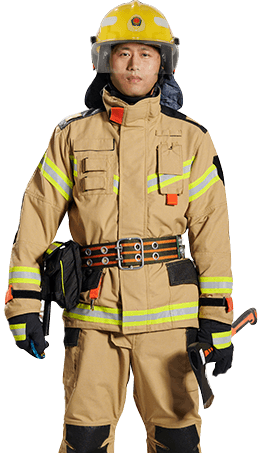
Structural Fire Suit is the core personal protective equipment worn by firefighters when they enter the scene of a building fire, which is different from ordinary labor insurance PPE, rescue suit, heat insulation suit, specially designed for the high temperature, steam, puncture, chemical contamination of building fires, and it is the standard protective equipment for fire scene rescue. A complete set of structural fire suit is mainly composed of protective jacket, rescue pants, multi-layer lining system, with helmet, gloves, protective boots, forming a whole body protection system.The 4 Core Layers of a Structural Fire Suit
Outer shell---The first line of defense
The outer shell is the outermost layer of a structural fire suit, which directly faces flames, impacts, and abrasion, and is the core carrier of the fireproof shell, determining the basic durability of the equipment.Core function:
- The shell of structural fire suit has permanent flame retardant properties, in contact with the flame will not appear melt droplets, shrinkage phenomenon, and will not contribute to combustion, can continue to play the role of flame retardant protection.
- High-quality fire suit shell with high-strength tear and abrasion resistance characteristics, can effectively resist the puncture of sharp debris in the fire scene, to avoid shell breakage leading to protection failure.
- Durable fire suit shell can directly block the fire in the open flame and heat radiation, reduce the high temperature on the internal layers of the invasion, for the protection of the inner layer of valuable buffer time.
Moisture barrier--- Invisible shield against steam and liquids
Moisture barrier is an easily overlooked, but crucial layer that assumes the core function of waterproofing and breathability of structural fire suit.Core function:
- The moisture barrier layer of structural fireproof clothing has efficient waterproof performance, which can effectively block the penetration of water, human blood and all kinds of corrosive chemical liquids used in the fire-fighting process, avoiding the harm caused by these substances to the firefighters' bodies.
- Highly heat-resistant fire suit moisture-proof layer also has the function of isolating high-temperature steam, which can effectively block the fire produced in the high-temperature steam contact with the firefighters' skin, thus avoiding the firefighters to suffer fatal steam burns.
- Structure of the fire suit's moisture barrier layer adopts one-way breathable design, this design can timely discharge firefighters in the process of long-time operation of the body of the sweat discharged, to prevent the accumulation of sweat lead to clothing moisture, and then avoid the firefighters to appear hot heatstroke situation.
Thermal barrier---Core heat insulation layer
Thermal barrier layer is the core of thermal protection of CE certified structural fire protection clothing, which undertakes most of the heat insulation and heat blocking tasks, and is the key to resisting high temperature burns.Core function:
- The heat insulation layer of structural fireproof clothing can effectively block heat conduction and heat radiation, slow down the rise of firefighters' body surface temperature, and avoid high temperature burns on the human body.
- The thermal insulation layer utilizes the core principle of air-layer insulation to form a stable static insulation buffer layer inside the garment, further blocking heat transfer to the human body.
- The thermal insulation layer also has the function of assisting moisture absorption and cushioning impact, which can not only absorb part of the moisture to keep wearing comfort, but also reduce the external impact on the firefighter's body to improve the overall wearing safety.
Comfort layer (Inner lining)---Most overlooked layer
Comfort layer is in direct contact with the skin, which is the key layer that determines the wearing experience and reduces fatigue, and it is also the key direction of the industry upgrading.Core advantage:
- The Comfort layer of the four-layer structure fire suit is made of skin-friendly and soft fabric, which can effectively reduce the friction between the garment and the skin, thus reducing the discomfort of the firefighters during long-time wearing and improving the wearing experience.
- The comfort layer has efficient moisture absorption and perspiration function, which can quickly absorb the sweat on the firefighter's body surface and export it in time, avoiding sweat accumulation on the surface of the skin and keeping the body dry.
- The reasonable design of the comfort layer of the four-layer structure fire suit can effectively reduce the heat stress reaction of the firefighters, relieve the body fatigue caused by the long-time high-intensity rescue operations, and ensure that the firefighters continue to carry out rescue work.
Industry Trend: Separate design of comfort layer and heat insulation layer, adopt lighter weight, high elasticity, flame retardant fabrics, enhance flexibility and breathability without reducing protection, and solve the industry pain point of strong protection and tired wearing.
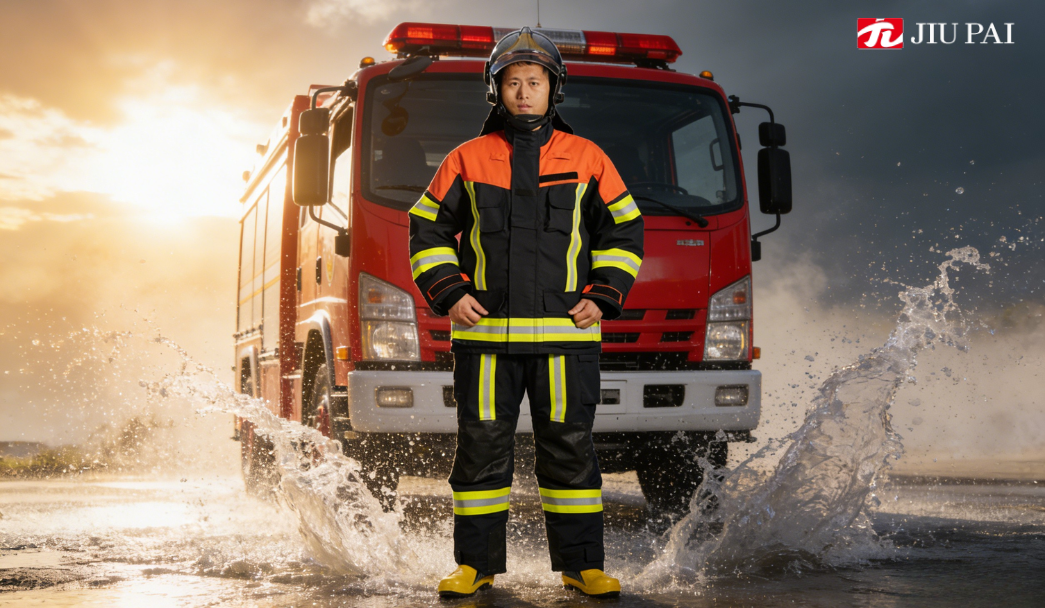
How the 4 Layers Work Together as a Protection System
The four layers of protection of structural fire suit work closely together and perform their respective duties, which together constitute a complete fire protection system. The outer shell blocks open flames, debris impact and abrasion, building the foundation of the inner layer. The moisture barrier keeps out liquids and hot vapors, draining perspiration and keeping you dry. The thermal barrier blocks heat conduction and radiation, reducing heat damage. The comfort layer regulates the micro-environment of the body surface to reduce fatigue and keep firefighters in the fight.The four layers of CE-approved firefighting clothing are interlocked and indispensable to form an efficient and synergistic closed loop of protection. The outer shell protects against external damage and buys time for subsequent protection. The moisture barrier prevents the penetration of vapors and liquids, avoiding secondary damage. Thermal insulation layer blocks the core high temperature, guarding human safety. Comfort layer protects the wearing experience and enhances rescue efficiency, working in concert to maximize protection effectiveness.
Comfort vs Protection---Finding the Right Balance
In fire protection, protection and comfort always need to be balanced. Excessive pursuit of thick and heavy protection will lead to poor breathability and excessive weight of the garment, which in turn triggers the heat stress reaction of firefighters, causing slow action and affecting rescue efficiency.The blind pursuit of lightweight, and will sacrifice clothing thermal protection and tear resistance, increasing the risk of firefighters in the fire scene of injury, the two need to be taken into account in order to protect the rescue safety.
High-quality structural fire suit will be upgraded through the fabric, ergonomic tailoring and optimization of the structure of the layers to achieve a balance between protection and comfort. High-quality structural fire suit can ensure high thermal protection performance (TPP) and good total heat loss (THL), but also flexible and unrestrained, without affecting the firefighters climbing, breaking and other rescue actions, and at the same time, the use of lightweight design to reduce fatigue brought about by prolonged wear, to adapt to the needs of the actual combat fire scene.
Common Mistakes When Choosing Firefighter Suits
- Lightweight and improper: Blindly choose lightweight breathable structure firefighter suits, but do not pay attention to its thermal protection properties (TPP) and tear indicators are up to standard, can not withstand the heat and impact of the fire scene, there is a serious safety hazard.
- Neglect of moisture-proof: Purchase ignoring the quality of moisture-proof layer, resulting in poor waterproof clothing, breathability is insufficient, easy to appear in the fire steam infiltration scald, the body sweat can not be discharged, triggered by the heat of heatstroke and other issues.
- Neglect of seams: Ignoring the durability of the seams of the breathable fire suit, the choice of products with weak seams, the use of the seams are prone to tearing, water seepage phenomenon, directly undermining the overall protection system, the loss of protective effect.
- cognitive bias: Wrongly believe that waterproof and breathable can not be balanced, buy one-sided focus on a particular feature, choose the wrong fabrics lead to poor wearing experience, while affecting the fire protection effect.
- No certification: Purchasing products without authoritative certification such as CE, NFPA1971, etc., their protective performance is not up to the standard, and they cannot provide firefighters with reliable safety protection.
How to Choose the Right Structural Fire Suit
Key factors to evaluate
Choose the structural fire suit need to focus on four core evaluation indicators, namely, thermal protection performance, total heat loss, fabric composition and authoritative certification, reasonable assessment in order to select the quality equipment to meet the needs of the fire scene.- Thermal Protection Performance (TPP): The higher the value, the stronger the heat insulation ability, which directly determines the ability of the fire suit to withstand the high temperature and heat radiation in the fire scene, and it is one of the key indicators to protect the firefighters from being burned by the high temperature.
- Total Heat Loss THL: The higher the value, the better the breathability and heat dissipation, which can effectively discharge sweat and heat from the firefighter's body, reduce the heat stress reaction, and enhance the comfort and safety of long-time operation.
- Fabric composition: Nomex, Kevlar, PBI and other high-performance flame-retardant materials are prioritized, which are highly flame-retardant, heat-resistant and wear-resistant, providing stable and reliable basic protection for firefighting clothing.
Application-based selection
Breathable structural fire suits need to be selected according to different fire scenes, combined with the characteristics of the scene to match the focus of protection, in order to give full play to the role of protection, to protect the firefighters in all types of rescue scenarios.- Urban building fires: Focusing on full-scene protection, balanced fire retardant, waterproof and heat insulation properties are needed to match the complex environment in the building, to cope with high temperatures, steam, debris and other risks, and to meet diversified rescue needs.
- Industrial fire: Need to strengthen the chemical corrosion resistance, high temperature performance, industrial scenes are prone to chemical leakage, high temperature equipment combustion, specialized protection can effectively resist chemical burns and extreme heat attack.
- Wildland and structural distinction: Wildland fire suit is more lightweight and breathable, suitable for wildland mobile rescue.
- Structural fire suits focus on full-dimensional protection, targeted to deal with all kinds of complex hazards in the building fire, the two can not be mixed.
Maintenance and Inspection of Fire Suit Layers
Maintenance and Inspection of Fire Suit Layers is the key to guarantee its protective performance, and it is necessary to carry out regular comprehensive inspection of each layer, standardize cleaning and storage, and eliminate the ineffective equipments in time, so as to ensure the long-term and reliable protective function.- Check the shell: Regularly check whether the shell is broken, burned, worn and stubborn stains, found that the problem of timely repair, if the damage is serious and can not be repaired, need to be replaced immediately to avoid protection failure.
- Test the moisture-proof layer: Regularly do a spray test on the moisture-proof layer, carefully check whether there is leakage, membrane layer damage, etc., to ensure that its waterproof and breathable performance is intact, to eliminate the risk of steam infiltration.
- Check the heat insulation/comfort layer: Check the heat insulation and comfort layer for lumps, mold, burns, etc. If such problems occur, they will reduce the heat insulation and comfort performance and need to be dealt with or replaced in a timely manner.
- Cleaning and storage: Use special cleaning agent to avoid damaging the fabric and the structure of each layer, and place it in a cool and ventilated place to dry after cleaning, and strictly prohibit exposure to sunlight and heavy pressure to prevent aging and damage to the equipment.
- Timely elimination: When the equipment is seriously damaged, the layers are separated or the certification is invalidated, it should be immediately stopped and eliminated, this kind of equipment can not provide effective protection, and there are potential safety hazards.
Conclusion
The core value of the best four-layer structure fireproof clothing lies in the multi-layer system engineering, rather than a single fabric stack. Shell, moisture-proof layer, heat insulation layer, comfort layer, each layer in the fire scene to guard life, one less layer, one less point of safety.For the fire brigade, choosing qualified, high-quality, scene-appropriate structural fire protection clothing is to build a strong life defense for firefighters. Attaching importance to the performance and maintenance of each layer is the greatest protection for firefighters.
Next Article:
Last Article:
Request A Quote
Related News
Quick Consultation
We are looking forward to providing you with a very professional service. For any
further information or queries please feel free to contact us.