
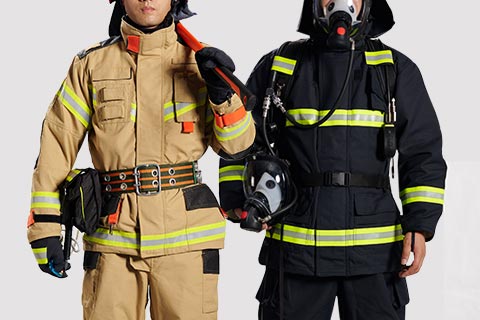

6 Tips to Extend the Lifetime of Your Fire Suit
Firefighting clothing is the core protective equipment for firefighters on the fire ground, and its service life is not only related to personal safety, but also affects the procurement cost of firefighting units. Frequent replacement of aging equipment will aggravate the budgetary pressure, protection failure is hidden fatal risk. This article organizes the firefighters protective equipment maintenance practical skills, can extend the life of the fire suit 30% -50%, both safety and cost control.
After each alarm and before daily preparations, you need to check them one by one according to a fixed list to ensure that nothing is missing:
Placing heavy and sharp objects in the pockets of firefighting clothing can crush the fabric and even puncture the moisture barrier. Rough movements when wearing and taking off the equipment, pulling the collar, cuffs and zippers and other parts, will also lead to loose seams, accessories damage.
As a professional firefighting apparel manufacturer, we have been deeply engaged in the industry for many years, focusing on high-quality firefighting apparel. If your organization needs high-quality firefighting equipment and exclusive solutions, please feel free to contact us, so that the protective equipment is more durable and safer for the first-line rescue.
What Determines the Lifespan of a Fire Suit?
The wear and tear of a fire suit is not caused by a single factor, but the environment, use, maintenance and other aspects of the joint role of the results, to understand the core factors affecting the source to do a good job of protection, to avoid equipment aging in advance.Key factors that affect durability
The durability of firefighting clothing is directly affected by four core factors, each of which can directly accelerate the aging of the equipment material and performance degradation.1. Environmental erosion: high temperatures in the fire scene, chemical corrosion, daily exposure to ultraviolet rays, continue to damage the outer wear-resistant material and the inner thermal insulation layer, resulting in the attenuation of protective performance.
2. Improper Cleaning: Unreasonable cleaning frequency and incorrect cleaning methods will damage the waterproof and breathable membrane and stitching areas, destroying the integrity of the fabric.
3. Poor storage: excessive temperature and humidity, poor ventilation, easy to trigger mold, hardening of the material and other hidden loss of fire clothing.
Mechanical wear and tear: daily friction, extrusion, cuts, easy to cause equipment damage, open line, directly reducing the protective effect.
2. Improper Cleaning: Unreasonable cleaning frequency and incorrect cleaning methods will damage the waterproof and breathable membrane and stitching areas, destroying the integrity of the fabric.
3. Poor storage: excessive temperature and humidity, poor ventilation, easy to trigger mold, hardening of the material and other hidden loss of fire clothing.
Mechanical wear and tear: daily friction, extrusion, cuts, easy to cause equipment damage, open line, directly reducing the protective effect.
Industry standard lifespan
The industry standard lifespan of firefighting clothing is about 5-10 years, depending on the actual frequency of use and maintenance level. The high frequency of the first line of police fire clothing, wear and tear will be much faster than the equipment on standby. The key point to note is that the wear and tear of the various components of the fire suit is not uniform and synchronized, for example, the outer reflective strips may be the first to fall off, the inner layer of moisture layer may be due to mold and mildew early failure, the damage to a single component if not dealt with in a timely manner, it will be implicated in the overall protective performance.Tip 1 : Perform Regular Inspections
Regular inspections are the key to detecting damage to firefighting clothing in a timely manner and avoiding small problems from becoming potential safety hazards. It is also a fundamental part of firefighters' protective equipment maintenance, and a regular inspection habit must be formed.After each alarm and before daily preparations, you need to check them one by one according to a fixed list to ensure that nothing is missing:
1. Outer protective shell: Check whether there are tears, burn marks, and local discoloration, hardening, etc. The discolored area may be the aging of the material caused by high temperature.
2. Moisture barrier integrity: Check for signs of breakage and water seepage. The moisture barrier is the key to blocking water vapor from entering the insulation, and minor breakage can affect protection.
3. Stitching and splicing: Check whether the stitching is loose, open line, whether the sealant at the splicing is off, these parts are the weak points of protection.
4. Reflective strips visibility: Check whether the reflective strips are peeling off, fading, warping, to ensure that good visibility can be maintained in the fire scene.
Tip 2 : Clean Your Fire Suit Properly
Fire Suit cleaning is not the more diligent the more , not wash more durable, the wrong way of cleaning will directly damage the fabric structure, and long-term cleaning of the fire suit, will be due to the accumulation of pollutants to accelerate the aging of the firefighters' equipment cleaning method lies at the heart of the scientific and appropriate.Risks of dirty gear
The soot, chemical pollutants, oil and other contaminants attached to firefighting clothing in the fire scene will not only irritate the firefighters' skin and cause health problems, but will also continue to corrode the fabrics and protective layers, so that the firefighting clothing wear-resistant, heat-insulating, waterproof performance gradually decay. The degree of cleanliness of firefighting clothing is related to the protective effect and health and safety, timely cleaning is the correct concept of equipment use.Best cleaning practices
The core principle of cleaning is to strictly follow the equipment manufacturer's instructions, which is a prerequisite for avoiding cleaning damage:1. Use only special detergents certified by the manufacturer. The use of harsh chemicals such as bleach, disinfectants, strong stain removers, etc., which can damage the protective coatings of the fabrics and the stitching adhesive, is prohibited.
2. Clean in a gentle mode, avoiding vigorous rubbing and brushing to prevent damage to the moisture barrier and insulation.
3. Rinse off the detergent promptly after cleaning to avoid continuous corrosion of the fabric by residual reagents.
Cleaning frequency strategy
According to the actual use of firefighting clothing, you can reasonably adopt a combination of light cleaning and deep cleaning of graded maintenance methods, taking into account the cleaning effect and equipment life:1. light cleaning: must be carried out after each police, mainly to clean the surface of the fire suit floating dust, soot and other shallow pollutants, wipe, light rinse can be used.
2. deep cleaning: according to the police frequency to develop a fixed cycle, generally at least once a month, or in the fire suit in contact with a large number of oil, chemical pollutants immediately after the deep cleaning needs to strictly follow the emergency rescue clothing cleaning specifications.
2. deep cleaning: according to the police frequency to develop a fixed cycle, generally at least once a month, or in the fire suit in contact with a large number of oil, chemical pollutants immediately after the deep cleaning needs to strictly follow the emergency rescue clothing cleaning specifications.
Tip 3 : Dry Fire Suits the Right Way
After cleaning the drying process is easy to be ignored as a key step, improper drying will directly damage the insulation layer of the fire suit and moisture layer, so that the previous cleaning and maintenance of the previous efforts to give up, clear firefighters equipment drying temperature and protective equipment drying method is essential.Correct drying methods
Drying should follow the principle of low temperature, ventilation, slow drying, the whole process in line with the requirements of the latest NFPA standards, specific operations are as follows:1. Priority is given to natural shade drying, hanging the firefighting suit hanger and placing it in a well-ventilated area to let the moisture evaporate naturally.
2. If drying equipment is used, special temperature-controlled drying cabinets for firefighting suits should be used, with the drying temperature strictly controlled not to exceed 49℃ (120℉) and low-speed ventilation mode set.
3. Avoid squeezing the fire suit during the drying process to ensure that all parts are fully dried.
2. If drying equipment is used, special temperature-controlled drying cabinets for firefighting suits should be used, with the drying temperature strictly controlled not to exceed 49℃ (120℉) and low-speed ventilation mode set.
3. Avoid squeezing the fire suit during the drying process to ensure that all parts are fully dried.
What to avoid
1. It is strictly prohibited to place the firefighting clothing under direct sunlight, ultraviolet rays will quickly deteriorate the fabric and reflective strips, reducing the durability of the equipment.
2. Prohibit the use of high-temperature home dryers, heaters, fire ovens and other equipment drying, high temperature will directly damage the protective layer.
3. Do not stack firefighting clothing for drying, the stacked place will be poorly ventilated residual moisture, triggering mold and mildew.
2. Prohibit the use of high-temperature home dryers, heaters, fire ovens and other equipment drying, high temperature will directly damage the protective layer.
3. Do not stack firefighting clothing for drying, the stacked place will be poorly ventilated residual moisture, triggering mold and mildew.
Tip 4 : Store Fire Suits Properly to Prevent Hidden Damage
The daily storage of fire suits is an important part of long-term maintenance, seemingly non-damaging storage methods, may make the equipment in the preparation stage of slow aging, grasp the fire suit storage skills, in order to extend the life of the equipment from the details.Ideal storage conditions
The core requirement for storing firefighting clothing is to create a cool, dry and well-ventilated storage environment.1. The temperature of the storage area should be kept at 15-25℃, and the relative humidity should be controlled at 40%-60%, away from high temperature and high humidity areas.
2. The storage location should avoid direct sunlight and ultraviolet radiation, can be posted in the storage cabinet UV film.
3. Keep the storage area well ventilated and open the windows regularly to prevent mold growth.
4. Firefighters should store their equipment on hangers so that the equipment can stretch naturally and avoid folding.
2. The storage location should avoid direct sunlight and ultraviolet radiation, can be posted in the storage cabinet UV film.
3. Keep the storage area well ventilated and open the windows regularly to prevent mold growth.
4. Firefighters should store their equipment on hangers so that the equipment can stretch naturally and avoid folding.
Common storage mistakes
1. Folding and squeezing firefighting clothing in a locker for a long period of time will cause permanent creases in the fabric and insulation, resulting in brittle material at the creases, which is prone to breakage in a fire scene.
2. Storing firefighting clothing that is not completely dry is a major cause of mold growth and fabric corrosion.
3. Stored outdoors or near windows, where prolonged exposure to ultraviolet light can cause the outer layer to fade, the reflective strips to fail, and the inner material to harden.
2. Storing firefighting clothing that is not completely dry is a major cause of mold growth and fabric corrosion.
3. Stored outdoors or near windows, where prolonged exposure to ultraviolet light can cause the outer layer to fade, the reflective strips to fail, and the inner material to harden.
Tip 5 : Minimize Mechanical Wear and Tear
Most of the physical wear and tear of firefighting clothing comes from the daily use of non-standardized habits, seemingly inadvertent action, may cause equipment damage, good maintenance of rescue clothing, need to regulate the use of every detail from the beginning.Daily usage habits that damage gear
Daily use, a lot of bad habits will accelerate the wear and tear of the fire suit, such as dragging the fire suit in the rough ground walking, will directly scrape the outer protective shell caused by tearing, wear and tear.Placing heavy and sharp objects in the pockets of firefighting clothing can crush the fabric and even puncture the moisture barrier. Rough movements when wearing and taking off the equipment, pulling the collar, cuffs and zippers and other parts, will also lead to loose seams, accessories damage.
Smart usage tips
When transporting firefighting clothing, it is recommended to use a special equipment bag to avoid direct contact between the equipment and rough objects, so as to prevent cuts and abrasions during transportation. If conditions permit, you can equip two sets of firefighter clothing for firefighters to rotate, so that the equipment to get a full rest, reduce the loss of a single use. Daily wear and take off the fire suit should also strictly follow the standardized process, to do light pulling and pulling, to avoid too much force to damage the fittings and stitching.Tip 6 : Repair Early, Replace Strategically
The maintenance of firefighting uniforms should not be repaired to make ends meet, nor do they have to be scrapped directly if they are slightly damaged, but we should make scientific judgments based on the degree of damage, repair small defects in a timely manner, and scrap them at the appropriate nodes to maximize the value of the equipment.When to repair
When the custom fire suit appears non-core protection parts of the minor damage, should be timely professional repair, to avoid damage expansion:1. The outer protective shell has a small area of tearing, open line, and did not hurt the inner moisture-proof layer and heat insulation layer.
2. Loose seams, reflective strips partially detached, zippers, velcro and other accessories damaged.
3. Small breakage of the moisture-proof layer, which can be repaired by special sealant.
2. Loose seams, reflective strips partially detached, zippers, velcro and other accessories damaged.
3. Small breakage of the moisture-proof layer, which can be repaired by special sealant.
When to retire gear
When the core protective properties of a fire suit are affected or irreversible damage occurs, it must be scrapped immediately and further use is prohibited:1. The thermal insulation layer appears to be hardened, shrinkage, mold, etc., the thermal insulation performance is greatly reduced, and can not meet the requirements of fire protection.
2. When the fire suit is exposed to strong corrosive chemicals and irreversible material corrosion occurs, even if there is no obvious damage in appearance, it should be scrapped.
3. The service life has exceeded the industry standard or manufacturer's regulations, even if the appearance is intact, there is a risk of protection due to the aging of the material.
4. In the fire scene suffered serious burns, extensive tearing, the core protective layer is damaged.
2. When the fire suit is exposed to strong corrosive chemicals and irreversible material corrosion occurs, even if there is no obvious damage in appearance, it should be scrapped.
3. The service life has exceeded the industry standard or manufacturer's regulations, even if the appearance is intact, there is a risk of protection due to the aging of the material.
4. In the fire scene suffered serious burns, extensive tearing, the core protective layer is damaged.
Pro Tips from Manufacturers
As a professional manufacturer of firefighting equipment, we combine years of R&D and production experience to provide firefighting units with advice on the maintenance of firefighting suits from the management level, to protect the service life of firefighting suits from the system, and to make the maintenance of equipment more efficient and standardized:1. Establish a normalized maintenance management system for firefighting uniforms, formulate a clear process of inspection, cleaning, drying and storage, and implement a person in charge to ensure that every maintenance action can be carried out on the ground.
2. Regularly organize professional training for firefighters to carry out firefighter protective equipment maintenance, so that each front-line personnel master the scientific use of equipment and maintenance skills, and reduce equipment loss from the use side.
3. Establish an exclusive maintenance file for each set of firefighting uniforms, with detailed records of police appearances, inspection results, number of cleanings, maintenance records, etc., so as to realize the traceability of the whole life cycle of the equipment and accurately judge the state of the equipment.
4. For large fire fighting units, it is recommended to cooperate with professional fire fighting equipment cleaning and maintenance organizations to carry out professional deep cleaning and performance testing on a regular basis, so that the equipment is always in the best condition.
Firefighting clothing maintenance is a set of complete system covering the use, inspection, cleaning, storage, maintenance, scientific maintenance can extend the life of the equipment by 30% -50%. This not only allows firefighting clothing to maintain the best protective performance at all times, building a strong defense for firefighters' fire safety, but also reduces the frequency of equipment replacement and lowers procurement costs, realizing the dual goals of safety and security and cost control, which is in line with the core needs of firefighters and procurement managers.2. Regularly organize professional training for firefighters to carry out firefighter protective equipment maintenance, so that each front-line personnel master the scientific use of equipment and maintenance skills, and reduce equipment loss from the use side.
3. Establish an exclusive maintenance file for each set of firefighting uniforms, with detailed records of police appearances, inspection results, number of cleanings, maintenance records, etc., so as to realize the traceability of the whole life cycle of the equipment and accurately judge the state of the equipment.
4. For large fire fighting units, it is recommended to cooperate with professional fire fighting equipment cleaning and maintenance organizations to carry out professional deep cleaning and performance testing on a regular basis, so that the equipment is always in the best condition.
As a professional firefighting apparel manufacturer, we have been deeply engaged in the industry for many years, focusing on high-quality firefighting apparel. If your organization needs high-quality firefighting equipment and exclusive solutions, please feel free to contact us, so that the protective equipment is more durable and safer for the first-line rescue.
Next Article:
Request A Quote
Related News

Quick Consultation
We are looking forward to providing you with a very professional service. For any
further information or queries please feel free to contact us.