

What Should Buyers Check Before Purchasing an EN 13911 Firefighter Hood?
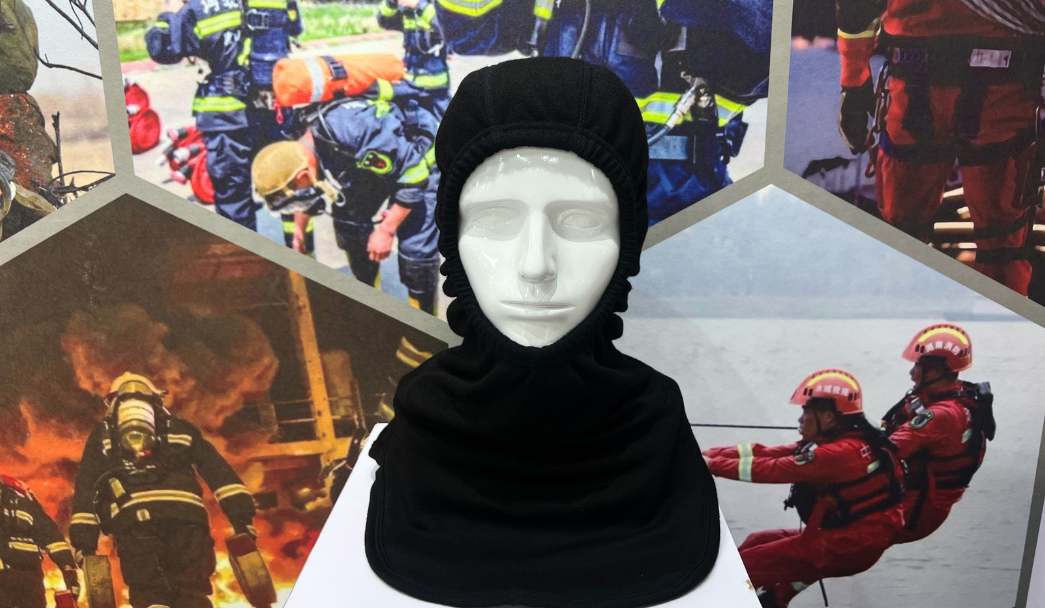
EN 13911 firefighter hood is the core equipment to fill the gap in the protection of fire helmets and protective clothing. It is also the mainstream choice of firefighter hood, high temperature and flame retardant fire-fighting headgear that complies with EU standards on the market. It can protect the head, neck and jaw areas of firefighters in all directions, and effectively resist flames, high temperature radiation, melts and harmful fumes. Damage.With strict EU safety standards, this washable and durable firefighter hood has become the mainstream procurement choice in the field of fire protection and emergency response around the world.The compliance and quality of procurement selection are directly related to the safety of first-line rescue. Improper selection can easily lead to problems such as protection failure, unqualified acceptance, and excessive loss. It is a key link that needs to be controlled in the bulk procurement of fire protection equipment.
At the same time, the material needs to have excellent thermal radiation blocking ability and thermal stability performance. In a high-temperature thermal radiation environment, it can effectively block the penetration of heat and avoid skin burns caused by heat accumulation. Under the instantaneous high temperature impact, the fabric structure does not shrink, carbonize, and fail.Professional EN 13911 firefighter hood uses high-end flame-retardant materials such as aramid and preoxygenated wire, with a multi-layer composite protective structure, taking into account the flame-retardant surface layer, heat insulation in the middle layer, and skin-friendly inner layer, and is fully adapted to extreme high temperature scenarios such as building fires, chemical fires, and forest fires.When purchasing, it is necessary to focus on verifying the core data such as the ultimate flame retardant temperature, heat penetration time, and thermal radiation barrier rate in the test report of the material of the special hood for chemical fire protection.
High-quality EN 13911 firefighter hood material adopts lightweight, breathable and flame-retardant fabrics. Under the premise of not reducing the flame-retardant and heat-resistant properties, the fabric weaving process is optimized to create a micro-breathable structure that can quickly discharge hot and humid gases from the head and avoid the accumulation of water vapor.At the same time, the material has good softness and ductility, no stiffness and caton feeling, will not restrain the rotation of the head, neck flexion and extension, and is suitable for all kinds of work actions.In addition, the inner fabric is skin-friendly and non-irritating, suitable for all-weather high-intensity rescue operations, and is the preferred material solution for wearing special fire-fighting headgear for a long time.
The standard-compliant protection range needs to completely cover the top of the head, the entire side of the head, the ear area, the back of the neck, the lower jaw and the upper edge of the chest, perfectly filling the protection gap between the neckline of the fire helmet and the collar of the protective clothing.The hem of the hood has excellent coverage, which can closely fit the inner layer of the protective clothing to eliminate protective loopholes.The facial opening has been accurately calculated, taking into account the field of vision, breathing and protective effects.During procurement verification, it is necessary to measure the protective performance in the dynamic and static dual state to ensure that the hood does not shift, does not curl, and is not exposed. It is an essential core performance of the smoke-proof and fire-proof headgear in the fire field.
The EN 13911 firefighter hood from regular manufacturers is equipped with multi-size specifications, suitable for all kinds of head and neck circumference, and adopts an ergonomic version to fit the physiological curve of the head and neck, with high elasticity and tightness technology and seamless seams, it is stable to wear without compression, softness and non-abrasive skin.Regardless of strenuous exercise or long-term work, there will be no problems such as slipping, tightness, and pain, which greatly improves rescue comfort and concentration. It is a high-quality design of a universal size fire-fighting protective hood.
At the same time, priority needs to be given to regular manufacturers with stable production capacity, strict quality control, and support for customized inspection, so as to avoid various procurement misunderstandings and prevent the entry of non-standard and inferior products.Only by controlling the procurement details in all directions can we filter out high-quality firefighter hoods that are suitable for actual combat, safe and durable, and exported in compliance, and protect the safety of front-line firefighters in all directions, and ensure that all kinds of fire-fighting equipment procurement projects are implemented in compliance and put into use stably for a long time.
Firefighter Hood Certification Requirements
Product certification is the core basis for EN 13911 firefighter hood's compliance with the market, legal procurement, and safe use, and it is also the core standard for distinguishing professional flame-retardant firefighter hood from inferior non-standard protective headgear.All firefighter hoods circulating in the EU market and global compliance projects must meet a full set of standardized certification systems, which are also necessary qualifications for export-specific EN13911 firefighter hoods.Lacking any certification or the certification parameters are not up to standard, the products cannot pass the fire-fighting acceptance and cannot be adapted to actual combat rescue scenarios.The first thing for buyers to verify is the full set of product certification qualifications to ensure that each indicator complies with international standards.EN IOS 13688:2013+A1:2021
EN ISO 13688:2013+A1:2021 is the general basic standard for fire-fighting protective clothing, and it is also the pre-basis for EN 13911 firefighter hood compliance certification, which specifically regulates the product terminology, classification, test conditions and identification specifications of firefighter head and neck protective equipment.The revised content of the new version of A1 optimizes the requirements for high temperature testing, material aging determination and traceability, and is more suitable for complex fire rescue scenarios.The purchase needs to confirm that the special headgear for industrial fire protection has been tested under standard working conditions, and the parameter identification is true and in compliance, so as to eliminate the application of old standards and inferior products with false protection levels.EN 13911 compliance
EN 13911:2017 is a special core standard for regulating fire-fighting and fire-fighting headgear. It clearly delineates the protective performance, structural design, material parameters and test methods of fire-fighting and rescue protective headgear, focusing on the short board of head and neck protection, and strictly controls key properties such as flame barrier, thermal radiation tolerance, anti-melt splash and seam sealing.During procurement verification, it is necessary to confirm that the protection capabilities, overall structure, size and process of the fully wrapped firefighter hood are fully in compliance, and there are no protective blind spots. At the same time, it has complete test data such as flame retardant, thermal stability, washability, and fit to ensure that the product can be adapted to various professional fire rescue scenarios.Ce certification
CE certification is a mandatory entry threshold for EN 13911 firefighter hood's cross-border circulation, EU market entry and global project bidding. This firefighter hood with CE certification is a high-risk PPE product and must pass the verification of a third-party agency authorized by the European Union before it can be labeled and sold in compliance.When purchasing, you need to avoid common misunderstandings. Do not rely on the appearance of CE stickers to determine compliance. Be sure to verify a valid certificate and supporting test report that can be officially traceable, and confirm that the qualification fully covers EN 13911 and EN ISO 13688:2013+A1:2021 standards, eliminate invalid OEM products, and ensure the compliance and rescue safety of foreign trade firefighter hood.How to Choose Firefighter Hood Materials
Material is the core factor that determines the protective performance, wearing experience, and service life of EN 13911 firefighter hood. The flame retardant ability, heat resistance, breathable comfort, and wear resistance of different materials vary greatly, which directly determines the comprehensive quality of high-end flame-retardant firefighter hood.High-quality firefighter hood material needs to take into account the ultimate protection and actual combat practicality. It can not only resist extreme fire environmental damage, but also adapt to long-term high-intensity wear operations. Buyers need to combine rescue scenarios to focus on verifying the performance of the two core materials of aramid firefighter hood.Flame and heat resistance
Flame retardant and heat resistance are the core properties of firefighter hood, and they are also the key indicators of the mandatory assessment of EN 13911 standard, and they are the core evaluation criteria for high temperature resistant protective headgear in fire areas.High-quality flame-retardant materials need to have permanent flame-retardant properties, which are different from ordinary coated flame-retardant fabrics, and will not cause flame-retardant failure due to washing, wear, and aging.In the open flame burning test, the fabric needs to be self-extinguishing from the fire, no continuous combustion, no melting dripping, no damage and cracking, to avoid dripping objects from burning the skin of firefighters, and to meet the high temperature protection needs of professional fire fighting and rescue.At the same time, the material needs to have excellent thermal radiation blocking ability and thermal stability performance. In a high-temperature thermal radiation environment, it can effectively block the penetration of heat and avoid skin burns caused by heat accumulation. Under the instantaneous high temperature impact, the fabric structure does not shrink, carbonize, and fail.Professional EN 13911 firefighter hood uses high-end flame-retardant materials such as aramid and preoxygenated wire, with a multi-layer composite protective structure, taking into account the flame-retardant surface layer, heat insulation in the middle layer, and skin-friendly inner layer, and is fully adapted to extreme high temperature scenarios such as building fires, chemical fires, and forest fires.When purchasing, it is necessary to focus on verifying the core data such as the ultimate flame retardant temperature, heat penetration time, and thermal radiation barrier rate in the test report of the material of the special hood for chemical fire protection.
Comfort and breathability
Under the premise that the protection performance is up to standard, the breathable comfort of the material directly affects the operating efficiency and battery life of firefighters, which is also the core advantage of the lightweight and breathable firefighter hood.Fire rescue scenes are mostly high-temperature, airtight, and high-intensity operating environments. If the firefighter hood is made of heavy material and has poor breathability, it can easily lead to stuffy head, sweating, stagnant water, and dizziness, which not only affects the flexibility of rescue operations, but also increases the physical energy consumption of firefighters, laying safety hazards, and cannot meet the needs of long-term actual combat rescue.High-quality EN 13911 firefighter hood material adopts lightweight, breathable and flame-retardant fabrics. Under the premise of not reducing the flame-retardant and heat-resistant properties, the fabric weaving process is optimized to create a micro-breathable structure that can quickly discharge hot and humid gases from the head and avoid the accumulation of water vapor.At the same time, the material has good softness and ductility, no stiffness and caton feeling, will not restrain the rotation of the head, neck flexion and extension, and is suitable for all kinds of work actions.In addition, the inner fabric is skin-friendly and non-irritating, suitable for all-weather high-intensity rescue operations, and is the preferred material solution for wearing special fire-fighting headgear for a long time.
Firefighter Hood Coverage and Protection
Protective coverage is a key indicator to measure the protective integrity of EN 13911 firefighter hood, which directly determines whether there is a protective blind spot, and it is also the core assessment standard for full coverage of the head and neck protective hood.Many low-cost and low-quality headscarves only cover the top of the head and the back of the head, and the protection of key exposed areas such as the neck, jaw, and behind the ears is lacking, which can easily be damaged by high temperature, flame, and smoke in a fire.The compliant EN 13911 firefighter hood needs to achieve a full range of protection coverage without dead ends, and strictly follow the standard protection size specifications.The standard-compliant protection range needs to completely cover the top of the head, the entire side of the head, the ear area, the back of the neck, the lower jaw and the upper edge of the chest, perfectly filling the protection gap between the neckline of the fire helmet and the collar of the protective clothing.The hem of the hood has excellent coverage, which can closely fit the inner layer of the protective clothing to eliminate protective loopholes.The facial opening has been accurately calculated, taking into account the field of vision, breathing and protective effects.During procurement verification, it is necessary to measure the protective performance in the dynamic and static dual state to ensure that the hood does not shift, does not curl, and is not exposed. It is an essential core performance of the smoke-proof and fire-proof headgear in the fire field.
Firefighter Hood Fit and Comfort
The fit and overall wearing comfort directly affect the adaptability of equipment and rescue safety. The firefighter hood that is loose and falls off, tight and oppressive, and does not match the size, even if the protective material is up to standard, it will not be able to play a role in actual combat protection.The EN 13911 standard clearly requires that the firefighter hood needs to be adapted to firefighters of different head shapes and body types, taking into account the stability of the fit and the flexibility of wearing. This is also the core point of the procurement of the high-fit firefighter hood.The EN 13911 firefighter hood from regular manufacturers is equipped with multi-size specifications, suitable for all kinds of head and neck circumference, and adopts an ergonomic version to fit the physiological curve of the head and neck, with high elasticity and tightness technology and seamless seams, it is stable to wear without compression, softness and non-abrasive skin.Regardless of strenuous exercise or long-term work, there will be no problems such as slipping, tightness, and pain, which greatly improves rescue comfort and concentration. It is a high-quality design of a universal size fire-fighting protective hood.
Firefighter Hood Compatibility With PPE
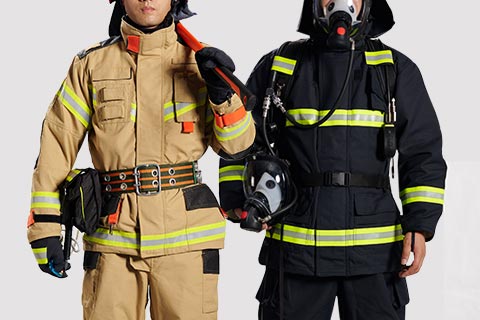
Firefighter hood is a supporting type of protective equipment, which needs to be used in conjunction with a full set of PPE protective equipment such as helmets, air-breathing masks, and fire-fighting protective clothing. Insufficient compatibility will directly destroy the integrity of the entire protective system.When purchasing EN 13911 firefighter hood, it is necessary to focus on verifying the adaptation performance to ensure that the product is a special firefighter hood for PPE, which is perfectly compatible with mainstream fire-fighting equipment to eliminate protection loopholes and equipment stuck problems.Helmet compatibility
Helmet adaptability is the basic compatibility requirement, and the core consideration is the thickness, version and edge fit effect of the helmet-compatible fire-fighting headgear.Compliance with CE-certified firefighter hood adopts a lightweight human body version with a moderate fabric thickness, which will not lift the helmet and destroy the overall sealing after wearing it.The flat and smooth edges can closely fit the inner cushion of the helmet, without bumps, folds and caton, and do not block the helmet buckle, fixed accessories and protective structure. It is compatible with most mainstream fire helmet models on the market and is suitable for all kinds of actual combat rescue wear scenarios.SCBA face mask interface
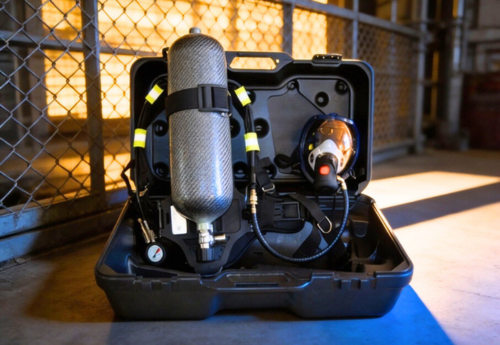
The interface adaptation of the air breathing mask is the key to ensuring the safety of respiratory protection, and it is also the core advantage of the SCBA adaptation to firefighter hood.The fabric of ordinary inferior headgear is too thick and rough-cut, which can easily be squeezed and stuck with the air-breathing mask, resulting in a gap in the fit, which leads to the invasion of toxic fumes and high-temperature air currents, causing safety hazards.The high-quality EN 13911 hood adopts precise and thin cutting technology, the edges fit tightly, and the rubber ring of the mask can be tightly fitted, which does not destroy the sealing structure, does not block equipment accessories, and stably guarantees the breathing safety of firefighters.Protective clothing integration
The integrated adaptation with fire-fighting protective clothing mainly checks the sealing of the hem of the matching hood of the full set of fire-fighting protective clothing.In accordance with EN 13911, the hem of the firefighter hood has sufficient size and strong elastic coverage, and can be completely stored on the inside of the collar of the protective clothing to create an integrated seamless protection system for the head, neck and torso.It is not easy for firefighters to prolapse and cocked during dynamic operations such as bending, climbing, and running. It effectively blocks high-temperature fumes and melts. The fabric is light and not bloated, does not restrict physical activity, and is suitable for all kinds of high-intensity rescue operations.Firefighter Hood Durability and Service Life
Fire-fighting equipment belongs to high-frequency loss equipment. The durability and service life of EN 13911 firefighter hood directly determine the cost-effective procurement and long-term use safety.Inferior headgear is prone to flame retardant failure, deformation and damage, which increases replacement costs and safety risks.When purchasing, it is necessary to focus on checking the durability, and the high-durability and long-lasting firefighter hood is preferred to ensure long-term stable protection.Washing resistance
Washing resistance is the core durability index of firefighter hood. The EN 13911 standard clearly regulates the washing resistance of firefighter hood and the performance retention parameters after cleaning.This repeatedly washable and disinfectant headgear adopts high-quality permanent flame-retardant fabric technology, which is different from ordinary coated fabrics and can withstand multiple machine washes, manual cleaning and professional disinfection and sterilization treatment.After cleaning, the material will not have problems such as flame retardant failure, hard fading, damage and aging. The performance is always stable, and it is perfectly adapted to the needs of high-frequency cleaning and maintenance of fire-fighting equipment, effectively reducing the frequency of equipment replacement and long-term procurement costs.Shape retention
Shape preservation is the core evaluation criterion for non-deformation fire protection headgear, which directly determines the fit accuracy and protection stability of the product for long-term wear.After washing, stretching and long-term wear, the inferior firefighter hood on the market is prone to shrinkage, relaxation, crimping and deformation, and it is easy to form a protective blind spot.In accordance with EN 13911 firefighter hood adopts high-stability flame-retardant fabric with reinforced seam technology. After repeated stretching and washing tests, the version, size and elasticity are always stable, and it can maintain a perfect fit for long-term use.How to Choose a Reliable Firefighter Hood Manufacturer
The core source of product quality is the manufacturer. EN 13911 firefighter hood is a high-risk protective equipment with extremely low quality fault tolerance.Choosing a formal and reliable EN 13911 firefighter Nomex hood manufacturer is the core key to avoiding procurement risks, ensuring quality, and stabilizing after-sales.Buyers can select high-quality suppliers from the four dimensions of production capacity, quality control, customization, and sample testing.Production capacity
The production capacity directly determines the efficiency of order delivery, the stability of supply, and the consistency of batch product quality. It is an important indicator for buyers to screen EN 13911 firefighter Nomex hood manufacturers.High-quality firefighter hood JIUPAI manufacturer is equipped with standardized dust-free production lines and a full set of automated testing equipment, which can achieve standardized and large-scale mass production, and efficiently undertake large-volume purchase orders and urgent expedited orders.The mature and perfect raw material supply chain and standardized production process can stably control the product parameters of each batch, eliminate batch color difference, performance deviation and other problems, and fully meet the supply and quality requirements of EN 13911 firefighter Nomex hood for bulk procurement by government and enterprise units and engineering projects.Quality control
Strict quality control system is the core guarantee of high-quality EN 13911 firefighter Nomex hood compliance, and it is also the key to distinguish between regular manufacturers and small workshop products.Reliable manufacturers have established a full-process closed-loop quality inspection mechanism, covering four links: raw material warehousing verification, production process sampling inspection, finished product performance re-inspection, and factory qualification traceability.Screen for compliance with flame-retardant fabrics and accessories from the source, correct process errors in time during production, and complete a full set of tests in strict accordance with the EN13911 standard before leaving the factory. Each batch of products can provide a complete test report and certification certificate, which greatly reduces the product defect rate and guarantees the safety and compliance of all factory equipment.ODM customization
Different fire rescue teams, industrial emergency scenarios and foreign trade bidding projects have differentiated requirements for the appearance, size and functional details of firefighter hood. Professional OEM customization capabilities are the core competitiveness of high-quality suppliers. Regular firefighter hood JIUPAI manufacturers can provide a full range of personalized customization services, including brand logo embroidery, appearance color adjustment, exclusive size revision, version structure optimization, functional detail upgrade, etc.At the same time, product protection performance can be optimized according to special high temperature and chemical rescue scenarios, and it can be flexibly adapted to various customized needs. It is a reliable cooperation channel for purchasing customized EN 13911 firefighter Nomex hood.Sample testing
Sample testing is an effective way for buyers to intuitively verify the quality of firefighter hood that can be sent for inspection and avoid procurement risks.Professional EN 13911 firefighter Nomex hood manufacturers support free sample delivery, on-site measurement, parameter debugging and review services by third-party authorities.Buyers can measure the core properties of flame retardant, heat resistance, washing resistance, wearable fit, and PPE equipment compatibility through samples, check the authenticity of product qualifications and test data, and effectively eliminate problems such as false publicity, product quality is not up to standard, and qualification fraud, so as to ensure that the purchased products fully meet the actual combat use and project acceptance standards.Conclusion
The core of EN 13911 firefighter hood's procurement selection is compliance first, performance-based, adaptation-based, and long-lasting quality. It is by no means a simple price comparison and style selection.Buyers need to verify the dual international standards and CE access certification, control the core parameters such as flame retardant, heat-resistant, breathable and comfortable, comprehensive protection, and PPE compatibility, and accurately select the cost-effective EN 13911 firefighter Nomex hood.At the same time, priority needs to be given to regular manufacturers with stable production capacity, strict quality control, and support for customized inspection, so as to avoid various procurement misunderstandings and prevent the entry of non-standard and inferior products.Only by controlling the procurement details in all directions can we filter out high-quality firefighter hoods that are suitable for actual combat, safe and durable, and exported in compliance, and protect the safety of front-line firefighters in all directions, and ensure that all kinds of fire-fighting equipment procurement projects are implemented in compliance and put into use stably for a long time.
Request A Quote
Related News
Quick Consultation
We are looking forward to providing you with a very professional service. For any
further information or queries please feel free to contact us.