

Top Features to Look for in High-Quality Fire Clothing
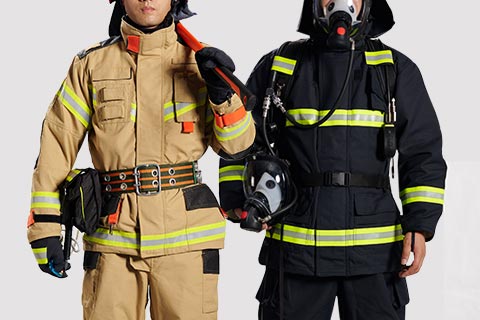
In fire rescue operations, fire suits serve as the lifeline of firefighters. Their quality directly affects the personal safety and operational efficiency of the rescue personnel. Inferior fire suits cannot withstand flames, high temperatures, sharp objects, etc., and also suffer from design flaws that affect the flexibility of their movements and increase the risks of rescue. This article compiles a guide for purchasing high-quality fire suits, analyzes the key points, helps you avoid misunderstandings and select the right equipment, and builds a safety barrier for firefighters.
The core certification standards for fire protection clothing globally are the EN469 EU standard and the NFPA1971 US standard. The former focuses on fabric flame retardancy, water resistance, etc., while the latter emphasizes heat protection, durability, etc. When purchasing, you can verify the authenticity by checking the label, reviewing the test report, and verifying the certification number. Be vigilant against false certifications, expired certifications, and avoid using non-compliant products.
High-temperature radiation and heat conduction are the main risks faced by firefighters. The TPP rating is the core indicator for measuring the heat protection performance of fire protection suits. The higher the value, the stronger the protection. Qualified products must meet the rating requirements for corresponding scenarios. High-quality fire protection suits effectively prevent heat penetration through the insulation layer, fabric structure optimization, and seam sealing design, ensuring protection safety in high-temperature environments.
Lightweighting is the trend in the development of fire protection suits. Overweight equipment would increase the burden on firefighters and reduce their efficiency. High-quality lightweight fire protection suits, while ensuring the protection level, use lightweight flame-retardant fabrics such as aramid, optimize the multi-layer structure to achieve weight reduction, and at the same time enhance flexibility through flat stitching techniques and joint hinge designs, meeting the requirements of high-intensity rescue and conforming to relevant standards.
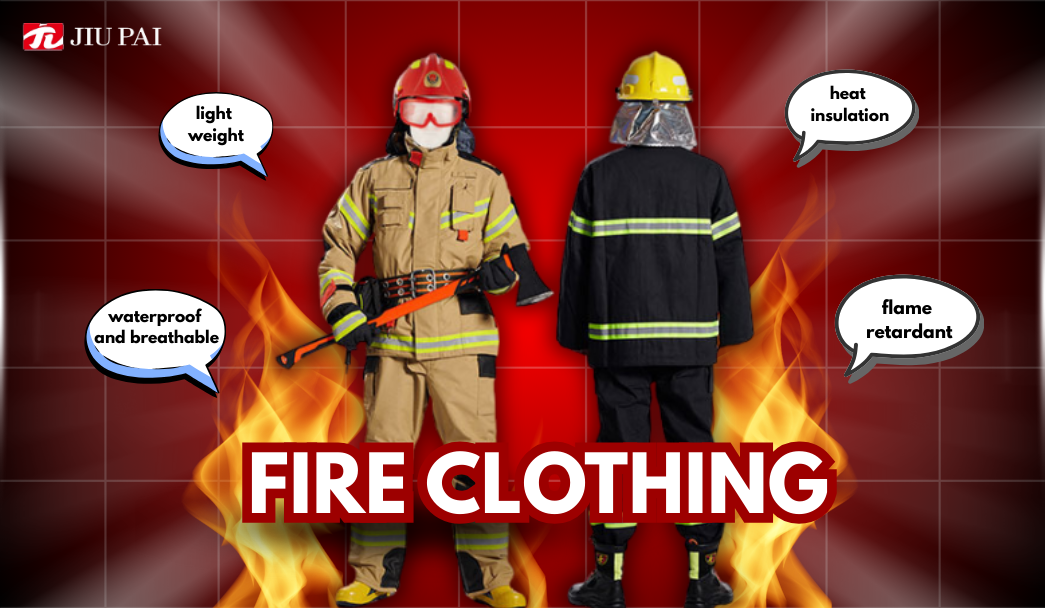
The waterproof and breathable layer of firefighting suits mostly adopts PTFE waterproof breathable membranes. With a microporous structure, it realizes sweat evaporation without water infiltration, and blocks external moisture and harmful substances. In addition, to prevent heat stress, the fabric also needs to have heat reflection performance, lightweight design, ventilation openings, and a cooling vest to provide comprehensive protection for firefighters in high-temperature working conditions.
The wear resistance of fire protection suits must comply with the EN ISO 12947 standard. The number of wear cycles of the outer fabric should be more than 50,000 times, and that of the inner fabric more than 30,000 times. After the test, the retention rate of breaking strength remains above 70% and the flame retardant performance is stable. Although high-quality fire protection suits have a higher initial procurement cost, their service life can reach 3-5 years, which is much longer than that of inferior products. They can also reduce safety accidents and maintenance costs, and in the long run, they offer better cost-effectiveness.
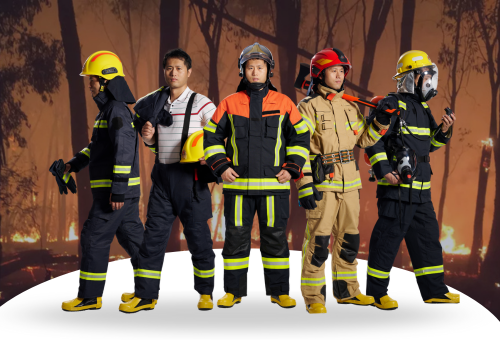
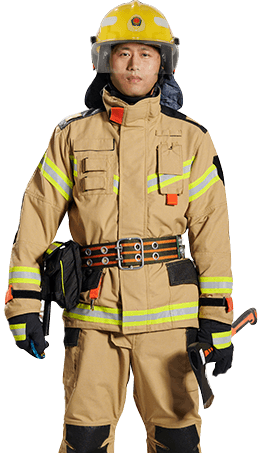
The design of high visibility firefighting suits should balance protection and visibility. The reflective strips should be made of heat-resistant and wear-resistant materials to prevent detachment and failure. The sewing positions should not affect movement and protection. Identification equipment is an important supplement. It is made of durable materials and sewn in prominent positions, facilitating identification for collaborative operations and quick information confirmation, avoiding disconnection during rescue.
Firefighting Clothing Certification Standards and Compliance Requirements
Compliance is the basic threshold for fire protection clothing. Only fire protection clothing that has passed authoritative standard certification can ensure that the protective performance meets the requirements. When purchasing, it is necessary to pay special attention to the international mainstream certification standards to avoid choosing inferior products without certification.The core certification standards for fire protection clothing globally are the EN469 EU standard and the NFPA1971 US standard. The former focuses on fabric flame retardancy, water resistance, etc., while the latter emphasizes heat protection, durability, etc. When purchasing, you can verify the authenticity by checking the label, reviewing the test report, and verifying the certification number. Be vigilant against false certifications, expired certifications, and avoid using non-compliant products.
Best Flame-Retardant Fabrics for Firefighting Clothing
The fabric is the core carrier of the protective performance of fire protection suits. High-quality fire protection suits need to adopt advanced flame-retardant fabric systems, taking into account the factors of flame retardancy, protection, and comfort. The mainstream fabrics are aramid 1313 and 1414, which have excellent flame retardancy, high temperature resistance, high strength, and lightness. They often adopt multi-layer designs. The fabric selection should pay attention to indicators such as the limit oxygen index and damage length. High-performance fabrics like aramid are preferred.High-temperature radiation and heat conduction are the main risks faced by firefighters. The TPP rating is the core indicator for measuring the heat protection performance of fire protection suits. The higher the value, the stronger the protection. Qualified products must meet the rating requirements for corresponding scenarios. High-quality fire protection suits effectively prevent heat penetration through the insulation layer, fabric structure optimization, and seam sealing design, ensuring protection safety in high-temperature environments.
Ergonomic Firefighting Clothing Comfort Flexibility and Operational Efficiency
The fire rescue site environment is complex, and firefighters need to perform high-intensity actions. The ergonomic design and flexibility of the fire suits are of vital importance. High-quality fire suits achieve this through three-dimensional cutting at the shoulders, elbows, knees, adjustable cuffs and trouser cuffs, elastic fabric at the waist and back, and a fitted collar design. They conform to the human movement trajectory, ensuring that actions are not restricted while also balancing protection and operational convenience.Lightweighting is the trend in the development of fire protection suits. Overweight equipment would increase the burden on firefighters and reduce their efficiency. High-quality lightweight fire protection suits, while ensuring the protection level, use lightweight flame-retardant fabrics such as aramid, optimize the multi-layer structure to achieve weight reduction, and at the same time enhance flexibility through flat stitching techniques and joint hinge designs, meeting the requirements of high-intensity rescue and conforming to relevant standards.
Breathable Firefighting Clothing Preventing Heat Stress
Firefighters are prone to heat stress reactions when working in high-temperature and high-humidity environments, which can affect rescue safety. Breathable firefighting suits can balance sweat evaporation, ventilation and protective performance, effectively preventing heat stress. The core indicator of their breathability is the water vapor permeability rate. High-quality products have this indicator of ≥ 5000g/(m²·24h), which can quickly remove sweat and water vapor, avoiding accumulation and keeping the skin dry.The waterproof and breathable layer of firefighting suits mostly adopts PTFE waterproof breathable membranes. With a microporous structure, it realizes sweat evaporation without water infiltration, and blocks external moisture and harmful substances. In addition, to prevent heat stress, the fabric also needs to have heat reflection performance, lightweight design, ventilation openings, and a cooling vest to provide comprehensive protection for firefighters in high-temperature working conditions.
Durable Firefighting Clothing Extending Service Life
Fire protection suits must have excellent durability and wear resistance to extend their service life and reduce procurement costs. High-quality fire protection suits are made with high-strength aramid fabric combined with wear-resistant coatings, which enhance their resistance to tearing and wear. The seams are double-stitched and reinforced with patches, and the elbow and knee areas, which are prone to wear, are reinforced with double-layer fabric to ensure long-term stable protection performance and durability.The wear resistance of fire protection suits must comply with the EN ISO 12947 standard. The number of wear cycles of the outer fabric should be more than 50,000 times, and that of the inner fabric more than 30,000 times. After the test, the retention rate of breaking strength remains above 70% and the flame retardant performance is stable. Although high-quality fire protection suits have a higher initial procurement cost, their service life can reach 3-5 years, which is much longer than that of inferior products. They can also reduce safety accidents and maintenance costs, and in the long run, they offer better cost-effectiveness.
High-Visibility Firefighting Clothing Ensuring Firefighter Safety
At the fire scene, there is much smoke and the light is dim. The visibility of firefighters directly affects their own safety and the efficiency of rescue operations. High visibility firefighting suits enhance the recognition ability in low-light environments through reflective design, reducing the risk of collision and disconnection. The reflective strips must comply with relevant standards and be sewn on prominent positions such as the chest, back, arms, and legs to ensure full-angle visibility and improve recognition in the smoke-filled environment.The design of high visibility firefighting suits should balance protection and visibility. The reflective strips should be made of heat-resistant and wear-resistant materials to prevent detachment and failure. The sewing positions should not affect movement and protection. Identification equipment is an important supplement. It is made of durable materials and sewn in prominent positions, facilitating identification for collaborative operations and quick information confirmation, avoiding disconnection during rescue.
Custom Firefighting Clothing and Modular Design Solutions
The rescue scenarios and body types of different fire-fighting teams vary, and standardized fire-fighting uniforms are difficult to meet all requirements. Customized fire-fighting uniforms and modular design schemes can precisely adapt to the needs of the teams, enhancing the practicality and comfort of the equipment.Customized FireFighting Uniforms
Customized fire-fighting uniforms can provide comprehensive personalized services. They can be customized with specific sizes based on the height, weight, and body type of firefighters to avoid the problem of not fitting with standardized sizes. They can also optimize the design for different rescue scenarios to improve targeted protection. The uniforms can be printed with the team name, badge number, and emblem to enhance team cohesion and meet the needs of different teams.Modular FireFighting Uniforms
Modular fire-fighting uniforms adopt a detachable and combinable design, which can be flexibly adjusted according to different fire scenarios. The basic model meets the needs of routine rescue, while additional layers can be added for high-temperature scenarios, waterproof outer layers for humid environments, and protective pads for demolition rescue. This design can improve the adaptability of the equipment and reduce the cost of repeated purchases.Adaptation of FireFighting Uniforms and Respiratory Equipment
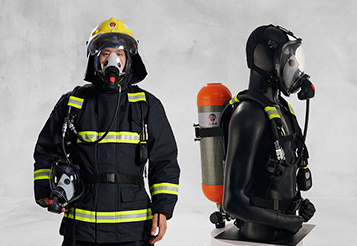
Self-contained breathing apparatus is the core equipment for firefighters. The fire-fighting uniform needs to be seamlessly adapted to it without affecting its use. The collar adopts a widened and adjustable design to accommodate the mask, the back is loose to reserve the position for the air cylinder, the waist is designed with elasticity to fit the belt, ensuring the equipment is firmly fixed. When purchasing, it is necessary to test the adaptability to avoid conflicts in wearing or air leakage problems.
Firefighter Equipment Maintenance and Pollution Control
The maintenance and care of firefighting suits directly affect their protective performance and service life. At the same time, pollutants from the fire scene tend to adhere to the suits. If not thoroughly cleaned, they may pose a threat to the health of firefighters. Scientific maintenance and pollution control are the key to ensuring the long-term stable use of firefighting suits.Firefighter Equipment Decontamination
High-quality firefighting suits should have good anti-pollution and easy-cleaning properties. Fabrics with anti-pollution coatings can reduce the attachment of pollutants, and waterproof breathable layers can prevent toxic and harmful substances from penetrating. The smooth surface of the clothing facilitates the removal of stains, and decontamination should follow the principle of cleaning first and then washing. First, use a brush to remove floating dust stains, then professional washing, to avoid residual pollutants.Water Washable Firefighting Suits
The cleaning of water-washable firefighting suits should follow strict regulations to avoid affecting the flame-retardant performance. Use neutral detergents, prohibit the use of bleach and strong oxidants, the washing temperature should not exceed 60℃, to prevent damage to the fabric due to high temperature. Choose a gentle washing mode to avoid strong stirring that causes fabric wear and the detachment of reflective strips. After washing, let it dry naturally, and prohibit high-temperature drying.Anti-Pollution Firefighting Suits
Anti-pollution firefighting suits are designed with multi-layer protection to protect firefighters from harmful substances. The outer layer fabric prevents the attachment of pollutants, the waterproof breathable layer prevents pollutants from penetrating, and the comfort layer avoids direct contact of the skin with pollutants. After use, it is necessary to decontaminate and disinfect in time. For those contaminated by strong acids, strong alkalis, or toxic chemicals, professional treatment is required. For those that cannot be cleaned, they should be replaced promptly. Regular testing is also necessary to ensure the safety of wearing.Reliable Firefighting Clothing Manufacturers and Quality Control
Choosing a reliable manufacturer of fire protection suits is the core to ensuring the quality of the equipment. A high-quality manufacturer has a complete production system, strict quality control procedures, and professional technical capabilities, which can provide the fire brigade with high-quality and highly reliable fire protection equipment.Evaluating fire suit manufacturers
When evaluating fire suit manufacturers, three points should be considered: first, the production scale to ensure the efficiency of order delivery and product consistency; second, professional strength, with a research and development team and a testing laboratory that can provide technical support; third, industry qualifications, having relevant production licenses and standard certifications to ensure the reliability of the product quality.Fire suit quality and quality consistency
High-quality suppliers need a strict quality control system, strictly controlling from raw material procurement to the production process and to the final product inspection. Large-scale production can ensure consistent equipment quality. Through standardized processes, unified raw materials and batch testing, errors can be reduced, meeting the batch purchasing needs of the fire brigade.Conclusion
When selecting high-quality firefighting gear, focus on five core elements: compliance, protection, comfort, durability, and practicality. Evaluate key characteristics such as certification standards, fabric performance, thermal protection, and ergonomics based on rescue scenario requirements and industry standards. As a specialized manufacturer deeply rooted in the firefighting equipment sector, JIUPEI consistently prioritizes firefighter safety. We develop and produce firefighting suits that meet international standards, delivering both high performance and cost-effectiveness, while offering customized, one-stop equipment solutions. For any inquiries, feel free to contact us anytime to receive professional purchasing advice and technical support.
Request A Quote
Related News
Quick Consultation
We are looking forward to providing you with a very professional service. For any
further information or queries please feel free to contact us.