

Firefighter Gear That Saves Lives Essential Protective Equipment Explained
The scene of fire rescue is fraught with risks. 90% of firefighters' burns can be avoided through qualified protective equipment. Structural fire protection equipment is the basic guarantee for duty and can effectively reduce the casualty rate. Now, let's take a look at the protective principles of these life-saving equipment, as well as what auxiliary equipment there is besides the core equipment and how to choose the equipment.
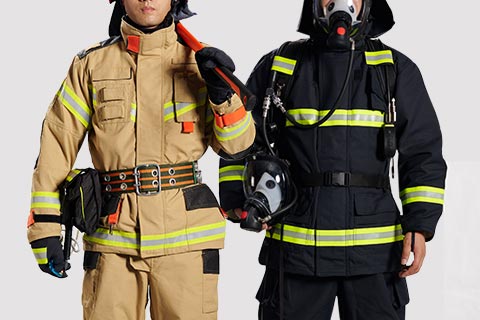
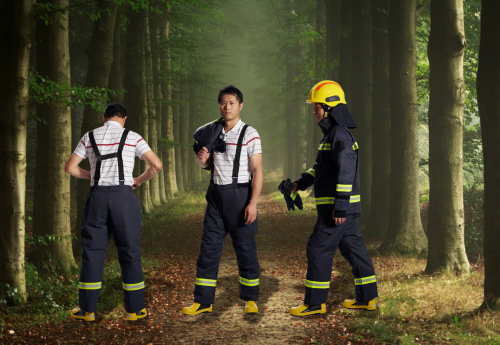
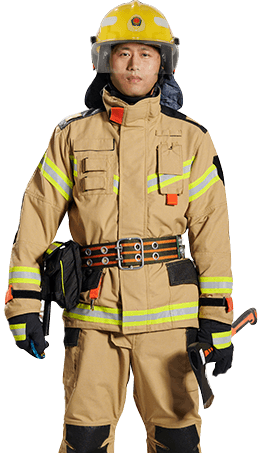
Standard fire clothing consist of four layers: the outer layer, the waterproof and breathable layer, the heat insulation layer, and the comfort layer, each with a clear function. The outer layer resists flame abrasion, the waterproof and breathable layer blocks water and wicks away sweat, the heat insulation layer blocks heat, and the comfort layer enhances flexibility. Details such as cuffs and collars affect the protective effect. Such equipment is not indestructible and its protective performance will decline after long-term use, so it needs to be regularly inspected and replaced.
The air breathing apparatus adopts a self-contained design, not relying on the on-site air, and can provide a clean air source and isolate toxic smoke. The SCBA includes components such as high-pressure gas cylinders, pressure reducing valves, air supply valves, and full face masks, which can convert high-pressure air into low-pressure gas suitable for breathing, ensuring normal breathing in extreme environments. At the same time, its protective performance and practicality should be optimized, and daily maintenance should be done well to ensure the stability and reliability of the equipment.
.png)
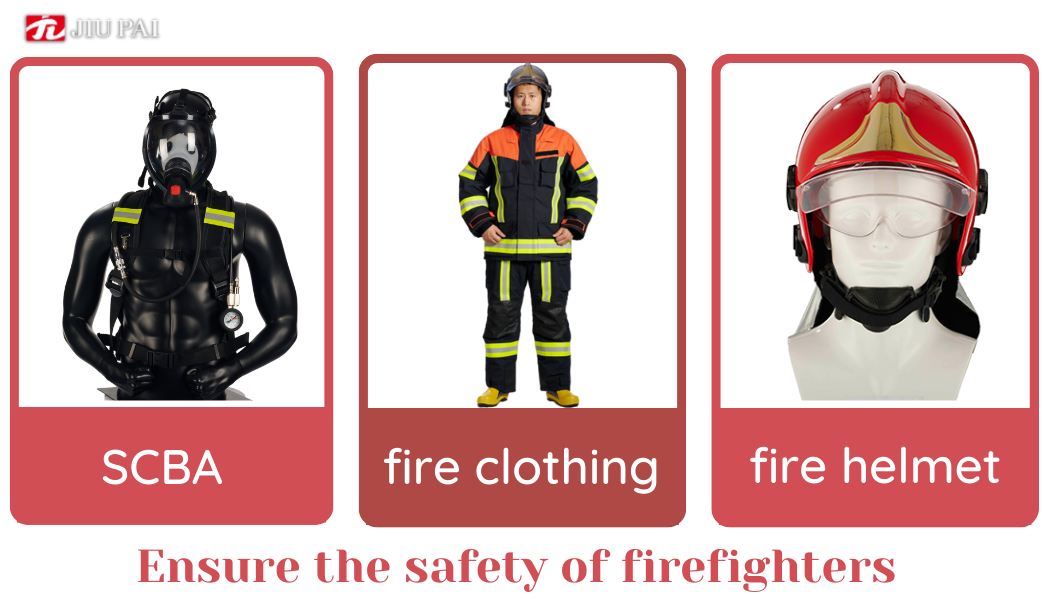
The protective performance of fire helmets comes from scientific design and high-quality materials. The outer shell is made of high-strength flame-retardant materials to withstand impacts, the inner cushioning pad absorbs impact energy to reduce injuries, and the insulation layer blocks high temperatures to prevent burns. Fire helmets also come with practical designs such as anti-fog masks and ear covers to ensure safe vision and hearing. It is necessary to select styles that meet safety standards and are suitable for the scenarios, conduct daily cleaning and inspection, and replace aging or damaged helmets in a timely manner.
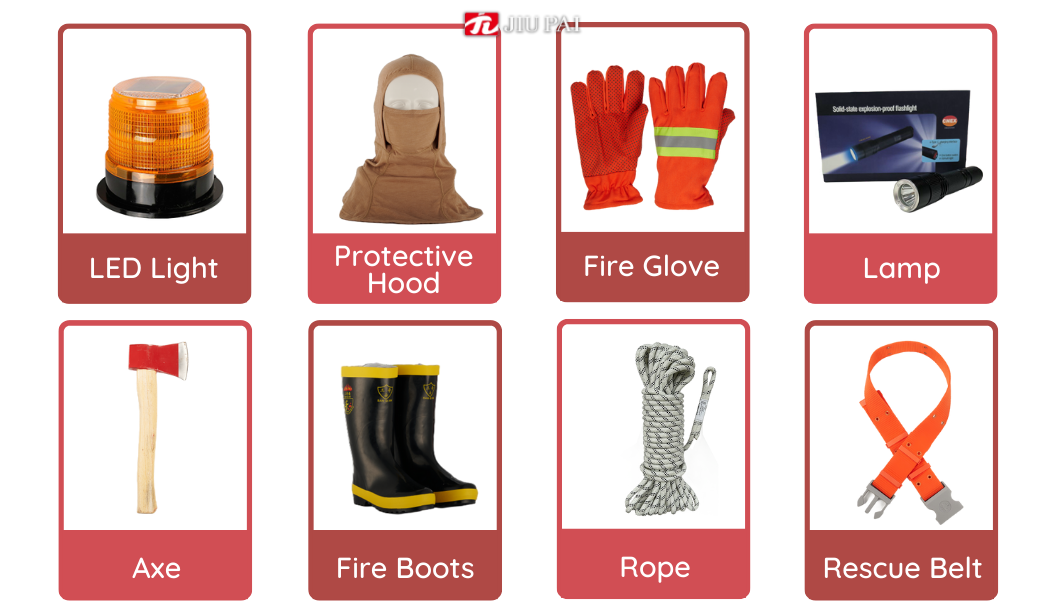
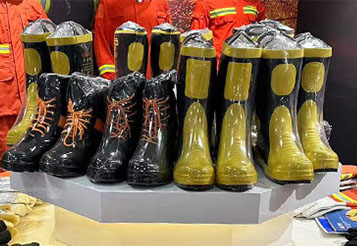
High-quality fire gloves are made of flame-retardant and high-temperature-resistant materials, with an inner lining for insulation. They balance protection and flexibility, enabling firefighters to precisely complete various delicate operations. Fire boots have a flame-retardant and waterproof upper, a non-slip and puncture-resistant sole, a steel toe cap at the toe, and an appropriate height of the upper part, which can protect the feet and ankles and withstand multiple risks without affecting movement.
.png)
High-quality fire-fighting equipment can withstand high temperatures, flames, impacts and other risks, enhance operational flexibility and ensure the smooth progress of rescue operations. Fire departments should attach importance to the selection, use and maintenance of equipment, choose high-quality compatible equipment and replace it regularly. JIUPAI, as a professional manufacturer deeply involved in this field, strictly controls quality and creates equipment that meets national standards and is suitable for various scenarios, providing reliable support for fire departments.
A: The replacement period should not exceed 5 years. If there are any damages or a decrease in flame retardancy, they must be replaced immediately. Professional inspections are required every year to ensure the protection meets the standards.
Q: How long can the air supply of the respirator meet the rescue requirements?
A: The regular endurance is 30 to 60 minutes. It depends on the capacity of the air cylinder and the usage intensity. Before duty, check the air supply and make a reasonable plan.
Q: How should fire helmets be maintained on a daily basis?
A: Clean any stains promptly, inspect the shell, cushioning pad and face shield. Replace them immediately if they are damaged or worn out. Avoid direct sunlight and storing in high temperatures.
Q: How to balance protection and flexibility when choosing fire-resistant gloves?
A: Choose the model with a layered design. The outer layer is flame-retardant and resistant to punctures, the inner layer is soft, the fingertips are wear-resistant and have elasticity, and the try-on fit ensures flexible operation.
How Firefighter Protective Clothing Prevents Burn Injuries
Fire-resistant protective suits are the first line of defense for firefighters in structural fires. Their core function is to insulate against high temperatures and block flames, reducing burn injuries at the source. Many people think that fire-resistant protective suits are not afraid of fire. In fact, their advantages lie in their flame retardancy and heat insulation. High-quality models are made of high-performance materials such as aramid, which do not burn or melt when exposed to fire and can maintain their structural integrity at high temperatures, buying time for rescue operations.Standard fire clothing consist of four layers: the outer layer, the waterproof and breathable layer, the heat insulation layer, and the comfort layer, each with a clear function. The outer layer resists flame abrasion, the waterproof and breathable layer blocks water and wicks away sweat, the heat insulation layer blocks heat, and the comfort layer enhances flexibility. Details such as cuffs and collars affect the protective effect. Such equipment is not indestructible and its protective performance will decline after long-term use, so it needs to be regularly inspected and replaced.
Why Is SCBA Essential for Firefighter Safety
At the scene of a fire, thick smoke and toxic gases are often more lethal than flames. Air breathing apparatus is a core piece of equipment that ensures the breathing safety of firefighters and enables them to complete rescue tasks. It is also an indispensable safety guarantee in structural fire rescue operations. Fires can produce various highly toxic gases and consume oxygen, creating an oxygen-deficient environment. Firefighters who inhale these substances can quickly lose consciousness and their lives are at risk.The air breathing apparatus adopts a self-contained design, not relying on the on-site air, and can provide a clean air source and isolate toxic smoke. The SCBA includes components such as high-pressure gas cylinders, pressure reducing valves, air supply valves, and full face masks, which can convert high-pressure air into low-pressure gas suitable for breathing, ensuring normal breathing in extreme environments. At the same time, its protective performance and practicality should be optimized, and daily maintenance should be done well to ensure the stability and reliability of the equipment.
How Do Firefighter Helmets Protect Against Impact and Heat
Fire helmets are the core protective equipment for firefighters' heads, capable of withstanding impacts from falling debris, blocking high temperatures to prevent head burns, and are essential for structural fire rescue operations. In fire scenes, wall fragments and burning materials frequently fall, and high-temperature air currents continuously invade. High-quality fire helmets can simultaneously address both types of risks, providing a double protective barrier for the head.The protective performance of fire helmets comes from scientific design and high-quality materials. The outer shell is made of high-strength flame-retardant materials to withstand impacts, the inner cushioning pad absorbs impact energy to reduce injuries, and the insulation layer blocks high temperatures to prevent burns. Fire helmets also come with practical designs such as anti-fog masks and ear covers to ensure safe vision and hearing. It is necessary to select styles that meet safety standards and are suitable for the scenarios, conduct daily cleaning and inspection, and replace aging or damaged helmets in a timely manner.
Why Are Firefighter Gloves and Boots So Important
Fire gloves and fire boots are often overlooked but are extremely important protective equipment. Firefighters need to frequently come into contact with burning materials and sharp objects during rescue operations, and their feet also face risks such as high temperatures and heavy objects crushing. Fire gloves and boots can specifically protect against these risks, ensuring the safety of limbs while not affecting operational flexibility. They are essential equipment for duty.High-quality fire gloves are made of flame-retardant and high-temperature-resistant materials, with an inner lining for insulation. They balance protection and flexibility, enabling firefighters to precisely complete various delicate operations. Fire boots have a flame-retardant and waterproof upper, a non-slip and puncture-resistant sole, a steel toe cap at the toe, and an appropriate height of the upper part, which can protect the feet and ankles and withstand multiple risks without affecting movement.
What Safety Equipment Do Firefighters Use Beyond PPE
In addition to the core personal protective equipment, firefighters also need to be equipped with various auxiliary safety gear to further enhance rescue safety, deal with complex scenarios, provide multiple guarantees for the rescue mission, and reduce duty risks.PASS rescue locator
Key auxiliary equipment, its main function is to locate trapped firefighters. When firefighters are in danger and unable to move, it will automatically emit sound and light alarm signals, helping teammates quickly locate for rescue and avoiding secondary risks. The operation is simple, and it can be triggered automatically in an emergency. It has strong reliability.Firefighter headgear
Supplementary protective equipment, it protects areas on the head that are not covered by the helmet and protective suit, such as the neck and behind the ears, to prevent burns from high temperatures and smoke invasion. It is made of lightweight and flame-retardant materials, and after wearing, it does not affect the wearing of the helmet or head movement, improving the integrity of overall protection.Other auxiliary equipment
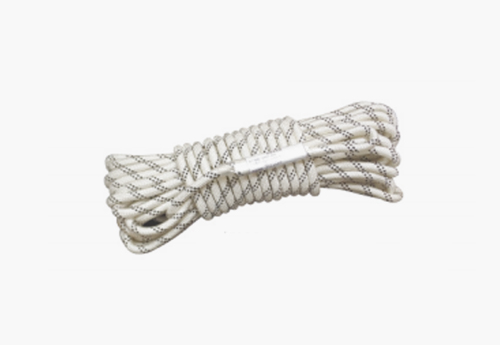
Rescue ropes can be used for high-altitude rescue and personnel transfer. Demolition tools can quickly break through obstacles and open rescue channels. First-aid kits can handle minor wounds on-site and provide initial rescue for firefighters or trapped individuals.
How Should Fire Departments Choose Firefighter Gear
When choosing fire-fighting equipment, the fire department should follow the core principles of prioritizing safety, meeting requirements, and ensuring reliable quality. They should make scientific purchases based on actual situations such as duty scenarios and rescue types, avoiding blind purchasing. This is to ensure that the equipment can play its protective role and safeguard the safety of firefighters.Select standard equipment
Prioritize the selection of equipment that meets national security standards. Core equipment such as fire protection suits, air respirators, fire helmets, and fire gloves must undergo testing by authoritative institutions and reach the prescribed protection levels. This is the foundation for ensuring protection performance and reducing operational risks.Applicable scenario
Based on the rescue scenario, select the type of equipment. For structural fire rescue, priority should be given to equipment that is resistant to high temperatures and shockproof. For outdoor rescue, lightweight and portable models should be given priority. At the same time, considering the differences in the body size of firefighters, select equipment with appropriate sizes to avoid affecting operational flexibility.Durable and easy to maintain
Attach importance to the durability of equipment and maintenance costs. Firefighting equipment is frequently used and wears out quickly. Choosing equipment with strong durability can reduce the frequency of replacement and lower long-term costs. Prioritize selecting styles that are easy to clean and maintain to extend the service life of the equipment and maintain good protective performance.Reputation-based after-sales service
Pay attention to the reputation of equipment and after-sales service. Choose brands with good market reputation and excellent user reviews to reduce procurement risks. A complete after-sales service can ensure that when equipment malfunctions, it can be repaired or replaced in time, avoiding any impact on duty tasks.Conclusion
Firefighting equipment serves as the first line of defense for the safety of firefighters' lives, and is also the core guarantee for enhancing rescue efficiency and reducing operational risks. Fire protection suits, air respirators, fire helmets, gloves, boots, and various auxiliary safety equipment all carry the mission of protecting lives. Their quality and performance directly affect the safety of firefighters during duty.High-quality fire-fighting equipment can withstand high temperatures, flames, impacts and other risks, enhance operational flexibility and ensure the smooth progress of rescue operations. Fire departments should attach importance to the selection, use and maintenance of equipment, choose high-quality compatible equipment and replace it regularly. JIUPAI, as a professional manufacturer deeply involved in this field, strictly controls quality and creates equipment that meets national standards and is suitable for various scenarios, providing reliable support for fire departments.
FAQs
Q: How often should the fire protection suits be replaced?A: The replacement period should not exceed 5 years. If there are any damages or a decrease in flame retardancy, they must be replaced immediately. Professional inspections are required every year to ensure the protection meets the standards.
Q: How long can the air supply of the respirator meet the rescue requirements?
A: The regular endurance is 30 to 60 minutes. It depends on the capacity of the air cylinder and the usage intensity. Before duty, check the air supply and make a reasonable plan.
Q: How should fire helmets be maintained on a daily basis?
A: Clean any stains promptly, inspect the shell, cushioning pad and face shield. Replace them immediately if they are damaged or worn out. Avoid direct sunlight and storing in high temperatures.
Q: How to balance protection and flexibility when choosing fire-resistant gloves?
A: Choose the model with a layered design. The outer layer is flame-retardant and resistant to punctures, the inner layer is soft, the fingertips are wear-resistant and have elasticity, and the try-on fit ensures flexible operation.
Next Article:
Last Article:
Request A Quote
Related News
Quick Consultation
We are looking forward to providing you with a very professional service. For any
further information or queries please feel free to contact us.