
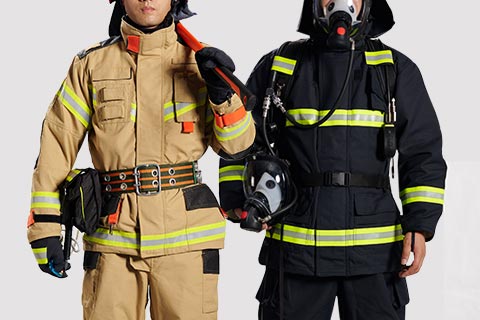

Six SCBA Features Every Fire Department Should Consider
In fire rescue operations, self-contained breathing apparatus (SCBA) is a life-saving equipment for firefighters. A wrong selection may lead to potential safety hazards and affect rescue efficiency. As a professional manufacturer, we understand the concerns of fire departments when choosing the right type - fear of insufficient battery life, discomfort in wearing, and malfunction of safety alerts. This article breaks down the key selection points based on practical needs, helping fire departments accurately choose reliable fire breathing apparatus.
The mainstream 5L, 6L, and 9L gas cylinders are suitable for different rescue scenarios. The selection should be based on the specific scenario and the physical condition of the firefighters, and it is not necessarily the case that the larger the capacity, the better. It is recommended to prioritize the use of high-strength carbon fiber gas cylinders that comply with NFPA standards, taking into account both long-term gas supply and lightweight design, and balancing safety and mobility.
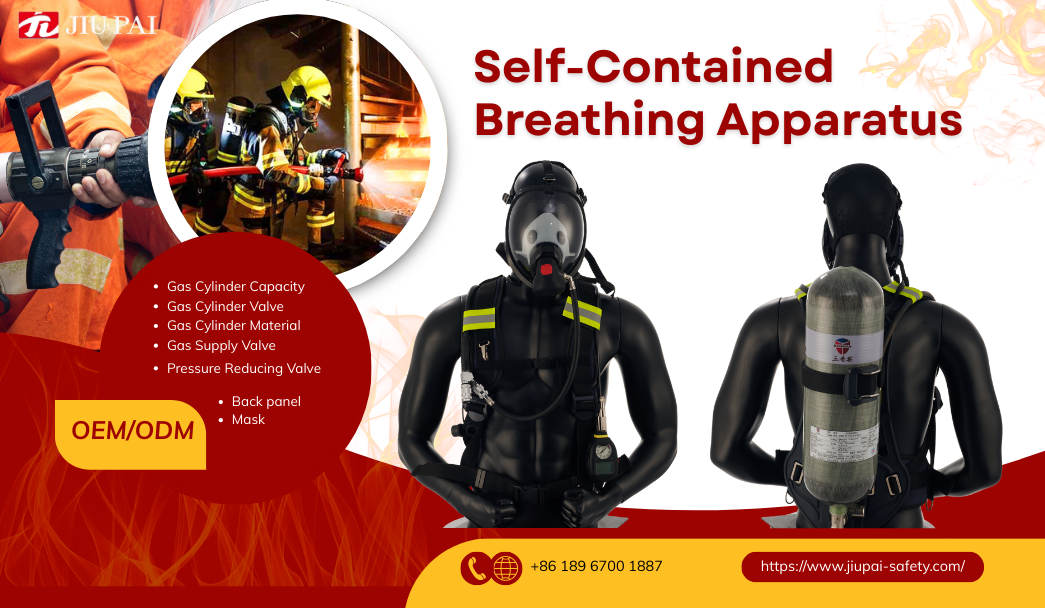
When choosing a mask, priority should be given to food-grade silicone sealing pads and adjustable shoulder straps. It should fit different facial contours, balance both the fit and leak prevention as well as the ease of wearing. The lightweight design can reduce head weight and alleviate fatigue. At the same time, wide-view, high-strength scratch-resistant lenses should be selected, along with anti-fog functions, to ensure clear vision in high-temperature and high-humidity environments and enhance rescue safety.
The selection should be for an integrated alarm system that avoids detachment and damage from external attachments. It must comply with the NFPA 1981 standard and possess characteristics of high-temperature resistance, water resistance, and impact resistance. At the same time, integrated alarm system should have both automatic and manual alarm functions, with sufficient battery life and a low-battery alert to ensure stable operation in harsh environments without failure.
When selecting, priority should be given to respirators made of high-strength lightweight materials. Optimize the structure ratio, reduce redundant components, and control the weight while ensuring the strength of the equipment. At the same time, pay attention to adjustable SCBA straps and ergonomic shoulder straps, which fit the body shape, distribute the weight, are breathable and comfortable, relieve work fatigue, and improve wearing adaptability.
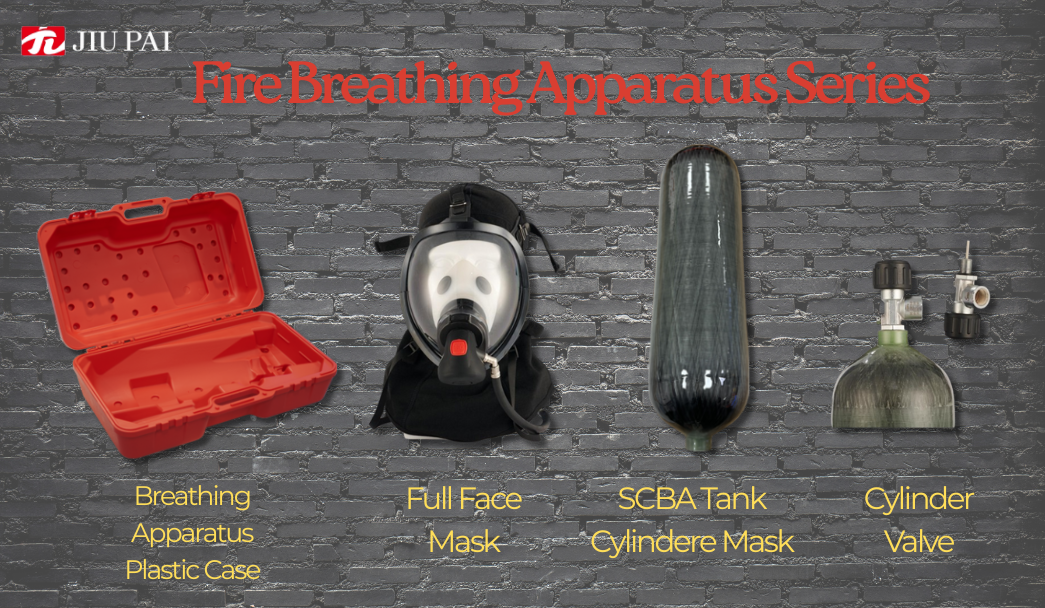
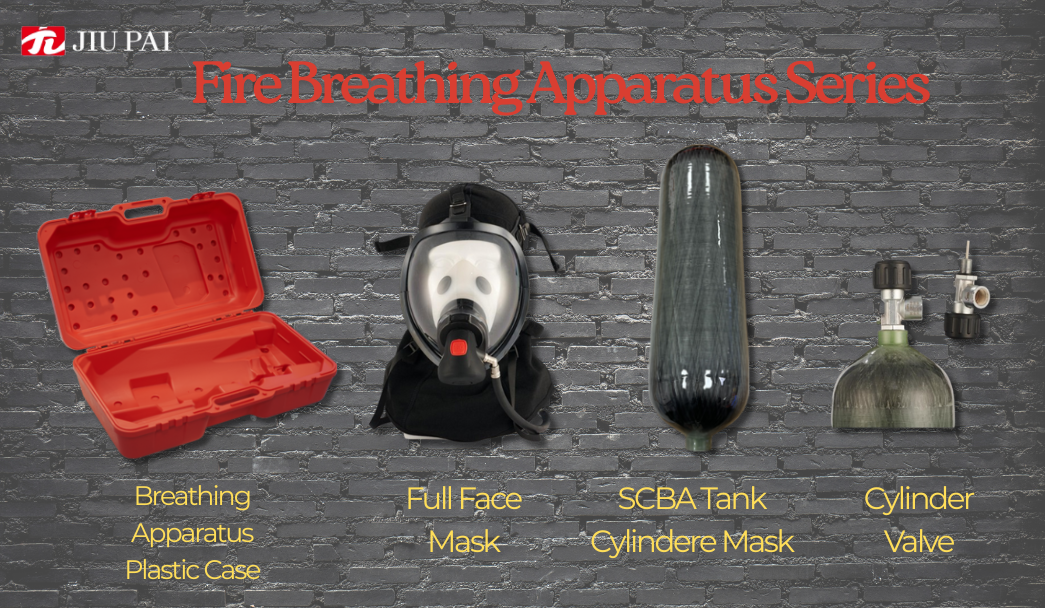
The selection should involve respirators made of high-quality materials that can withstand high temperatures and corrosion, which must comply with NFPA compliant SCBA standards and be certified by authoritative bodies to ensure durability in harsh environments. At the same time, modular design models should be given priority, as they have convenient component disassembly and assembly without the need for specialized tools. Combined with complete accessories and maintenance manuals, it can reduce replacement costs and improve attendance rates.
JIUPAI not only offers customized face masks and back plates, but also supports SCBA color and design customization of head-up display devices, taking into account the wearing adaptability, operational convenience, and visualization requirements. We can tailor the equipment structure based on the size of the fire brigade and their operational characteristics, customizing from core components to functional configurations in all dimensions, to create JIUPAI respirators with stronger adaptability and higher cost-effectiveness, helping to facilitate efficient rescue operations.
JIUPAI, as a professional manufacturer of fire protection equipment, always takes safeguarding the safety of firefighters' lives as its core. It has been deeply engaged in the research and production of breathing apparatuses. JIUPAI fire breathing apparatus are suitable for various rescue scenarios. We provide a full chain of services from customized design, production manufacturing to after-sales maintenance, helping fire departments solve selection problems. If you need to purchase customized equipment, JIUPAI will offer professional solutions and high-quality equipment support.
Air Cylinder Capacity and Duration
At the fire scene, there is a shortage of oxygen. The capacity of the fire breathing apparatus directly affects the safety of the firefighters' endurance during rescue operations. Insufficient capacity can lead to the interruption of rescue efforts and the danger of personnel. Especially in complex scenarios such as high-rise buildings and underground spaces, the demand for long-term gas supply is even more urgent.The mainstream 5L, 6L, and 9L gas cylinders are suitable for different rescue scenarios. The selection should be based on the specific scenario and the physical condition of the firefighters, and it is not necessarily the case that the larger the capacity, the better. It is recommended to prioritize the use of high-strength carbon fiber gas cylinders that comply with NFPA standards, taking into account both long-term gas supply and lightweight design, and balancing safety and mobility.
Facepiece Comfort and Visibility
The respirator mask is the key for firefighters to avoid danger. Poor fit and heaviness can cause facial compression, breathing difficulties, restricted vision, and even lead to missed hazards and impaired decision-making. These are the core concerns during the selection process. The adaptability of the mask directly affects the rescue situation. It is necessary to prioritize comfort and clear vision to avoid slowing down the rescue process due to equipment issues.When choosing a mask, priority should be given to food-grade silicone sealing pads and adjustable shoulder straps. It should fit different facial contours, balance both the fit and leak prevention as well as the ease of wearing. The lightweight design can reduce head weight and alleviate fatigue. At the same time, wide-view, high-strength scratch-resistant lenses should be selected, along with anti-fog functions, to ensure clear vision in high-temperature and high-humidity environments and enhance rescue safety.
Integrated PASS Device
At the fire scene, firefighters may encounter unexpected situations such as getting lost or trapped. The respirator personal alarm system serves as a life-saving signal. As a core safety component, its reliability directly affects the safety of rescue operations. It can automatically monitor the status, issue alerts to assist in positioning, and is a key factor that must be carefully considered during selection, and cannot be compromised in any way.The selection should be for an integrated alarm system that avoids detachment and damage from external attachments. It must comply with the NFPA 1981 standard and possess characteristics of high-temperature resistance, water resistance, and impact resistance. At the same time, integrated alarm system should have both automatic and manual alarm functions, with sufficient battery life and a low-battery alert to ensure stable operation in harsh environments without failure.
Weight and Ergonomics
Firefighters need to carry a variety of equipment during rescue operations. If the respirators are too heavy, it will significantly reduce mobility, prolong response time, increase physical exhaustion, lead to overexertion, and affect rescue efficiency and their own safety. Therefore, lightweight SCBA design and ergonomic SCBA harness compatibility are key factors that the fire department needs to consider when selecting equipment, directly related to the continuous combat capability.When selecting, priority should be given to respirators made of high-strength lightweight materials. Optimize the structure ratio, reduce redundant components, and control the weight while ensuring the strength of the equipment. At the same time, pay attention to adjustable SCBA straps and ergonomic shoulder straps, which fit the body shape, distribute the weight, are breathable and comfortable, relieve work fatigue, and improve wearing adaptability.
Durability and Maintenance
The fire scene environment is extremely harsh, with high temperatures and corrosive substances that can easily damage respirators. As a frequently used rescue equipment, its maintenance is cumbersome, costly, and the attendance rate is low, which are the core concerns of the fire department. Therefore, durable SCBA materials, high-temperature resistant SCBA, and the ease of maintenance, as well as compliance with industry standards of the respirators, are the key factors that must be carefully considered during the selection process.The selection should involve respirators made of high-quality materials that can withstand high temperatures and corrosion, which must comply with NFPA compliant SCBA standards and be certified by authoritative bodies to ensure durability in harsh environments. At the same time, modular design models should be given priority, as they have convenient component disassembly and assembly without the need for specialized tools. Combined with complete accessories and maintenance manuals, it can reduce replacement costs and improve attendance rates.
Customization Options
The rescue scenarios of different fire departments vary greatly, and general respirators are difficult to meet the requirements. Custom SCBA is the key to solving the core pain points. JIUPAI has been deeply engaged in the field of personalized firefighter equipment. It can customize core components such as cylinder capacity, valves, materials, pressure reducing valves, pressure gauges, and supply valves according to individual needs, precisely matching the rescue requirements of different scenarios in cities and towns, demonstrating the brand's strength and equipment adaptability.JIUPAI not only offers customized face masks and back plates, but also supports SCBA color and design customization of head-up display devices, taking into account the wearing adaptability, operational convenience, and visualization requirements. We can tailor the equipment structure based on the size of the fire brigade and their operational characteristics, customizing from core components to functional configurations in all dimensions, to create JIUPAI respirators with stronger adaptability and higher cost-effectiveness, helping to facilitate efficient rescue operations.
Conclusion
Self-contained breathing apparatus is the life barrier for firefighters. The selection directly affects the safety and efficiency of rescue operations. Fire departments should abandon the misconceptions of prioritizing price and brand, and instead, based on their own rescue scenarios and personnel needs, focus on six core aspects: cylinder endurance, mask fit, safety warning, etc. They should precisely select equipment that is highly adaptable and safe and reliable.JIUPAI, as a professional manufacturer of fire protection equipment, always takes safeguarding the safety of firefighters' lives as its core. It has been deeply engaged in the research and production of breathing apparatuses. JIUPAI fire breathing apparatus are suitable for various rescue scenarios. We provide a full chain of services from customized design, production manufacturing to after-sales maintenance, helping fire departments solve selection problems. If you need to purchase customized equipment, JIUPAI will offer professional solutions and high-quality equipment support.
Request A Quote
Related News
Quick Consultation
We are looking forward to providing you with a very professional service. For any
further information or queries please feel free to contact us.