

EN 469 Firefighter Suit Standards, Materials and Protection Guide
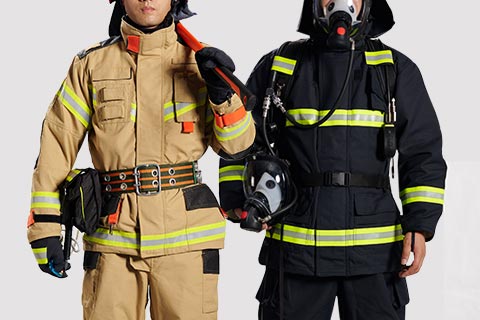
EN 469 is the authoritative European safety standard for firefighter protective clothing and the core specification for global fire protection.This certified protective clothing is specially designed for all kinds of fire fighting and emergency rescue scenarios. It can effectively resist flame, high temperature, moisture wear and slight chemical corrosion. It is an essential protective equipment for fire fighting operations.When purchasing and selecting models, focus on checking EN 469 and CE compliance qualifications, comprehensive protection performance, while taking into account wearing comfort and lightweight, and adapting to various fire operation requirements.
EN 469 certification is the core access qualification for fire protective clothing to enter European and international markets, and is also an authoritative standard for measuring product safety performance, which can help buyers avoid compliance risks and enhance product competitiveness.The certified protective clothing has undergone rigorous extreme working condition simulation test, and its performance parameters meet the standards. It can stably protect in flash fire, high temperature radiation and humid closed fire, effectively reduce the risk of firefighter burn, corrosion and mechanical damage, and greatly improve the safety of field operation.
The fabric has strong environmental adaptability, which can not only directly resist open fire burning and high temperature heat radiation, but also effectively resist mechanical damage such as sharp object scratch, rough surface wear and external force impact in fire scene. Meanwhile, it is resistant to high and low temperature and aging. It is not easy to deform and damage in extreme outdoor and fire environment, so as to ensure the protection stability of the outer layer of protective clothing in the whole process and adapt to various complex and high-risk fire fighting operation scenarios.
In high-risk chemical and steam-intensive fire, the barrier layer can effectively block acid, alkali, oil and corrosive liquid splash to avoid corrosion damage caused by chemical substances contacting skin.At the same time, it can prevent high-temperature water vapor from entering the interior of clothing for condensation, avoid the risk of steam burn from the root, solve the industrial pain points of traditional protective clothing that are humid, sultry and easy to burn, and greatly improve the protection safety of extreme humid fire.
The core advantage of this structure is the precise balance of protective performance and equipment weight.Traditional heavy insulation fabric has strong protection but poor mobility, while EN 469 compliant insulation layer adopts lightweight fluffy structure, which greatly reduces the overall weight of clothing on the premise of ensuring high standard insulation effect, avoids heavy equipment increasing the workload of firefighters, not only builds up high temperature protection defense line, but also ensures rescue mobility and operation efficiency.
The inner layer fabric has excellent moisture absorption, moisture transmission and quick-drying performance, which can quickly absorb sweat on the skin surface and conduct it to the outer layer for discharge, keep the skin dry and not sticky, avoid sweat accumulation and breeding sultry, peculiar smell, reduce skin allergy, eczema and other problems.At the same time, the friction coefficient of the fabric is low, which can reduce the friction between clothes and skin, reduce the fatigue of operation and improve the flexibility of movement in the large-scale movements of firefighters such as running, climbing and bending.
The heat transfer test accurately detects the heat insulation efficiency and heat transfer rate of protective clothing by simulating the continuous heat radiation and heat convection environment of fire scene, verifies the protective effect under high temperature exposure for different periods of time, and distinguishes Level 1 and Level 2 protection levels.Waterproof and breathable test Through high hydrostatic pressure test, air permeability test and wet and hot environment simulation test, the waterproof and breathable performance of the fabric is verified to ensure the adaptability of wet conditions.
Mechanical strength test includes tear strength, wear resistance, joint tensile strength, bending resistance test and other tests to simulate long-term high-intensity operation, repeated wear and complex scratch conditions to ensure stable mechanical performance of equipment, long-term use is not easy to be damaged, opened and deformed, and long-term protection is guaranteed.
For export enterprises, foreign trade buyers and overseas fire protection projects, CE certification is a mandatory access condition for entering the EU and European Economic Area markets. Fire protection equipment without CE marks cannot be circulated, sold and used in the European market.CE certification is also the core basis for global customers to verify product quality, and is the key qualification for products to integrate into the international market and enhance core competitiveness.
The core premise of obtaining CE certification is that the whole process of product compliance, from raw material procurement, production and processing to finished product testing, each link must comply with the EU fire protection equipment safety specifications, eliminate unqualified raw materials, non-standard production process, and ensure that the protective performance and safety parameters of each ex-factory product are up to standard.
During the production process, the whole process control shall be implemented, and the key processes such as cutting, sewing, bonding, reinforcement and reflective strip bonding shall be standardized and controlled. EN469 process standard shall be strictly implemented to eliminate process problems such as jumper, glue opening, weak bonding and size deviation, so as to ensure the uniform process and stable quality of each product.
100% full inspection shall be completed before the finished product leaves the factory, including appearance inspection, protection performance sampling inspection, mechanical performance retest, ventilation and waterproof test, etc. All parameters can be labeled before leaving the factory, and complete inspection report and compliance documents shall be kept at the same time to ensure traceability and verification of the product and comprehensively guarantee the safety of terminal use.
NFPA 1971 has higher requirements for thermal protection threshold and stronger overall protection strength, but the equipment weight is larger and the air permeability is relatively weak, which is more suitable for North American high-risk extreme fire operations.In terms of selection, it is necessary to adapt according to regional procurement requirements, and EN 469 certified products are preferred for mainstream international projects such as European markets, Middle East and Southeast Asia.Projects in North America are compliant with NFPA 1971 standards and accurately match regional compliance requirements.
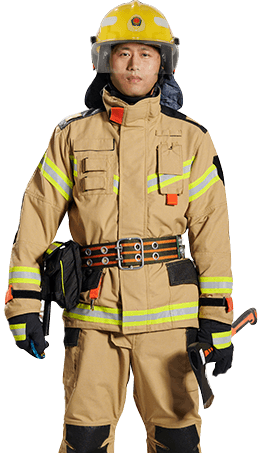
EN 469 certified protective clothing belongs to professional fire protection equipment, the protection level is far higher than ordinary flame retardant clothing, it can resist multiple high-risk risks in fire field in an all-round way, and adapt to high-intensity professional scenarios such as structural fire fighting, chemical rescue and emergency rescue.In short, ordinary flame retardant clothing is daily labor protection, EN 469 protective clothing is fire safety protection, the two application scenarios, safety thresholds, compliance standards are completely different, can not be replaced.
The company has established a standardized and large-scale production system, strictly implementing international safety standards in the whole process from raw material screening, fabric compounding, process processing to finished product testing. All products meet the core performance standards such as flame retardant, heat insulation, waterproof, air permeability and mechanical strength, which can fully adapt to various high-risk scenarios such as municipal fire protection, industrial fire protection, oil and gas chemical industry, emergency rescue, etc., providing high-quality compliance protection solutions for global fire protection practitioners.
Whether it is bulk procurement by fire departments, customization by foreign trade dealers, exclusive supporting for engineering projects, or research and development of special protective equipment for special working conditions, our company can quickly respond to the needs, providing one-stop services from scheme design, sample sampling, batch production to after-sales warranty. With high cost performance, high quality and high adaptability, EN 469 fire protective clothing helps the global fire protection industry to upgrade safety.
What Is EN 469 Firefighter Suit?
EN 469:2020 is a professional fire protection clothing standard issued by the European Standardization Committee, which is applicable to various fire fighting and rescue scenarios such as municipal, industrial, oil and gas chemical, and is divided into two protection levels: Level 1 and Level 2.It is completely different from ordinary industrial flame retardant clothing. Ordinary flame retardant clothing is only suitable for daily basic protection and cannot cope with extreme fire. EN 469 protective clothing adopts multi-layer composite structure, which can resist flame, high temperature, steam, chemical splash and mechanical wear. It is compliance equipment for professional fire operation.EN 469 certification is the core access qualification for fire protective clothing to enter European and international markets, and is also an authoritative standard for measuring product safety performance, which can help buyers avoid compliance risks and enhance product competitiveness.The certified protective clothing has undergone rigorous extreme working condition simulation test, and its performance parameters meet the standards. It can stably protect in flash fire, high temperature radiation and humid closed fire, effectively reduce the risk of firefighter burn, corrosion and mechanical damage, and greatly improve the safety of field operation.
EN 469 Firefighter Suit Protection Requirements
Heat and flame protection
Flame protection is the basic core performance of EN 469 protective clothing. The compliant fabric has permanent flame retardant characteristics, which can be quickly extinguished in case of fire without melting and dripping, which can effectively avoid secondary burns.The standard distinguishes two levels of protection. Level 1 is suitable for mild flash fire scenes in ordinary building fires, while Level 2 can withstand short-term thermal radiation of about 1000℃, adapt to high-risk and high-temperature fires such as oil and gas, chemical industry and factory buildings, and resist high-intensity open fire and thermal shock.Thermal protection performance
The thermal insulation performance directly determines the fire protection ability of EN 469 protective clothing. The product relies on multi-layer composite thermal insulation structure to effectively block the heat radiation and heat conduction in the fire field and slow down the body surface heating rate.The standard strictly controls the heat transfer value, which can control the skin heating within a safe range during long-term high temperature operation, greatly reduce the risk of deep and deep thermal burns, reduce the feeling of stifling discomfort of firefighters, and effectively prolong the on-site rescue operation time.Water and moisture protection
EN 469 standard has strict requirements on waterproof and moisture-proof performance of protective clothing. Qualified products can resist high-pressure water flow, ponding immersion and chemical liquid penetration in fire, so as to avoid high temperature scald and corrosion damage caused by water seepage.At the same time, the fabric adopts a multi-layer breathable structure to realize the effect of single moisture conduction, quickly discharge human sweat and internal moisture, eliminate the problem of steam burn, solve the defect of waterproof and stuffy sweat of traditional protective clothing, and ensure dry and comfortable wearing.Mechanical durability
EN 469 protective clothing has excellent mechanical durability, the outer layer uses high-strength flame retardant fibers, excellent tear resistance, can cope with sharp building materials, metal scratches and extrusion pull.After tens of thousands of wear tests, the surface layer is not easy to wear and pilling, the key joints and stressed parts are reinforced and sewn, not easy to crack, suitable for high-frequency and high-intensity fire fighting operations, long-term protection integrity, effectively extend the service life of equipment.EN 469 Firefighter Suit Materials and Layers
Outer layer
EN 469 protective clothing outer layer is the core protective layer, the main high-strength flame retardant, wear resistance, tear resistance, is the first barrier to external open fire, high temperature, mechanical damage.The outer layer fabric rejects ordinary flame retardant fabrics, all using high-performance aramid fiber as the main material, the mainstream ratio is Nomex, Kevlar composite fiber, with special flame retardant setting process, to achieve permanent flame retardant effect, will not be washed, wear, aging loss of protective performance.The fabric has strong environmental adaptability, which can not only directly resist open fire burning and high temperature heat radiation, but also effectively resist mechanical damage such as sharp object scratch, rough surface wear and external force impact in fire scene. Meanwhile, it is resistant to high and low temperature and aging. It is not easy to deform and damage in extreme outdoor and fire environment, so as to ensure the protection stability of the outer layer of protective clothing in the whole process and adapt to various complex and high-risk fire fighting operation scenarios.
Moisture barrier
Waterproof breathable barrier layer is the core functional layer of EN 469 protective clothing. It is made of aramid substrate composite flame retardant ePTFE breathable film material, which is the key structure to balance waterproof, breathable and corrosion resistance.The film material has a special pore structure, which can realize one-way circulation of water vapor, which not only blocks the penetration of external liquid water, high-pressure water flow and chemical harmful liquid, but also discharges internal sweat moisture.In high-risk chemical and steam-intensive fire, the barrier layer can effectively block acid, alkali, oil and corrosive liquid splash to avoid corrosion damage caused by chemical substances contacting skin.At the same time, it can prevent high-temperature water vapor from entering the interior of clothing for condensation, avoid the risk of steam burn from the root, solve the industrial pain points of traditional protective clothing that are humid, sultry and easy to burn, and greatly improve the protection safety of extreme humid fire.
Thermal barrier
The thermal insulation layer is made of superfine flame-retardant thermal insulation fiber material, which forms a three-dimensional thermal insulation cavity through fluffy weaving technology, which can block heat conduction, heat convection and heat radiation to the greatest extent and greatly reduce the transmission rate of external high temperature to human body.The material has passed EN 469 standard special heat insulation test, stable heat insulation performance, no rapid failure in continuous high temperature environment, suitable for long-term fire fighting and rescue operations.The core advantage of this structure is the precise balance of protective performance and equipment weight.Traditional heavy insulation fabric has strong protection but poor mobility, while EN 469 compliant insulation layer adopts lightweight fluffy structure, which greatly reduces the overall weight of clothing on the premise of ensuring high standard insulation effect, avoids heavy equipment increasing the workload of firefighters, not only builds up high temperature protection defense line, but also ensures rescue mobility and operation efficiency.
Inner layer
The inner layer of protective clothing is a skin-friendly comfort layer. It adopts soft and skin-friendly flame retardant knitted fabric, which is delicate to the touch, has no hard edge and no irritation. It fits human skin, completely solves the problem of roughness and abrasion of the inner layer of traditional fire fighting clothing, greatly improves the comfort of long-term wearing, and is suitable for several hours of continuous rescue operation.The inner layer fabric has excellent moisture absorption, moisture transmission and quick-drying performance, which can quickly absorb sweat on the skin surface and conduct it to the outer layer for discharge, keep the skin dry and not sticky, avoid sweat accumulation and breeding sultry, peculiar smell, reduce skin allergy, eczema and other problems.At the same time, the friction coefficient of the fabric is low, which can reduce the friction between clothes and skin, reduce the fatigue of operation and improve the flexibility of movement in the large-scale movements of firefighters such as running, climbing and bending.
EN 469 Testing and CE Certification
En 469 performance tests
All EN 469 protective clothing must pass a full set of standardized performance tests before being marketed, among which flame retardant performance test is the core test item. Through open flame continuous ignition and flash impact simulation test, the fabric self-extinguishing speed, melting dripping situation and flame retardant durability shall be tested to ensure compliance with standard flame retardant threshold value and eliminate combustion risk.The heat transfer test accurately detects the heat insulation efficiency and heat transfer rate of protective clothing by simulating the continuous heat radiation and heat convection environment of fire scene, verifies the protective effect under high temperature exposure for different periods of time, and distinguishes Level 1 and Level 2 protection levels.Waterproof and breathable test Through high hydrostatic pressure test, air permeability test and wet and hot environment simulation test, the waterproof and breathable performance of the fabric is verified to ensure the adaptability of wet conditions.
Mechanical strength test includes tear strength, wear resistance, joint tensile strength, bending resistance test and other tests to simulate long-term high-intensity operation, repeated wear and complex scratch conditions to ensure stable mechanical performance of equipment, long-term use is not easy to be damaged, opened and deformed, and long-term protection is guaranteed.
Ce certification requirements
CE mark is EN 469 fire protection clothing in line with the EU safety standards of the legal mark, but also product compliance, safety authority proof.Protective clothing with CE mark means that it fully meets all performance requirements of EN 469:2020 standard, and has passed the inspection and certification of EU authorities. The production process, material quality and protective performance all meet international safety standards.For export enterprises, foreign trade buyers and overseas fire protection projects, CE certification is a mandatory access condition for entering the EU and European Economic Area markets. Fire protection equipment without CE marks cannot be circulated, sold and used in the European market.CE certification is also the core basis for global customers to verify product quality, and is the key qualification for products to integrate into the international market and enhance core competitiveness.
The core premise of obtaining CE certification is that the whole process of product compliance, from raw material procurement, production and processing to finished product testing, each link must comply with the EU fire protection equipment safety specifications, eliminate unqualified raw materials, non-standard production process, and ensure that the protective performance and safety parameters of each ex-factory product are up to standard.
Certified firefighter suit quality control
Formal EN 469 certified protective clothing manufacturers will establish a full-process quality control system.Before raw materials are put into storage, core materials such as aramid fabric, waterproof breathable film, heat insulation layer and auxiliary materials shall be sampled and tested to verify basic properties such as flame retardant, heat insulation, waterproof and wear resistance of materials, so as to prevent inferior raw materials from being put into production and control product quality from the source.During the production process, the whole process control shall be implemented, and the key processes such as cutting, sewing, bonding, reinforcement and reflective strip bonding shall be standardized and controlled. EN469 process standard shall be strictly implemented to eliminate process problems such as jumper, glue opening, weak bonding and size deviation, so as to ensure the uniform process and stable quality of each product.
100% full inspection shall be completed before the finished product leaves the factory, including appearance inspection, protection performance sampling inspection, mechanical performance retest, ventilation and waterproof test, etc. All parameters can be labeled before leaving the factory, and complete inspection report and compliance documents shall be kept at the same time to ensure traceability and verification of the product and comprehensively guarantee the safety of terminal use.
EN 469 vs Other Firefighter Protective Clothing
En 469 vs NFPA 1971
EN 469 is the authoritative standard of European fire protection clothing, NFPA 1971 is the core standard of American fire protection equipment, both belong to the two mainstream systems in Europe and America, the core protection objectives are the same, but there are slight differences in testing standards, performance parameters and applicable scenarios.EN 469 focuses more on the overall protection balance, taking into account flame retardancy, heat insulation, breathability, waterproofing and mechanical properties. It has outstanding advantages in lightweight and is suitable for conventional and industrial fire protection scenarios in Europe and most regions around the world.NFPA 1971 has higher requirements for thermal protection threshold and stronger overall protection strength, but the equipment weight is larger and the air permeability is relatively weak, which is more suitable for North American high-risk extreme fire operations.In terms of selection, it is necessary to adapt according to regional procurement requirements, and EN 469 certified products are preferred for mainstream international projects such as European markets, Middle East and Southeast Asia.Projects in North America are compliant with NFPA 1971 standards and accurately match regional compliance requirements.
En 469 vs flame resistant clothing
The core difference between EN 469 protective clothing and ordinary flame retardant tooling is that the protection level is completely different.Ordinary flame retardant clothing only has basic fire prevention and scalding prevention functions, no professional heat insulation, waterproof, steam prevention, high strength wear resistance, low protection level, only suitable for ordinary industrial fire prevention and daily labor protection scenarios, unable to cope with extreme risks of professional fire.EN 469 certified protective clothing belongs to professional fire protection equipment, the protection level is far higher than ordinary flame retardant clothing, it can resist multiple high-risk risks in fire field in an all-round way, and adapt to high-intensity professional scenarios such as structural fire fighting, chemical rescue and emergency rescue.In short, ordinary flame retardant clothing is daily labor protection, EN 469 protective clothing is fire safety protection, the two application scenarios, safety thresholds, compliance standards are completely different, can not be replaced.
Certified EN 469 Firefighter Suit Manufacturer
En 469 and CE certified solutions
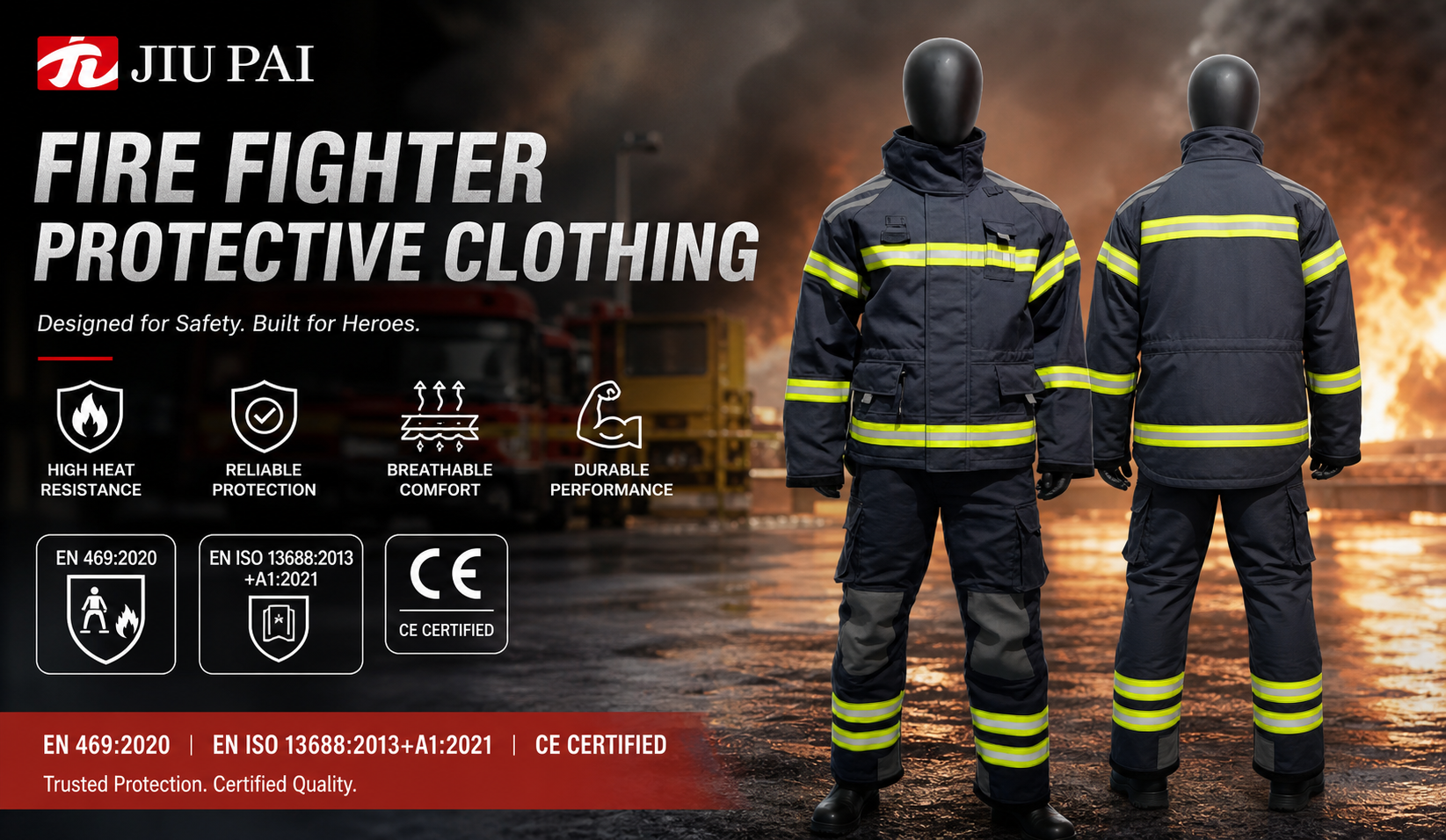
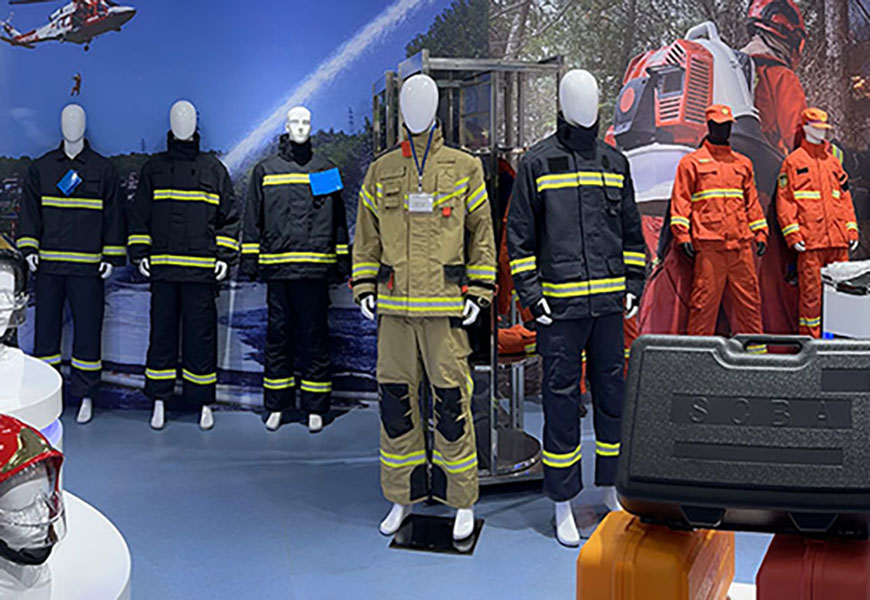
As a professional manufacturer of large-scale fire protection equipment, JIUPAI has been deeply engaged in the R & D, production and sales of EN 469 firefighter protective clothing for many years. The whole line of products strictly comply with the latest standards of EN 469:2020, pass the inspection of third-party authoritative organizations, hold formal EN 469 certification and CE certification qualification, fully meet the European and global international market access requirements, and lead the industry in compliance, safety and stability.The company has established a standardized and large-scale production system, strictly implementing international safety standards in the whole process from raw material screening, fabric compounding, process processing to finished product testing. All products meet the core performance standards such as flame retardant, heat insulation, waterproof, air permeability and mechanical strength, which can fully adapt to various high-risk scenarios such as municipal fire protection, industrial fire protection, oil and gas chemical industry, emergency rescue, etc., providing high-quality compliance protection solutions for global fire protection practitioners.
Custom firefighter ppe solutions
JIUPAI Safety can provide a full range of OEM/ODM customized fire PPE solutions, supporting personalized customized services.According to customer needs, we can customize clothing version, size specification, appearance color matching, reflective logo, logo printing, exclusive logo and other appearance designs. At the same time, we can strengthen special performance such as heat insulation, corrosion prevention and wear resistance for special operation scenarios, and adapt to the differentiated protection needs of different regions and industries.Whether it is bulk procurement by fire departments, customization by foreign trade dealers, exclusive supporting for engineering projects, or research and development of special protective equipment for special working conditions, our company can quickly respond to the needs, providing one-stop services from scheme design, sample sampling, batch production to after-sales warranty. With high cost performance, high quality and high adaptability, EN 469 fire protective clothing helps the global fire protection industry to upgrade safety.
Conclusion
EN 469 defines a comprehensive safety and performance benchmark for professional firefighter protective clothing, covering fabric materials, multi-layer protective construction, wear durability and compliance testing requirements.EN 469 and CE certified fire fighting suits can stably cope with all kinds of fire and rescue scenarios, ensuring the safety of firefighters in all aspects.Accurate selection of standardized, high-quality protective equipment is an important foundation for the standardized construction and safe operation of fire brigades.
Request A Quote
Related News
Quick Consultation
We are looking forward to providing you with a very professional service. For any
further information or queries please feel free to contact us.