

How to Approve Firefighter PPE Samples Before Bulk Production
The personal protective equipment of firefighters directly determines the life safety of front-line firefighters in fire scenes and emergency rescue scenes.For fire departments, equipment buyers, general contractors and foreign trade buyers, the confirmation of firefighter PPE samples before the production of large-scale goods is the core level for guarding the bottom line of equipment safety and avoiding major losses in orders.In the later stages of many procurement projects, problems such as fabric flame retardant failure, size deviation, cracked sutures, and mismatched certification occur. The root cause lies in the lack of the firefighter's PPE sample review process and incomplete inspection dimensions.Relying on the idea of standardized sample acceptance, we will do a good job in sample value evaluation, physical verification, category inspection, data archiving, and quality control of large-scale goods, which can standardize sample approval and ensure the stable performance of firefighter PPE equipment delivered in bulk and continue to meet project safety requirements.
Why PPE Sample Approval Matters Before Bulk Production
Large PPE is a high-risk safety protection product. Once the production of large-scale goods is completed, it is found that the protection performance is not up to standard, which will bring huge material losses and long delivery delays. More seriously, the use of unqualified firefighter PPE will directly threaten the lives of firefighters.Sample confirmation is not a simple check of appearance, but the technical requirements in the procurement agreement are implemented as physical verification, and the safety, work, and specification benchmarks of firefighter PPE products are locked in advance.Reduce quality risk
It is difficult to fully restore the physical characteristics of PPE fabric composite, sewing technology and heat resistance of accessories in the paper specification.Large-scale PPE sample inspection can investigate protective defects such as flame retardant, plastic, waterproof, and puncture-proof in advance, so as to avoid mass production of personal protective equipment for firefighters with substandard protection.The written parameters only represent the theoretical properties, and the performance of the material under real working conditions such as high temperature, humidity, friction, etc. cannot be predicted by the documents alone.Prenatal sample testing can detect hidden dangers such as fabric layering and weak protective layers in advance, prevent the actual failure of finished products, and avoid major risks that threaten the life and safety of firefighters from the source.Confirm product specifications
Whether the sample is standard ppe.Buyers can check the weight of firefighting clothing fabrics, multi-layer composite structure, reflective tape specifications, accessory models and size tolerances one by one against the technical list, so as to avoid factory understanding deviations and eliminate two sets of standards for drawings and physical objects.Foreign trade and government procurement projects are prone to text ambiguity, and factories may simplify the structure of firefighting suits or replace accessories.The sealing sample converts the text standard into a measurable physical benchmark, locks the material arrangement, the location of the reflective tape, and the model of the accessories, and subsequent production inspections are based on this standard to eliminate poor information and reduce disputes and rework during the delivery phase.Avoid rework and delays
Skip the approval of firefighter PPE samples and put them into production directly. Later rectification requires the re-procurement of aramid flame-retardant fabrics and the re-opening of mold accessories, which will generate high costs and lengthen the delivery time, delaying the renewal of firefighter PPE equipment in the fire brigade.The procurement cycle of special fabrics used in large PPE is long, and the mold opening of customized accessories is time-consuming. Unqualified large-scale goods will cause the raw materials to be scrapped and the whole batch to be reworked.There is a strict delivery window for foreign-related orders, and delays will trigger fines for breach of contract and damage the reputation of suppliers.Implement complete prenatal sample approval, lock in all technical details in advance, reduce production stage changes, and ensure that the project is delivered on time.What Should Buyers Check Before Approving PPE Samples?
After the purchaser gets the prenatal sample, it can't just take a rough look at the appearance. It needs to establish a standardized inspection list, covering the five dimensions of materials, work, wear experience, accessories, and compliance certification, and comprehensively verify the complete set of personal protective equipment for firefighters.Material and fabric properties
Large PPE fabrics are the core of protection, and the quality of firefighting clothing fabrics directly determines the upper limit of the protection of the entire set of firefighter PPE.Focus on verifying the composition of the fabric, distinguishing between permanent flame-retardant aramid fabrics and finishing flame-retardant fabrics with flame-retardant attenuation after washing, and detecting gram weight, tear strength, heat insulation and waterproof properties.Check the composite quality of the thermal insulation layer and waterproof film of the firefighting clothing, confirm that there is no layered foaming, and cross-check the test report of the third-party laboratory to ensure that the materials sent for inspection are consistent with the batch of prenatal samples.Eliminate the use of old clothes and the theft of fabrics, and ensure that firefighting suits still maintain stable protection capabilities after multiple washes.Construction and stitching
The fracture of the suture at the high temperature of the fire site will directly destroy the protective structure of the firefighting clothing, causing the entire set of firefighter PPE to pass through.The inspection needs to confirm the density of the needle pitch, use high-temperature and flame-retardant sewing thread, the seams are flat without needle skipping and disconnection, and the shoulders, crotch and other force positions are reinforced.At the same time, verify the bonding process of the reflective tape to ensure that it will not fall off and crack at high temperatures, and the seams of pockets, velcro, and zippers must be evaluated for force.Ordinary polyester thread will melt and tear the firefighting clothing in case of high temperature, and the falling off of the reflective tape at high temperature will reduce the visibility of the fire site, comprehensively investigate process defects, and ensure the structural integrity of the firefighting clothing under complex rescue conditions.Fit, comfort and size
The fit of equipment affects the actions of firefighters, and the adaptability of firefighting suits, firefighting helmets, and firefighting gloves needs to be tested by real people.Try on a complete set of firefighter PPE to simulate rescue actions such as raising hands, squatting, and crawling, check whether the fabric is tight and pulling, measure the size, and control the size tolerance.At the same time, evaluate the weight and breathable performance of the equipment, and wear it for a long time to avoid sultry heat and fatigue.If the equipment is too tight, it will restrict body movements, and if it is loose, it is easy to hook obstacles and destroy the protective fit.Arrange tests for people of different body types to ensure uniform size in mass production, taking into account protective performance and operational flexibility.Accessories and brands
Itemized inspection of a full set of firefighter PPE accessories, flame-retardant zippers, velcro, adjustment buckles, reflective signs and other accessories must be high temperature resistant, and the high temperature environment will not deform and melt.Customized orders check the embroidery location and Pantone color number of the logo, and the product label is fully marked with the manufacturer, specification, and certification number.Non-PPE plastic parts will cause secondary burns when melted at high temperature, and the label assumes the role of traceability to facilitate later maintenance and inspection.Signs and logos need to be sealed for confirmation, and the color difference value and firmness are verified to prevent appearance compliance issues such as color difference, pattern offset, and printing shedding from large goods.Safety standards and certifications
Check that firefighter PPE has special testing requirements for NFPA, ISO, XF and other domestic and foreign standards, firefighting suits, firefighting helmets, firefighting gloves, and breathing equipment.Check the certificate and the type test report, confirm that the model, fabric, structure and sample of the certificate match and are within the validity period, and be wary of applying other model certificates.There are differences in different market access regulations, and export order certificates must match the target market.High-risk projects can entrust a third party to retest the flame retardant and thermal protection indicators to avoid the invalidation of the certificate during customs clearance and acceptance, and to ensure that firefighter PPE meets the hard requirements of bidding and market access.How to Approve PPE Samples Step by Step
Standardize the PPE sample approval process to facilitate the internal circulation of the procurement team, and at the same time give the manufacturer a clear execution node, and keep written records of each step.Step 1-Confirm the specifications
The first step is to align the technical specifications of the firefighter's PPE. The purchaser and the manufacturer confirm all the parameters of the firefighting clothing fabric, structure, accessories, size, certification, etc., and verbally agree to write them all into the document as the benchmark for the inspection of the firefighter's PPE samples.Many projects rely on verbal communication, causing differences in understanding between the two sides, and samples are repeatedly proofing.At this stage, the BOM list, drawings, and performance indicators are locked, the vague descriptions are deleted, and the two parties are archived.This finalized specification is the only basis for sample inspection, defect determination, and acceptance of large-scale goods. Any adjustments must be submitted in writing and oral promises are not accepted.Step 2-Check the quality of the sample
Use the special inspection list for firefighter PPE to complete the physical process inspection, visually combine the actual measurement with tools, record the color difference, suture defects, and dimensional deviations, take pictures and archive, divide the fatal, major, and minor defects, and issue a firefighter PPE sample inspection report.The inspection uses calipers and weighing tools to quantify the data, and the fatal defects directly determine that the samples are unqualified. The main defects must be rectified, and the secondary defects are negotiated and evaluated.The defective photo is bound to the report number to facilitate the factory to locate the problem.Complete inspection data are archived and stored as supporting materials for sample revision and subsequent order quality dispute determination.Step 3-Verify the test report
Cross-check firefighter PPE samples and supporting test reports, check the sample model and fabric batch, and confirm that the core indicators such as flame retardant, thermal protection, and seam strength of firefighting clothing are up to standard.If key test items are missing, the manufacturer is required to retest or a third-party retest.Focus on confirming that the materials and product structure submitted for inspection are consistent with the current pre-production samples, and prevent suppliers from applying the new version of the samples to the old batch qualification report.Check the list of test items item by item to ensure that the safety indicators required by the contract are supported by effective data, ensure that the reports are true and credible, and meet the needs of bidding and market access.Step 4-Test fit and Function
Carry out functional tests on the wearing of PPE for firefighters, try on samples for people of different body types, simulate rescue actions, test the efficiency of wearing and removing, and check the buckle of fire helmets, the flexibility of fire gloves, and the compatibility of breathing equipment.The qualification of a single sample is not equivalent to the adaptation of a complete set of equipment. The back frame of the breathing equipment, the neckline of the fire helmet, and the shoulders of the firefighting suit are prone to interference.Simulate the search and rescue and demolition actions of the fire site, evaluate the emergency removal ability, investigate problems such as stagnation and excessive gaps, and ensure that the complete set of firefighter PPE can stably play a protective effect in actual combat scenarios.Step 5-Request sample revision
When large PPE samples are defective, a written rectification list shall be issued, indicating the modification content, acceptance criteria and submission time limit.After the manufacturer completes the modification, resubmit the revised sample, and review all the items in a complete manner. It cannot only check the changed parts to avoid the introduction of new defects in the rectification.Verbal communication rectification is prone to information deviations, resulting in multiple invalid proofing.The written documents clearly state the defects, judgment criteria and deadlines. The new version of the sample completes the full review, and iterates in cycles until all indicators meet the standards. Each revision is recorded and archived to form a complete sample change traceability data.Step 6-Issue written approval
After all large PPE samples have passed the inspection, a written sample confirmation document will be issued, the sample number will be bound, and it will be clear that the sample is the only reference standard for large goods, and both parties will sign and seal it.Without the written permission of both parties, the manufacturer shall not modify the materials and craftsmanship without authorization.The document is marked with the sample version and the date of sealing, and both supply and demand parties shall keep the signed sealing samples.Any material and process modifications must be applied for in advance, re-proofing and approval.Subsequent first-piece inspections, production inspections, and finished product inspections are subject to sealed samples. In the event of quality disputes, sealed PPE samples are used as the basis for judgment.
How to Evaluate Different Types of Firefighter PPE Samples
There are many categories of large PPE, and the inspection priorities of firefighting suits, firefighting helmets, firefighting gloves, firefighting headgear, and breathing equipment are very different, and acceptance standards need to be formulated by category.Firefighter protective clothing
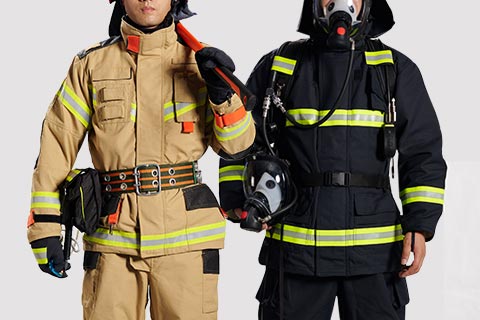
Samples of firefighting suits and emergency rescue suits focus on verifying the four-layer composite structure, testing the flame-retardant and heat-insulating properties of firefighting suits, seam strength, reflective strip fastness and version activity margin, evaluating the protective attenuation after multiple washes, and verifying the label size information.firefighting clothing is the core barrier for the protection of the whole body of firefighters. The four-layer structure performs its own duties. Failure to meet the standards of any layer will weaken the entire set of firefighter PPE protection capabilities.In addition to static performance testing, it is also necessary to evaluate the performance degradation caused by repeated washing. The firmness of the reflective tape and the margin of activity of the version jointly determine the actual combat reliability of the firefighting suit in the fire rescue scene.Firefighter helmet and facial protection
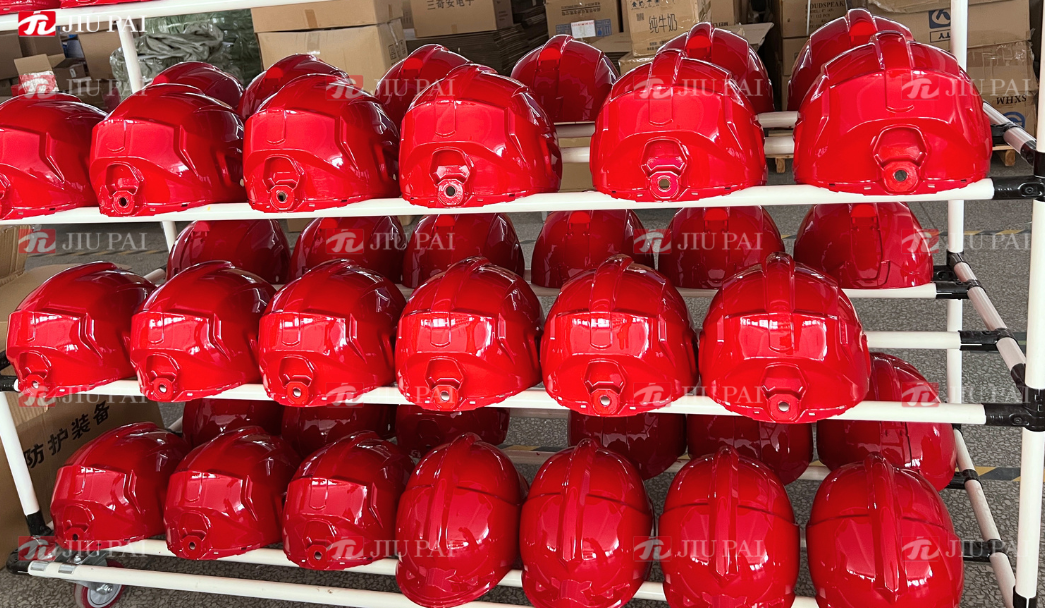
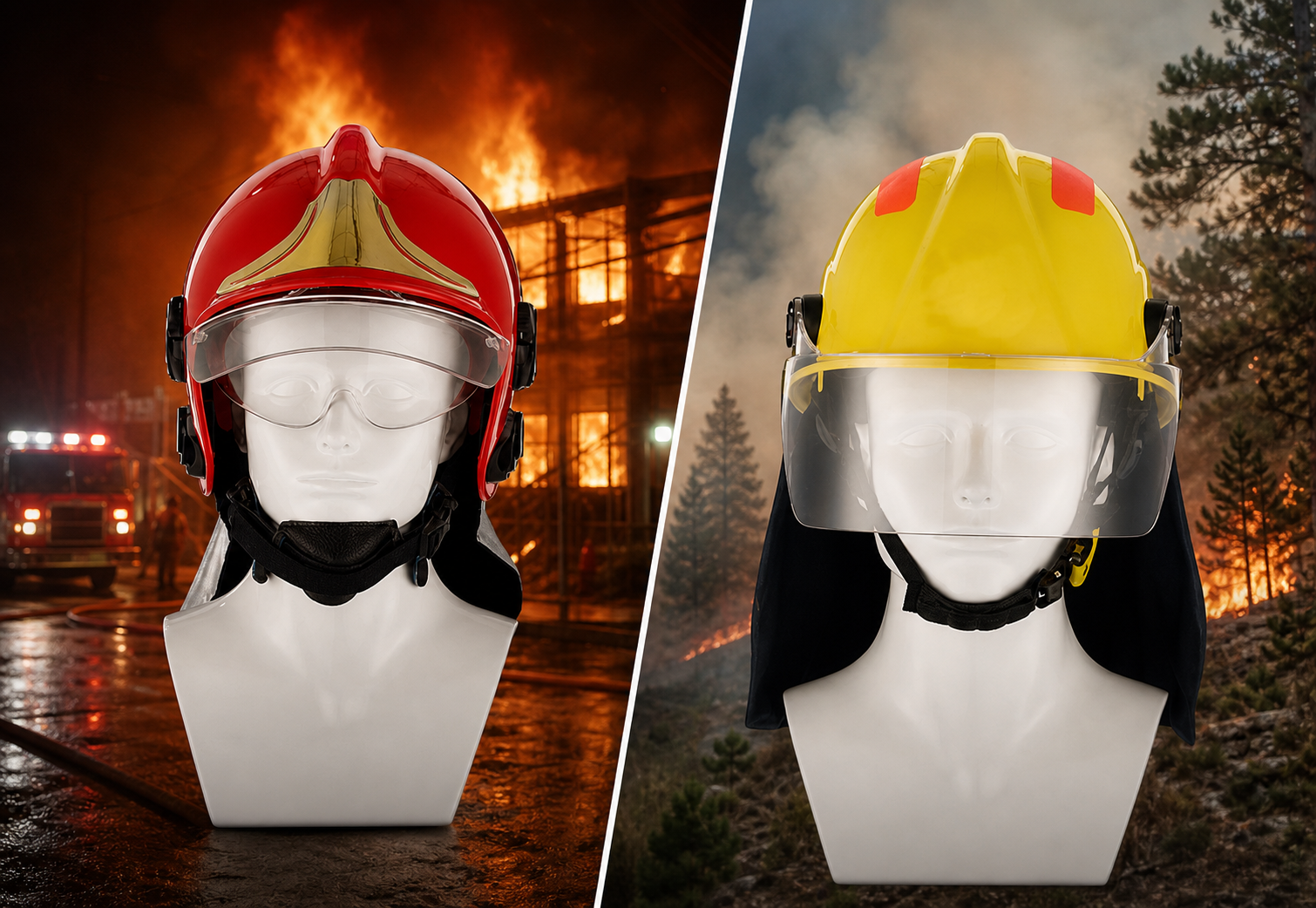
Fire helmet samples test the impact resistance and heat resistance of the shell, the splash resistance of the mask, the adjustment stability of the headband and the tensile strength of the chin strap, check the adaptability of the mask and goggles, and the plastic parts shall not crack and deform at high temperatures.The fire helmet belongs to the PPE of the head firefighter to resist the impact of falling objects, high temperature radiation and splashing debris, and the shell cannot be softened and broken in a high temperature environment.The structure of the headband needs to be stable, the helmet will not slip off when shaking violently, and the gap between the mask is strictly controlled to prevent high-temperature liquids from invading the face.The complete set of head protection components can be matched with firefighting suits and firefighting headgear to adapt to fire scenes and emergency rescue protection scenes.Gloves, boots and protective cover
firefighting gloves are tested for heat resistance, cut resistance, puncture resistance and fingertip operation flexibility, firefighting boots are tested for non-slip, puncture resistance, and insulation properties, and firefighting headgear is tested for flame-retardant and heat insulation. After wearing, it is seamlessly connected with firefighting helmets and firefighting suits.firefighting gloves are the protection of special firefighter PPE for the hands. The flexibility of the fingertips cannot be sacrificed, otherwise it will affect valve operation and tool grasping.firefighting boots protect against sharp stab wounds and the risk of slippery falls. There are no hard bumps in the joints of the firefighting headgear. Wearing a helmet will not cause compression and pain. The edges and equipment are closely connected, leaving no protective blind spots, and the head and neck of the firefighter are protected in all directions.SCBA and special equipment
Special firefighter PPE such as positive pressure air respirators for breathing equipment focuses on testing air tightness, air supply pressure, low pressure alarm reliability and mask sealing, verifying the certification of gas cylinders and pressure reducing valves, and testing the weight balance and adaptability to fire suits and fire helmets.Breathing equipment is a life-support equipment in a toxic flue gas environment. Failure of air tightness will bring fatal danger, and the low-pressure alarm device must be sensitive.The back frame structure reduces the fatigue of long-term wear, and the pressure-bearing components need to be effectively certified to investigate the space conflict between the breathing equipment and the neckline and helmet of the firefighting suit, and to ensure the safety and stability of the entire set of firefighter PPE combination.What Documents Should Be Included in PPE Sample Approval?
Sample approval is not to leave only one physical object. A complete set of technical documents constitutes a complete approval file, which serves as the legal and technical basis for the production, inspection and acceptance of large-scale goods, covering firefighting suits, firefighting helmets, firefighting gloves, breathing equipment and other types of personal protective equipment for firefighters.Specification and material list
The complete technical specification and BOM bill of materials specify the model, type, parameters and brand of each layer of fabric, sewing thread, reflective tape, pull and buckle of the firefighting suit, and stipulate that material replacement must be applied for in advance and samples must be resubmitted.The BOM list is the core document to prevent suppliers from stealing materials. It is refined to each component, and it is forbidden to label the names of accessories in general.Raw materials may not be replaced at will without the written permission of the purchaser.If the supplier applies for material replacement, it must submit a new material inspection report, remake the firefighter PPE sample and complete a full set of approval. The file follows the order throughout the process as the basis for sampling large-scale materials.Size chart, color and artwork
The size chart, Pantone color card, logo and label originals are archived together, and the key dimensions and tolerance ranges of each size are marked, the physical color samples are retained, and the location, size and craftsmanship of the identification are determined.The size table indicates the tolerances of the length, bust, and trousers of firefighting clothing, and the production of large-scale goods is strictly controlled to avoid size dispersion.The physical color sample solves the problem of screen color difference and determines whether the fabric and printing colors are up to standard.The layout and text of the logo and label are all locked, and the complete set of visual size documents and the PPE supporting the sealing sample are archived as a unified judgment standard for appearance acceptance.Approval form and revision record
Sample approval form, records of previous revisions, register the version number, defect items, rectification requirements, and acceptance results of each version of the PPE sample, and establish a complete traceability chain to reduce the risk of order disputes.The revision record indicates the sample submission time, problem, rectification plan, retest result and approver.In the event of a quality dispute, the stage of the problem can be quickly located and the responsibilities of both supply and demand can be clarified.All forms are signed and confirmed, and both electronic and paper files are archived.The iterative process is completely recorded from the initial proofing to the final sealing, so that the technical changes of the project can be traced throughout the process, and the contract risks of foreign trade and government procurement projects can be reduced.Common Mistakes to Avoid During PPE Sample Approval
Many procurement projects step on pits, which are due to common misunderstandings in the acceptance stage of firefighters' PPE samples, and buyers need to focus on avoiding them.Rely only on appearance
A flat appearance does not mean that the protection is qualified. Many samples of firefighter PPE, such as firefighting suits and firefighting gloves, have a good appearance, but the core indicators of flame retardant and tear resistance are not up to standard. Samples cannot be directly confirmed by the naked eye alone. It must be combined with the test report and the wear test.The appearance inspection only evaluates the workmanship, color difference, and version, and cannot judge the protective ability of the material under high temperature, puncture, and continuous friction conditions.Some suppliers beautify the appearance of samples to cover up material defects, and visual acceptance will bury major safety risks.The approval of large PPE samples requires a combination of three verifiers, and all of them can be approved for mass production after they are qualified.Ignore material differences
Some suppliers use high-quality fabrics for firefighter PPE samples, and large-scale products are replaced with low-cost fabrics with similar appearance. firefighting clothing fabrics are the most common category of stolen materials.The BOM list is locked in the sample approval stage, and it is expressly prohibited to replace materials privately, and material verification is increased for large-scale sampling inspections.Flame-retardant fabrics with similar appearance have obvious gaps in protection life and heat resistance, which are difficult to distinguish with the naked eye.This is due to the high-frequency quality trap of foreign trade procurement of PPE. Samples are approved with good materials, and mass production downgrades materials to drive down costs.The list of materials is compiled, and the materials are sampled and verified for large-scale goods. Once the materials are changed privately, the unqualified products are immediately isolated and the contract accountability is initiated.Change specifications after approval
After the large PPE sample is confirmed, if the fabric, version, and accessories of the firefighting suit are temporarily modified, the original sealed sample will fail, and the proofing test and approval must be re-made.Changing specifications after the start of large-scale goods will bring serious delivery and quality risks.Many buyers believe that minor changes do not need to be retested, but fabric and version adjustments will change the thermal protection and activity performance of firefighting clothing.Any specification changes will void the original sealed samples, and samples of firefighter PPE need to be remade to complete a full set of inspection and certification.If the production has been put into operation and then adjusted, resulting in the scrap of raw materials, the shutdown of the production line, a significant increase in costs and delays in delivery, all changes must be completed in advance of the sample approval process.How to Ensure Bulk Production Matches the Approved PPE Sample
The approval of samples does not mean that large-scale goods are automatically consistent with the samples. It is necessary to establish a full-process control mechanism to lock in the quality benchmark of large-scale PPE products.Keep approved reference samples
Both supply and demand parties seal the signed and confirmed reference samples of firefighter PPE, and store them properly at room temperature in the dark. As the comparison standard for prenatal, first piece, and shipment inspection, the quality disputes are subject to the sealed samples.The sealed sample is marked with the number and approval date, and the two parties shall keep it separately to prevent the sample from being changed.During the first inspection, inspection, and final inspection of large-scale goods, compare the finished products and sealed samples, and check the appearance of firefighting clothing fabrics, craftsmanship, and accessories.Third-party inspection agencies also use sealed PPE samples as the objective basis for judgment, effectively reducing business wrangling and providing physical certificates for order quality disputes.Check initial production
Large-scale goods are put into production, and the first firefighter PPE and sealed samples are taken to compare the fabric, work, accessories and dimensions of the firefighting clothing item by item.If the first piece is unqualified, it will be discontinued immediately for investigation, and production will not continue until the first piece is consistent with the sealed sample.Changing materials, changing molds, and adjusting sewing parameters on the production line can easily cause the finished product to deviate from the sample standard. The first inspection is the first level of production.The inspectors check the materials, process details, and dimensional tolerances against the sealed samples, and verify the incoming materials.The first piece of unqualified shutdown is traceable, and production will resume after the rectification and retest are completed, so as to avoid the one-time production of large quantities of defective firefighter personal protective equipment.In-process and final inspection
Arrange inspections during production, and check the sewing process and the use of accessories at random; after completion, carry out the final inspection of the finished product, re-test the core PPE protection indicators according to AQL sampling, and seal the samples throughout the process to isolate unqualified products in time.Production inspections can detect batch process deviations as soon as possible, such as suture replacement, mixing of accessories, and intercepting defects in the middle of production.The final inspection of finished products adopts the industry AQL sampling scheme, which takes into account efficiency and risk, and samples and retests the flame retardant indicators of firefighting clothing.Unqualified batches are evaluated separately for rework or scrap, and it is strictly prohibited to ship with qualified products to ensure that the quality of the delivered PPE is consistent with the sealed sample.Conclusion
Large PPE is the last barrier to protect the lives of frontline rescuers, and sample approval is an indispensable risk control link in the procurement chain.A complete set of sample confirmation system, from specification locking, multi-dimensional sample inspection, category evaluation, document archiving to large-scale consistency control, can help global firefighting equipment buyers avoid safety hazards, control project costs, and ensure that every piece of firefighting clothing, firefighting helmets, firefighting gloves, firefighting headgear, SCBAppe equipment delivered in bulk, joint safety certification.As a professional firefighter PPE, JIUPAI safety can provide customized prenatal samples, third-party testing support and full-process quality control solutions to help procurement projects land smoothly.
Next Article:
Last Article:
Request A Quote
Related News
Quick Consultation
We are looking forward to providing you with a very professional service. For any
further information or queries please feel free to contact us.