

Firefighting Clothing: A Buyer’s Guide to Maximum Protection
In critical moments at a fire scene, high-quality firefighting suits are the lifeline for firefighters. Fire procurement and safety managers often face confusion when choosing products. This guide will help you accurately select reliable fire protection equipment from aspects such as understanding, selection, maintenance, and avoiding pitfalls.
The admission standards for fire suits are strict. They must comply with national and industry norms and pass professional tests such as high-temperature resistance and puncture resistance. Although the performance focuses of firefighting suits in different scenarios vary, the core attribute of protecting and safeguarding lives remains unchanged.
Even more remarkable is that this type of material on fire department clothing combines the advantages of being lightweight and elastic. It can ensure maximum insulation while not adding extra weight for rescue workers, allowing them to remain comfortable even during long-term operations. It serves as a crucial defense against high-temperature burns.
The comfort layer is in direct contact with the skin and is designed with soft and breathable fabric, which can reduce the friction between the clothing and the skin, enhancing the comfort of wearing for a long time. This allows rescue workers to focus entirely on their tasks without being distracted by uncomfortable clothing.
Forest fire rescue: Due to the long rescue time and complex wild environment, forest firefighting suits that are lightweight, wear-resistant and have better breathability should be selected. At the same time, the outer material should also be considered to prevent scratches from branches.
Chemical enterprises emergency situations: Fire suits need to have additional protection against chemical corrosion to ensure they can resist the erosion of harmful substances such as acids and alkalis, and prevent secondary injuries to rescue personnel.
At the same time, attention should be paid to the weight of the fire suit. Under the premise of ensuring protective performance, lightweight fire resistant clothing should be chosen as much as possible to reduce the physical exertion caused by wearing them for a long time.
After cleaning, it should be air-dried naturally, avoiding direct sunlight and high-temperature drying. High temperatures can damage the fiber structure of the insulation layer, directly leading to a significant decrease in insulation performance.
If not used for a long time, it is necessary to regularly check whether the firefighting clothing is damaged or moldy. It is recommended to conduct a simple water-proof and heat-insulating performance test every six months to ensure that it can function properly in an emergency.
If minor damages are found, contact the manufacturer for professional repair. In case of large-scale damage or a decline in protective performance, stop using it immediately and replace it. Under no circumstances should expired or damaged fire resistant coveralls be used to save costs, as this poses a safety hazard to frontline personnel.
JIUPAI is deeply committed to the fire protection field, with the mission of safeguarding the safety of frontline personnel. We offer a full range of products including fire suits and protective clothing, as well as customized services. With high-quality materials and strict quality control, we have passed authoritative certifications and provide precise protection solutions for various scenarios.
Choosing Jiupai means choosing solid protection. Welcome to contact us for inquiries about purchasing or customizing your needs, and let's build a safety line for frontline personnel together.
What Is a Firefighting Suit
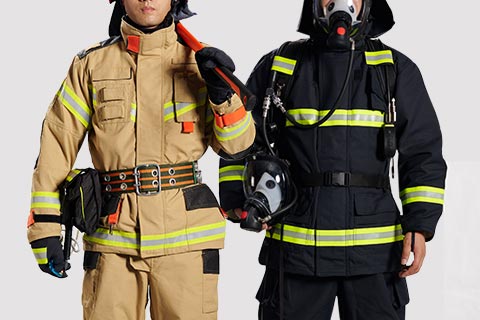
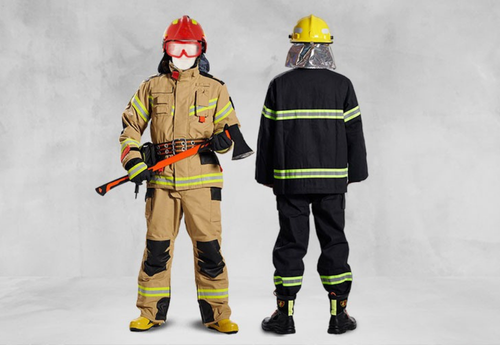
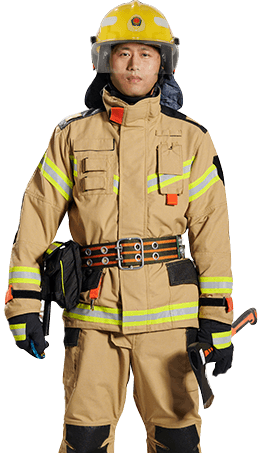
Firefighting suits, also known as fire combat suits or fireproof suits, are special protective clothing designed specifically for firefighters. Fire resistant clothings are suitable for various fire and emergency rescue scenarios. They are not ordinary clothes but a system of equipment with multiple protective functions, capable of resisting high temperatures, flames, corrosion, and scratches in the fire scene, while ensuring the flexibility of firefighters' movements such as climbing and demolition.The admission standards for fire suits are strict. They must comply with national and industry norms and pass professional tests such as high-temperature resistance and puncture resistance. Although the performance focuses of firefighting suits in different scenarios vary, the core attribute of protecting and safeguarding lives remains unchanged.
What Is the Most Important Component of Firefighting Clothing
A reliable set of fire suits relies on the collaborative efforts of multiple layers, each of which plays an irreplaceable role. When purchasing fire resistant clothing, a comprehensive consideration is necessary and none can be missing.Insulation layer
The heat insulation layer is the heart of the fire suit's protective capability and is hailed as the second skin of firefighters. It is made of high-temperature resistant special materials such as aramid fibers and can withstand temperatures above 400℃. Through a special structure, it can effectively block convective heat, radiant heat and conductive heat in the fire scene, keeping the body surface temperature firmly within a safe range.Even more remarkable is that this type of material on fire department clothing combines the advantages of being lightweight and elastic. It can ensure maximum insulation while not adding extra weight for rescue workers, allowing them to remain comfortable even during long-term operations. It serves as a crucial defense against high-temperature burns.
Outer layer
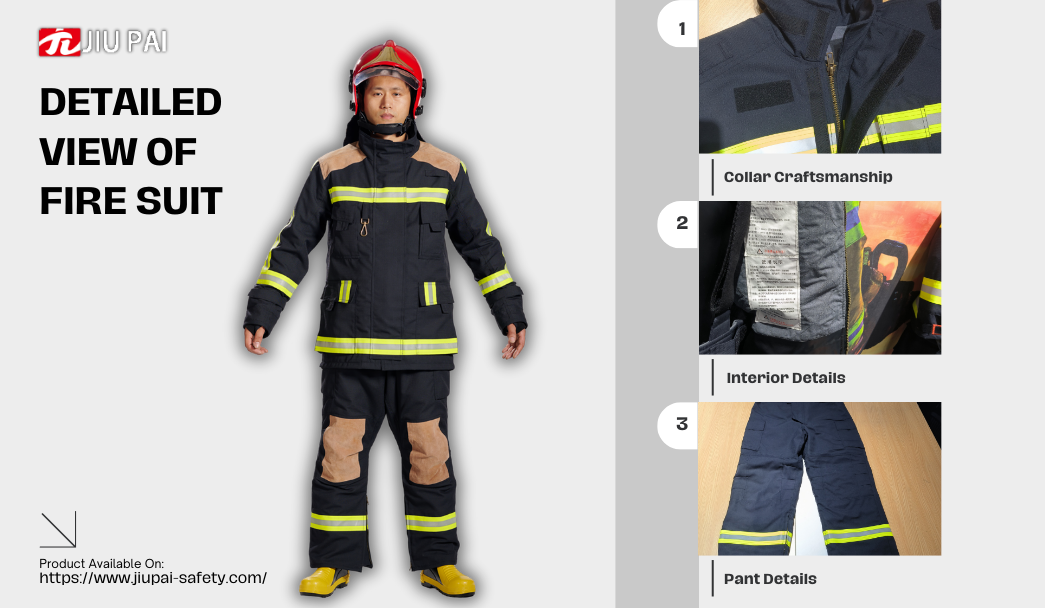
The outer layer is the first line of defense of a fire suit, directly facing flame scorching, object impact and sharp object scratches. High-quality outer layer fabric should have strong flame retardancy, not melting or burning for a short time in a flame of about 1000℃. At the same time, it should also be tear-resistant and wear-resistant. In building fires, it can prevent fragment impact. In forest rescue, it can resist branch scratches. In chemical scenarios, fire department clothing's outer layer can also handle mild corrosion. When purchasing, the corresponding performance should be matched according to the specific scenario.Waterproof breathable layer and comfort layer
The waterproof and breathable layer is truly versatile in both offense and defense. On one hand, it can prevent water and chemical liquids from seeping into the clothing during a fire, avoiding the risk of the body getting wet and accelerating heat loss or suffering from chemical corrosion. On the other hand, Waterproof breathable layer of firefighting clothing has excellent breathability, allowing sweat produced by rescue workers during movement to be promptly expelled, keeping the skin dry and preventing the discomfort of stuffiness from affecting their rescue performance.The comfort layer is in direct contact with the skin and is designed with soft and breathable fabric, which can reduce the friction between the clothing and the skin, enhancing the comfort of wearing for a long time. This allows rescue workers to focus entirely on their tasks without being distracted by uncomfortable clothing.
How to Choose the Right Fire Suit for Your Application
The performance requirements for firefighting suits vary significantly across different rescue scenarios. Blindly pursuing the highest configuration will only lead to cost waste and may even affect rescue efficiency due to redundant functions. Purchasers need to start from three dimensions: scenario characteristics, personnel needs, and standard compliance, to achieve precise matching.Clearly define the usage scenarios
Urban building fires: It is recommended to prioritize firefighting suits that offer balanced performance in high-temperature resistance, water resistance, moisture permeability, and puncture resistance. Special attention should be given to the short-term high-temperature resistance of the insulation layer, such as not melting or burning within 30 seconds in a 1000°C flame.Forest fire rescue: Due to the long rescue time and complex wild environment, forest firefighting suits that are lightweight, wear-resistant and have better breathability should be selected. At the same time, the outer material should also be considered to prevent scratches from branches.
Chemical enterprises emergency situations: Fire suits need to have additional protection against chemical corrosion to ensure they can resist the erosion of harmful substances such as acids and alkalis, and prevent secondary injuries to rescue personnel.
Designed to fit the human body
The size and style of fire suits directly affect the wearing experience and rescue flexibility. When purchasing, detailed body measurements of personnel should be collected, and styles that conform to ergonomics should be selected. Three-dimensional cutting and elastic fabrics are used in easily movable parts such as the shoulders, elbows, and knees to ensure that large movements such as climbing, bending over, and lifting are not restricted. The collar, cuffs, and trouser legs are designed with a tightening feature, which can prevent high-temperature gases from seeping in and also prevent foreign objects from entering the fire resistant clothing.At the same time, attention should be paid to the weight of the fire suit. Under the premise of ensuring protective performance, lightweight fire resistant clothing should be chosen as much as possible to reduce the physical exertion caused by wearing them for a long time.
Reject unverified products
Compliance is the bottom line for the procurement of fire suits. It is necessary to choose qualified and legitimate manufacturers, such as those that have passed fire product certification. Actively verify the product inspection reports and certification certificates to ensure they meet the latest national or industry standards. For imported products, additional verification of domestic testing and certification is required to avoid protection failure due to non-compliance with standards. Never choose unregulated products just to save money. These fire resistant coveralls have poor material and craftsmanship and cannot provide protection in a fire. Instead, they may pose a safety hazard.How to Extend the Life of Your Firefighting Clothing
The procurement cost of a high-quality fire suit is not low. Scientific maintenance and care can not only extend its service life but also keep its protective performance in the best condition for a long time, avoiding safety risks caused by equipment wear and tear. As a manufacturer, it is necessary to convey the correct maintenance methods to the users.Standardized cleaning
Fire suits must be washed promptly after use to remove surface oil, soot and chemical residues. However, there are three strict no-go zones that must be adhered to. Bleach and strong acid or alkali detergents are strictly prohibited to prevent fabric corrosion. Industrial washing machines with strong agitation must not be used to avoid damaging the multi-layer structure. The washing water temperature should be kept below 30℃, and hand washing or gentle machine wash mode is preferred.After cleaning, it should be air-dried naturally, avoiding direct sunlight and high-temperature drying. High temperatures can damage the fiber structure of the insulation layer, directly leading to a significant decrease in insulation performance.
Store properly
Fire resistant coveralls should be stored in dedicated cabinets that are dry, well-ventilated and away from direct light. They should be kept away from sharp objects, chemicals and high-temperature equipment to prevent fabric scratches, corrosion or aging. Do not fold or squeeze them when storing to avoid deformation of the heat insulation layer and adhesion of the waterproof and breathable layer, which may affect the protective effect.If not used for a long time, it is necessary to regularly check whether the firefighting clothing is damaged or moldy. It is recommended to conduct a simple water-proof and heat-insulating performance test every six months to ensure that it can function properly in an emergency.
Regular maintenance and inspection
It is recommended to establish a one-file-per-person management system for fire clothing, detailing the usage, cleaning and maintenance of each set of clothing. After each use, a thorough inspection should be conducted to check for any damage to the outer layer, loose stitching, leakage in the waterproof and breathable layer, and clumping in the heat insulation layer.If minor damages are found, contact the manufacturer for professional repair. In case of large-scale damage or a decline in protective performance, stop using it immediately and replace it. Under no circumstances should expired or damaged fire resistant coveralls be used to save costs, as this poses a safety hazard to frontline personnel.
Common Mistakes to Avoid When Buying Fire Clothing
In the process of purchasing firefighting suits, many people fall into misconceptions due to information asymmetry, ultimately affecting the quality of the purchase. The following four common mistakes must be avoided at all costs:Only look at the price and ignore the performance
This is the most common pitfall. Some purchasers blindly pursue the lowest bid, but overlook the fact that the core of fire suits is their protective performance. Low-priced products often use inferior materials, with insufficient thickness of the heat insulation layer and poor flame retardancy of the outer layer. In a fire scene, fire department clothings cannot provide effective protection at all, but instead pose a threat to the lives of frontline personnel. When making a purchase, performance should be given priority, and the cost-effectiveness should be comprehensively considered rather than simply comparing prices.Disregarding individualized needs
Firefighters in different positions and of different body types have very different demands for fire suits. For instance, a 190 cm tall firefighter and a 160 cm tall one, if wearing fire suits of the same size, will either find them too tight to move freely or too loose to prevent heat from seeping in. When making purchases, it is necessary to fully collect the personalized demands of the users and give priority to manufacturers that support customized services to ensure that each firefighting clothing can meet the actual usage requirements.Neglecting after-sales service
The service life of fire suits is usually 3 to 5 years. During this period, professional maintenance, guidance on upkeep and replacement of parts are inevitable. Some purchasers only focus on the product price and quality when signing contracts, but neglect the after-sales service terms, which leads to the inability to obtain timely support from the manufacturer when problems arise later. When making a purchase, choose a manufacturer with comprehensive after-sales service, clearly stipulate the service contents such as response time for maintenance, supply of parts and regular inspection, to avoid subsequent troubles.Not paying attention to standard updates
National and industry standards for fire suits are constantly updated with technological advancements, and new standards often impose higher requirements on protective performance. Some purchasers are unaware of the updates to the standards and still purchase fire department clothing that comply with the old standards, resulting in protective performance that fails to meet current rescue needs. Before making a purchase, it is essential to consult the latest standard documents to ensure that the purchased products meet the latest specifications.Conclusion
Fire suits are the life armor of firefighters. Professional purchasing decisions are a sign of respect for life. Clearly defining needs, paying attention to components, maintaining scientifically, and avoiding misunderstandings - each step is of vital importance.JIUPAI is deeply committed to the fire protection field, with the mission of safeguarding the safety of frontline personnel. We offer a full range of products including fire suits and protective clothing, as well as customized services. With high-quality materials and strict quality control, we have passed authoritative certifications and provide precise protection solutions for various scenarios.
Choosing Jiupai means choosing solid protection. Welcome to contact us for inquiries about purchasing or customizing your needs, and let's build a safety line for frontline personnel together.
Next Article:
Request A Quote
Related News
Quick Consultation
We are looking forward to providing you with a very professional service. For any
further information or queries please feel free to contact us.