
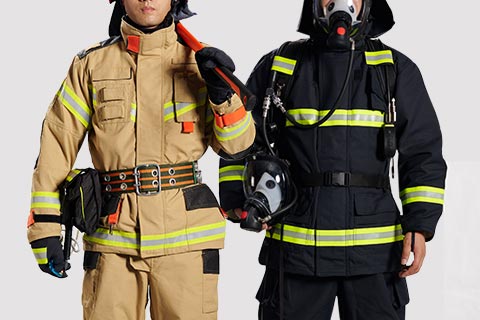

How Do Firefighting Helmets Keep Firefighters Safe
Fire scenarios are very dynamic. Firefighters operate under extreme heat, thick smoke, and falling debris, which puts their heads in a very high-risk position. A well-fitted fire helmet influences not only physical protection but also comfort and operational efficiency of the wearer. In crucial moments, the protective capability of the firefighter helmet influences the safety of firefighters and rescue operation outcomes directly.
What Are the Different Types of Fire Helmets
Traditional Firefighting Helmets
The traditional design of a fire helmet is quite iconic in appearance, with a wide brim that serves to effectively protect the firefighter from falling debris and radiated heat associated with operations related to the suppression of a building fire. Firefighting helmets are typically made from reinforced fiberglass or high-strength leather and provide resistance to heat and impact. Suitable for fire departments where durability and stability are in need, these fire helmets are effective for long-term operational service in structural firefighting duty.Structural Firefighting Helmets
Structural firefighting helmet is the most used in urban fire operations, developed for broad protection within high-temperature environments. Structural firefighting helmets protect the head, face, and neck with heat-resistant shells, energy-absorbing liners, and compatibility with SCBA masks. For that reason, fire helmets are designed to meet NFPA or EN standards for tasks such as indoor attack and cleaning up at the fireground.Modern Euro Fire Helmets
Modern euro fire helmets feature an integrated, fully enclosed shell for lateral impact protection and facial coverage. The double-layer masks protect the jaw and ears, with weight distribution that provides for extended wear comfort. Suitable for both technical rescue and extensive firefighting operations, modern euro fire helmets meets teams' needs that put an emphasis on lightweight construction and all-around protection.Wildland Firefighting Helmets
In wildland fire helmets, the focus is on lightweight construction with ventilation for extended wear comfort. Characteristics of wildland firefighting helmets include a wide brim, ventilation channels, and goggle-compatible design. Neck protection fabric can be attached to block sparks and debris. Structurally compliant to NFPA 1977 standards, firefighting helmets are for high-mobility line patrols and extended shift operations.Fire Rescue Helmet
Fire rescue helmets are created for non-structural fire operations, such as rope rescue, vehicle extrication, and urban search and rescue. Manufactured from high-impact composite materials, Fire rescue helmets are designed with lightweight construction for superior lateral and vertical impact protection. Models that have mask, headlamp, and communication system integrations further improve safety and adaptability for confined-space and elevated operations.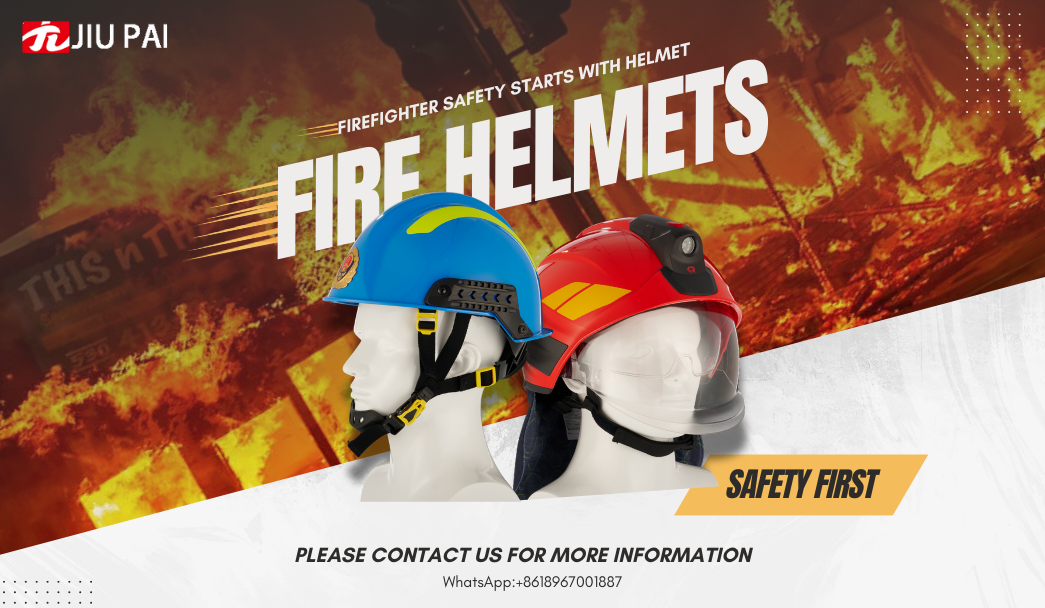
What Are the Key Components of a Helmet
Shell material
The shell of the firefighting helmet is the base for the entire protection system. Firefighting helmet's shell commonly comes in high-performance thermoplastic material forms or composites that are able to give impact resistance, tolerance to high temperature, and resistance to penetration. The shell shall also resist thermal radiation, falling debris, and lateral compression while operating within fire environments. Materials compliant with the standards of EN or NFPA maintain structural integrity under extreme firefighting conditions and, therefore, enhance overall durability and lifesaving performance.Impact Liner
The liner system distributes the impact forces and enhances wearing stability. The liner effectively reduces shock transmission during collision with high-density energy-absorbing foam or composite padding, hence minimizing injury risks to the head. Most premium liners of fire helmet also feature breathable structures to alleviate the heat buildup during prolonged operations. Suspension systems that are adjustable further enhance the fit so that the helmet shall stay in place during rapid movements or even in rescue situations.Visor System
Modern firefighting helmets often employ a visor with two layers or goggles inside, so the face and eyes are protected on a number of levels. While the exterior visor protects against heat and dust, inner goggles enhance visibility inside a low-light or smoke-filled area. Lenses are typically made of impact-resistant polycarbonate meeting standards for scratch resistance, anti-fog, and heat resistance.Neck Protector
The neck curtain is significant in preventing sparks, heat waves, and debris from coming through the back of the helmet. Materials currently in use include flame-retardant fiber fabric or composite insulation layers; the covering of the neck and upper back regions is their task. A high-quality neck curtain merges heat resistance with fireproofing and flexibility, providing continuous protection in structural firefighting, wildfire rescue, and high-temperature operations while reducing the chances of thermal burns.Retention System
The helmet chin strap and adjustment mechanism maintain a secure fit with comfort. Stability in vigorous movement, climbing, or while wearing SCBA is assured by multi-point adjustments, soft padding, and heat-resistant webbing. Standard-compliant retention systems withstand tensile and impact tests to maintain support for firefighters making rapid advances into structures, breaching structures, and performing rescues.How Do Fire Helmets Prevent Head Injuries
Firefighting helmets offer critical protection at the scenes of fire. The shells absorb and distribute, with cushioned linings, impacts from falling objects, sparks, and debris to reduce the risk of skull fractures and concussions. Materials resistant to high temperatures cover the head against thermal radiation; thus, lightweight fire helmet keeps firefighters safe during structural firefighting, indoor operation, and cleaning up the fire scene.The face shield, neck curtain, and retention system continuously protect the face, neck, and head from thick smoke, flying debris, and rapid motions. This integrated design of firefighter helmets keeps the head stable, hence minimizing further injuries resulting from displacement or impact, fire helmets ensure safety to firefighters during dangerous operations.
Why Fire Helmet Comfort Matters for Firefighter Safety
Comfort Affects Working Efficiency
Comfort in a fire-fighter's helmet directly translates to work efficiency while responding to extended emergencies and training. A too-heavy or wrongly fitted helmet contributes to neck and shoulder fatigue; as such, it reduces their mobility and reaction speed, whereas an accurately fitted fire helmet allows firefighters to pay close attention to structural firefighting, wildland fire suppression, and technical rescue operations with increased operational safety.Reduce Fatigue, Increase Alertness
Fire helmets with balanced weight and ergonomic designs ensure that neck and shoulder strains are properly dealt with to minimize operational fatigue. Comfortable firefighting helmets keep firefighters fresh and alert for back-to-back deployments and long shifts, reducing fatigue-related operational errors while ensuring overall safety in firefighting and emergency rescue missions.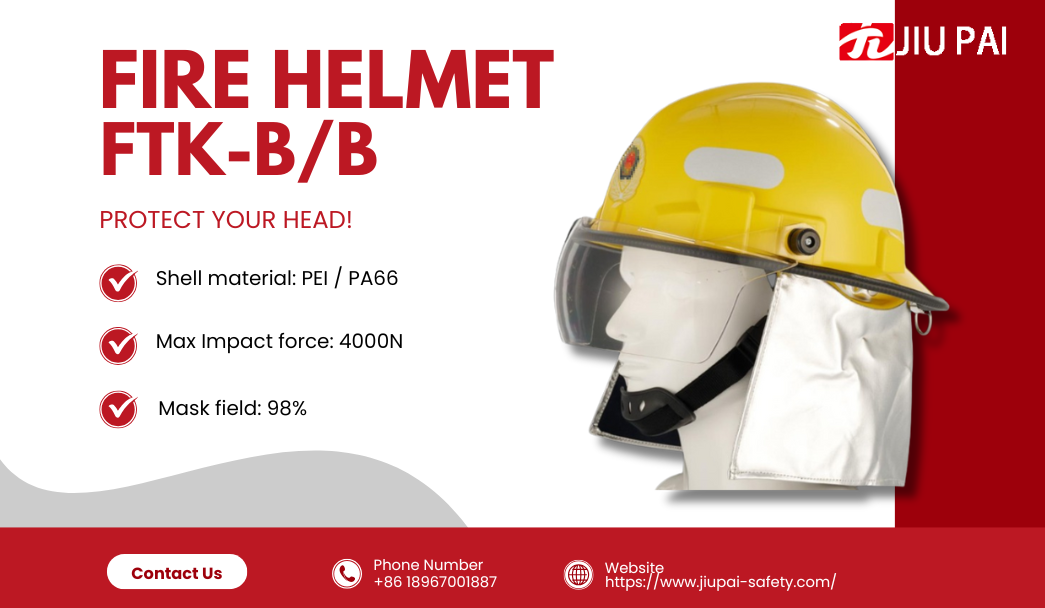
Improved Safety Compliance
Comfortable firefighting helmets improve wearer compliance for firefighters. Lightweight, secure, and well-fitting helmets are more easily worn for longer periods of time, providing continued protection of the head from high temperatures, smoke, and falling debris. Compliance with wearing standards compatible with recognized industry safety codes such as NFPA or EN exhibits professionalism in managing fire safety.Fireground Tasks
Firefighter helmets that are uncomfortable are a distraction to firefighters and raise the likelihood of operational error. Every second counts in the operations of structural firefighting, wildland fire suppression, and technical rescue. A well-fitted and comfortable fire helmet lets firefighters forget it's on their head and focus all attention on extinguishing fires or the rescue effort. This improves the overall safety and effectiveness for the operation at hand.When Should Fire Helmets Be Replaced
Standard Service Life
Firefighting helmets are generally recommended for service within a 10-year timeframe from the date of manufacture. Visually intact helmets should be replaced upon expiration of their service life to provide reliable protection against high temperatures, impacts from falling objects, and fire debris. Accordingly, head safety for firefighters in both structural firefighting and wilderness rescue operations will be assured in conformity with industry safety standards such as NFPA or EN.Wear and Tear
Prolonged deployment, drills, and training may cause crack development, scratches, or aging liners in the fire helmets. Shell damage or suspension system loosening compromises protective performance before the standard service life has been reached. As such, prompt replacement should be necessary to ensure adequate protection against fire operations.Impact or Accidental Damage
A firefighter helmet that has been dropped, subjected to high-temperature impact, or struck with a heavy object should be replaced instantly, even if no visible damage can be seen. The internal cushioning structures may be damaged by impacts and reduce protective capabilities. Firefighters cannot afford compromised equipment in high-risk firefighting and rescue operations.Regular Inspection System
Fire departments should have a system to regularly inspect and maintain the firefighter helmets, including information on the status of the shell, liner, suspension system, and visor. Keeping track of length of service and maintenance history with the fire helmets may help identify which ones will need replacement, and ensure that properly protective helmets are worn on every call.Conclusion
A fire helmet is not only a piece of equipment but a lifeline for a firefighter in the fireground. The selection of a firefighting helmet that meets mission requirements in terms of comfort and protective performance will go on to provide unfailing support in very high-risk operations. Proper use of a firefighter helmet makes every emergency response safer and more professional, reflecting the highest commitment to life safety.
Next Article:
Request A Quote
Related News

Quick Consultation
We are looking forward to providing you with a very professional service. For any
further information or queries please feel free to contact us.