

Top 5 Must-Have Features in Firefighting Boots
In the fire scene, high temperatures, heavy objects and sharp objects all pose threats to firefighters' feet. One wrong step could be fatal. The reliable protection of best firefighting boots is a hard standard for saving lives. As firefighter PPE footwear, this pair of combat boots is the first line of defense, and the design details are related to safety.
To determine whether fire boots are of good quality, authoritative standards such as NFPA 1971 and EN 15090 are crucial. Certified NFPA firefighting boots undergo multiple extreme tests, being able to withstand short-term temperatures of 500°C or continuous temperatures of 300°C. The shoe structure is stable and does not crack, allowing firefighters to focus on rescue operations without worrying about foot protection.
Modern fire boots not only provide protection but also take into account comfort. The problem of foot discomfort caused by traditional steel toe designs has now been perfectly solved through ergonomic design. The composite toe structure achieves the same level of protection with a lighter weight, allowing firefighters to move freely when climbing ladders or carrying equipment. The design logic of these impact-resistant fire boots is simple: they need to protect against danger while not restricting movement.
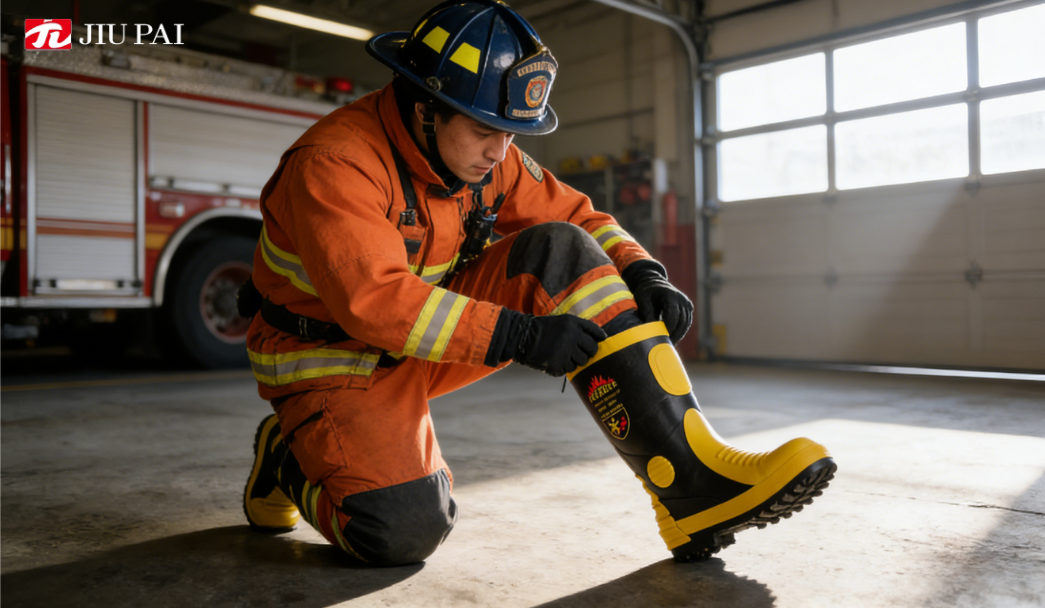
To address the threat of sharp objects, puncture-proof firefighting boots have steel or high-strength composite material puncture shields embedded in the inner layer of the sole, which can effectively prevent nails, stones, etc. from penetrating the sole. What's more considerate is that these designs do not fail in high-temperature environments. The heat resistance of the outsole ensures that it does not soften or deform due to high temperatures, maintaining stable protective performance.
When facing harmful substances such as foam agents and acid-base solutions, the upper material of chemical-resistant fire boots can come into play. The specially treated fabric can resist the penetration and corrosion of chemical substances, neither allowing harmful substances to come into contact with the skin and cause burns, nor allowing the firefighting boots themselves to be damaged due to corrosion, ensuring that the protective performance is not compromised throughout the operation.
At the same time, the ventilation design is also crucial. The breathable fabric inside the firefighting boots for sale can promptly remove the moisture produced by the feet, preventing bacteria from breeding in a stuffy environment and effectively preventing athlete's foot and blisters. The accumulation of these details makes the best boots for firefighters not only protective equipment but also an invisible boost for long-term operations, helping firefighters maintain their best condition during high-intensity work.
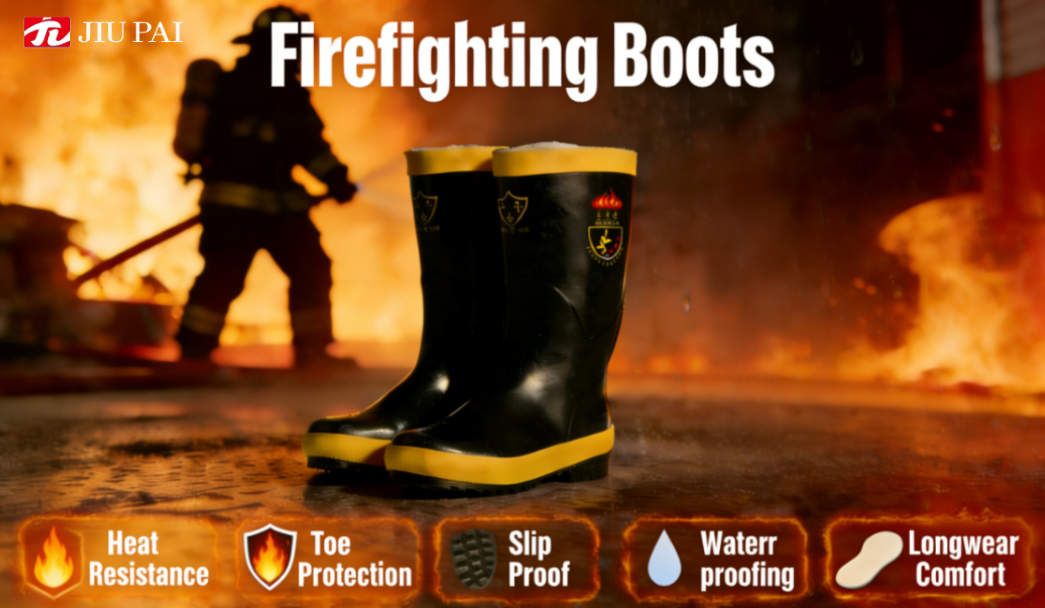
Firefighting work cannot afford the slightest negligence. Choosing fire boots with the above five core features is an additional solid guarantee for your own and others' safety. Immediately compare your needs and select the professional fire boots that are most suitable for you, so that every mission is carried out with confidence.
Certified Heat and Flame Resistance
When firefighters venture deep into the heart of a fire, the temperature under their feet often reaches several hundred degrees Celsius, and sparks and hot debris pose significant threats. The fire-resistant firefighting boots' heat resistance is the core protection. Professional models are made with Kevlar fibers and other materials to form a heat-insulating barrier. Firefighting boots remain stable and non-combustible even at high temperatures, while ordinary labor protection boots are prone to melting and deforming.To determine whether fire boots are of good quality, authoritative standards such as NFPA 1971 and EN 15090 are crucial. Certified NFPA firefighting boots undergo multiple extreme tests, being able to withstand short-term temperatures of 500°C or continuous temperatures of 300°C. The shoe structure is stable and does not crack, allowing firefighters to focus on rescue operations without worrying about foot protection.
Impact Protection for Toes
Fires often cause collapses, heavy objects to fall, and debris to collide. The toes, being the most vulnerable part of the foot, can lose their ability to move if injured. The steel toe design of firefighter boots, or the lighter composite toe structure, can form a rigid protective layer to withstand up to 200 joules of impact force. This is equivalent to the energy of a 5-kilogram object falling from a height of 1 meter.Modern fire boots not only provide protection but also take into account comfort. The problem of foot discomfort caused by traditional steel toe designs has now been perfectly solved through ergonomic design. The composite toe structure achieves the same level of protection with a lighter weight, allowing firefighters to move freely when climbing ladders or carrying equipment. The design logic of these impact-resistant fire boots is simple: they need to protect against danger while not restricting movement.
Slip Resistance and Puncture Protection
The ground in a fire scene is always full of traps. The slippery layer formed by mixed water and foam, as well as sharp obstacles such as broken steel bars and shattered glass, can cause firefighters to lose their balance or get injured instantly. The outsole of slip-resistant firefighting boots is made with a special rubber formula and features deep interlaced patterns, which can grip the ground like a suction cup, maintaining traction even in oil or mud, significantly reducing the risk of slipping.To address the threat of sharp objects, puncture-proof firefighting boots have steel or high-strength composite material puncture shields embedded in the inner layer of the sole, which can effectively prevent nails, stones, etc. from penetrating the sole. What's more considerate is that these designs do not fail in high-temperature environments. The heat resistance of the outsole ensures that it does not soften or deform due to high temperatures, maintaining stable protective performance.
Waterproof Performance and Chemical Resistance
Firefighters often have to wade through water or come into contact with fire-fighting foam, chemical leaks and other corrosive substances during their operations. Once their feet get wet or eroded, they will not only feel uncomfortable but also be at risk of infection. Waterproof firefighter boots adopt professional waterproof membrane technologies, combined with seamless sealing processes to form a comprehensive waterproof structure. Even when immersed in deep water, they can keep the interior dry and keep their feet in a comfortable state all the time.When facing harmful substances such as foam agents and acid-base solutions, the upper material of chemical-resistant fire boots can come into play. The specially treated fabric can resist the penetration and corrosion of chemical substances, neither allowing harmful substances to come into contact with the skin and cause burns, nor allowing the firefighting boots themselves to be damaged due to corrosion, ensuring that the protective performance is not compromised throughout the operation.
Comfort and Long-Term Wearability
A fire rescue operation often lasts for several hours or even more than a dozen hours. Firefighters need to stand, run and climb for a long time. The fatigue caused by an ill-fitting pair of firefighting boots may directly affect their work efficiency. Comfortable firefighting boots are designed with ergonomics in mind. The thick shock-absorbing insoles can cushion the impact of each step, and the supportive structure that conforms to the arch of the foot can distribute the pressure on the feet, reducing the soreness caused by prolonged walking.At the same time, the ventilation design is also crucial. The breathable fabric inside the firefighting boots for sale can promptly remove the moisture produced by the feet, preventing bacteria from breeding in a stuffy environment and effectively preventing athlete's foot and blisters. The accumulation of these details makes the best boots for firefighters not only protective equipment but also an invisible boost for long-term operations, helping firefighters maintain their best condition during high-intensity work.
How to Choose the Right Firefighting Boots for Your Needs
After understanding the core features, the key to choosing firefighting boots lies in matching the specific working environment. The environmental risks in different firefighting scenarios vary significantly, and the focus of choosing the boots also differs greatly. Only by precisely matching can the protective efficiency be maximized.
Structural firefighting
Structural firefighting often faces extreme risks such as building collapses and intense heat exposure. Heat resistant firefighter boots must focus on "robust protection". Priority should be given to styles for heat resistance and have a shock-resistant toe capable of withstanding over 200 joules of impact force. This ensures that in the core area of a fire scene, the feet can withstand heavy objects falling and high-temperature damage, allowing for more time for internal rescue operations.Wilderness firefighting
Wildfire fighting often involves complex terrains such as mountains and forests. Slippery soil and rocky slopes are common hazards. At this time, the anti-slip property and ankle support are of vital importance. It is recommended to choose best firefighting boots with deep tread patterns and strong rubber grip, and also to enhance the ankle coverage design to avoid sprains during climbing or running, and to meet the mobility requirements in rough terrain.Industrial Firefighting
In industrial firefighting, one often needs to deal with risks such as chemical leaks and corrosive substances like acids and alkalis. The chemical resistance of the professional firefighting boots is a key consideration. One should choose styles with specially treated shoe uppers and tight sealing processes to ensure they can resist the penetration of foams and industrial solvents. This not only prevents chemical substances from burning the skin but also avoids the firefighting boots from deteriorating due to corrosion, thus ensuring full protection throughout the operation.Conclusion
In addition to focusing on feature matching, it is also necessary to ensure that the boots meet industry standards. The size selection should leave some space for movement. If possible, prefer custom-made styles. After all, a pair of suitable fire boots is the most reliable companion for firefighters, and it can safeguard life safety in every dangerous situation.Firefighting work cannot afford the slightest negligence. Choosing fire boots with the above five core features is an additional solid guarantee for your own and others' safety. Immediately compare your needs and select the professional fire boots that are most suitable for you, so that every mission is carried out with confidence.
Request A Quote
Related News



Quick Consultation
We are looking forward to providing you with a very professional service. For any
further information or queries please feel free to contact us.