

How to Choose the Best Firefighting Helmet Manufacturer in China?
Fire helmets are the first life line of defense for firefighters in fire rescue, emergency rescue and disaster relief. Their quality directly determines the life safety of front-line rescuers.For firefighting equipment buyers, government-enterprise buyers, and overseas trading companies, choosing a reliable, professional, and powerful global firefighting helmet manufacturer is far more important than simply comparing prices.The manufacturers of firefighting helmets on the market are uneven, and inferior firefighting helmets with OEM products, shrinking technology, and substandard standards from small factories are emerging in an endless stream. Not only is the protective performance greatly reduced, but there are also great safety risks.If you want to select the world's high-quality and long-term cooperative suppliers of head fire helmets, you must conduct a comprehensive verification.
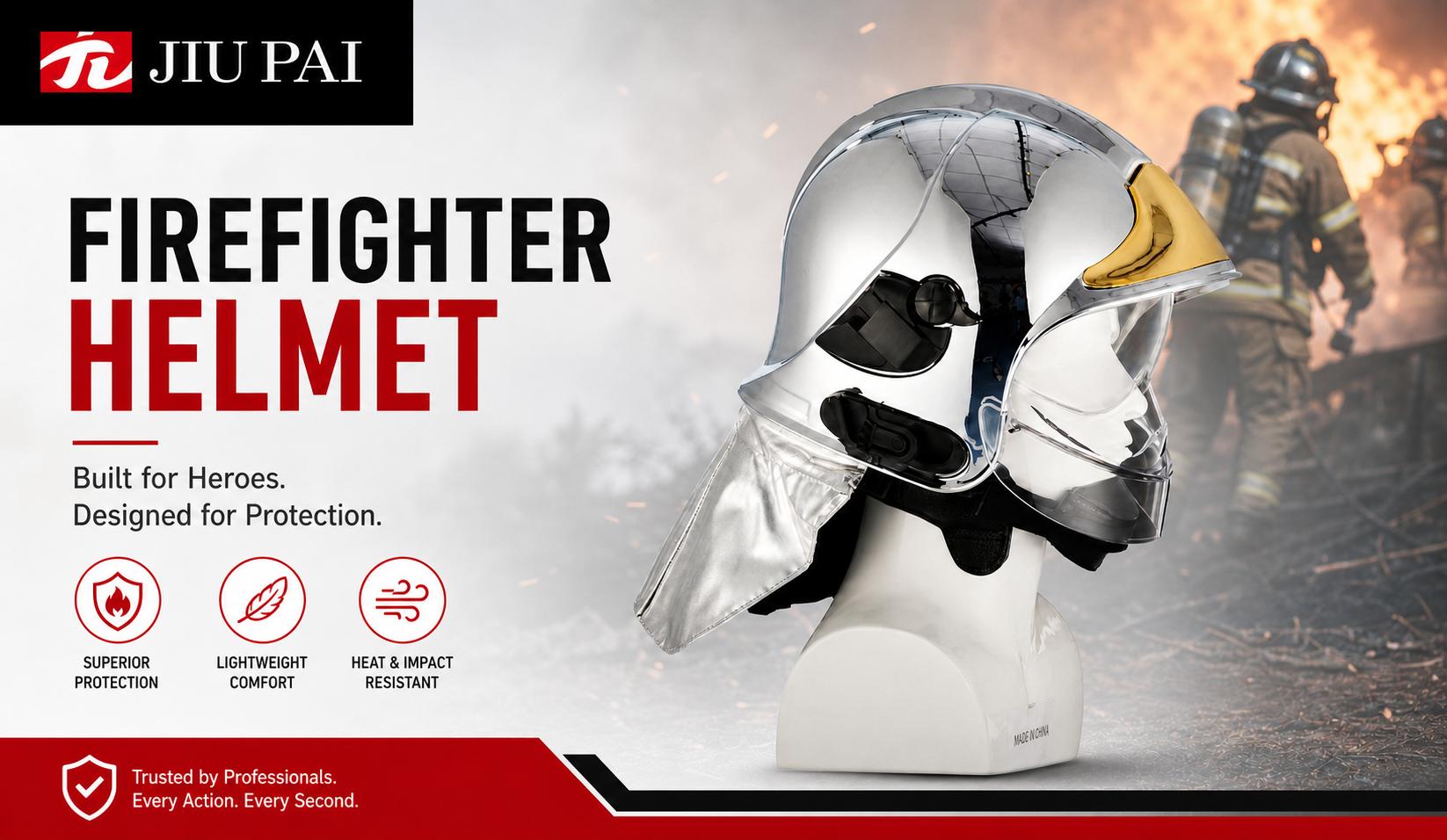
Regular top manufacturers will strictly follow the global general test standards to complete the impact and puncture retest after pretreatment in high and low temperature, hot and humid environments to ensure that the performance of fire helmets in extremely harsh environments does not decrease.Products from inferior manufacturers often simplify the testing process. The thickness of the shell is not up to standard, and the material of the buffer layer is cut corners. It seems that there is no difference in appearance. It is easy to crack, deform, and penetrate in the event of a sudden impact, and rescue safety cannot be guaranteed at all.When purchasing and selecting models, manufacturers must be required to provide complete impact and puncture performance test reports to verify whether the parameters meet the actual rescue needs.
Professional head manufacturers use special flame-retardant and high-temperature-resistant raw materials, with a multi-layer thermal insulation buffer structure, which can withstand the extreme high temperature environment of the fire site, and at the same time has excellent self-extinguishing performance from the fire, will not aid combustion, and no open flame remains.Low-end manufacturers use ordinary plastics and low-quality composite materials with extremely low temperature resistance, which quickly soften and deform at high temperatures, not only losing their protective effect, but may also produce toxic and harmful gases, exacerbating the risk of rescue.At the same time, the masks, straps, liners and other accessories of high-quality firefighting helmets also need to meet the flame-retardant and heat-resistant standards simultaneously to achieve all-round protection without shortcomings.
At the same time, the protective coating on the shell and surface of the fire helmet must have the characteristics of acid and alkali resistance, oil resistance, and corrosion resistance of various chemical solvents. In the face of corrosive liquids and flue gas spraying in chemical fires, there will be no shell corrosion, coating shedding, performance failure and other problems.Top manufacturers will optimize the protective formula of fire helmets for special rescue scenarios, strengthen the resistance to chemical erosion and electrical insulation stability, and adapt to the global multi-scene rescue needs, while most of the products of ordinary manufacturers are only suitable for conventional fire situations, unable to cope with special and complex rescue conditions, and the applicable scenarios have great limitations.
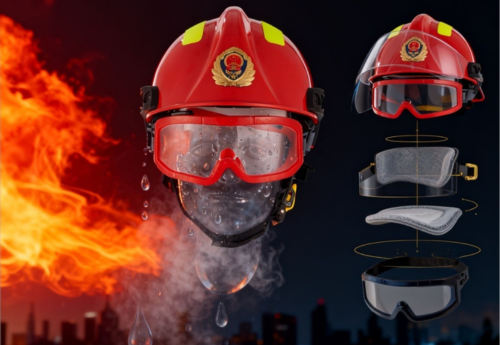
In terms of core accessories, the cushioning lining of high-quality fire helmets, high-density sponges, adjustable head circumference suspension system, flame-retardant straps, protective masks, waterproof and dust-proof frames and other accessories are all equipped with special high-quality components, which are strong in toughness, not easy to age, wear-resistant and durable, and are not easy to deform, break or fall off after long-term high-frequency use.In order to compress costs, low-end manufacturers will use recycled waste and low-quality ordinary materials. The accessories have rough workmanship, poor fit, and are easy to age and crack. Not only is the protection performance insufficient, but there will also be loose wear, protective gaps and other problems, greatly reducing rescue safety and equipment service life.Regular manufacturers will strictly control every quality inspection process of raw materials, and all accessories have undergone multiple rigorous tests to ensure the stable quality of the whole machine.
NFPA is an authoritative firefighting equipment standard formulated by the American Fire Protection Association, and it is also the core reference standard for global fire helmets. The products that meet the standards can be adapted to the North American market and the global high-standard procurement needs.EN 443 is the general safety standard for fire helmets in the European Union, which regulates the protective performance, structural design, and testing requirements of fire helmets.EN 16471 focuses on the safety specifications of emergency rescue fire helmets, and sets strict standards for multi-function rescue scenarios.At the same time, regular export-grade firefighting helmets must have CE EU compulsory safety certification and ISO quality management system certification, and some high-end products can also have a number of international special testing and certification.
A reliable global manufacturer, all mass-produced fire helmets have passed the above-mentioned full set of authoritative testing and certification. The certificates are authentic and verifiable, the qualifications are complete and effective, and complete qualification documents, test reports, and certification certificates can be provided for procurement verification, project bidding, and overseas customs clearance.However, most of the small factories and OEM manufacturers only have basic ordinary certifications, lack core international standard qualifications, and their products cannot meet the global professional procurement needs, and there is no guarantee of compliance and safety.
Companies that have long focused on the research and development and production of firefighting helmets will continue to iterate their product technology, optimize their product structure according to the upgrading needs of global rescue scenarios, and solve industry pain points such as bulky wearing of traditional firefighting helmets, blind spots for protection, and poor adaptability.On the other hand, emerging small factories lack the accumulation of core technology and imperfect technological processes. Mass-produced products are prone to uneven quality and unstable performance, and cannot be adapted to the high standards of professional fire and rescue.When purchasing, priority is given to the source factory with more than ten years of professional fire helmet production experience, which is the basic prerequisite to ensure product quality.
At the same time, rich global market experience means that manufacturers have a mature cross-border delivery, customs declaration, and performance system, which can properly handle various issues of overseas bulk orders and avoid compliance risks and delivery risks in cross-border procurement.However, small manufacturers limited to the local market lack experience in global trade services, are not familiar with international standards and overseas procurement rules, and are prone to problems such as product non-compliance, delivery delays, and non-compliance, which seriously affect the implementation of the project.
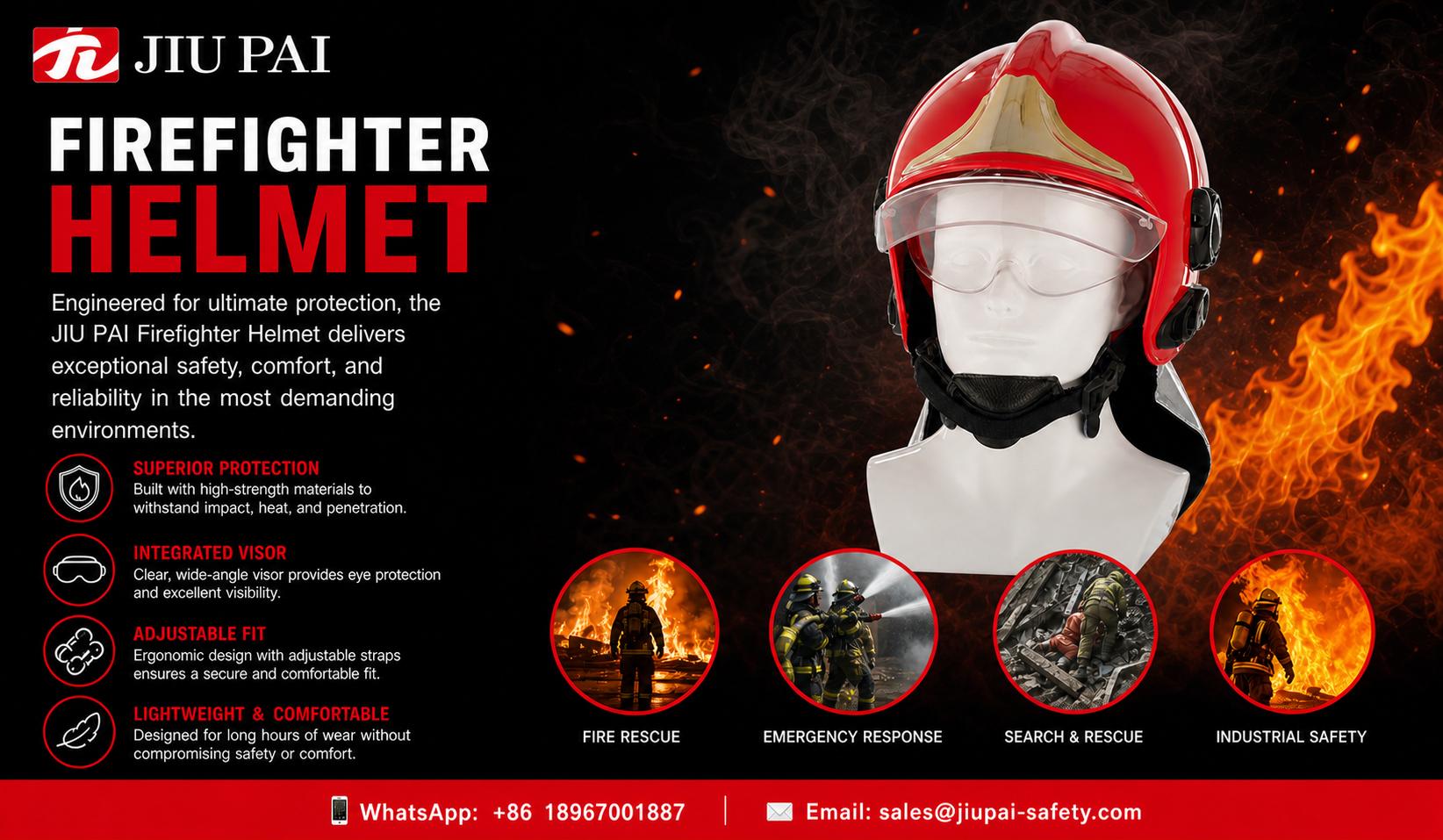
When purchasing and selecting models, we can focus on verifying manufacturers' benchmarking cooperation cases, batch supply records, and customer reputation evaluations, and give priority to manufacturers with national and international firefighting equipment supporting project experience.The products of such manufacturers have undergone dual inspections in actual combat scenarios and large-scale projects, and their quality, reliability, adaptability, and practicality are more guaranteed.For manufacturers without high-quality project cases and famous customer cooperation resumes, product quality and service capabilities cannot be effectively verified, and procurement risks are extremely high.
Mature source factories can stably undertake large-volume and ultra-large-volume orders, with sufficient daily and monthly production capacity, and there will be no problems of insufficient production capacity of small factories, backlog of orders, and delayed delivery.At the same time, large-scale chemical plants have independent quality inspection workshops, testing equipment and quality control teams, and each batch of products can complete all tests to ensure uniform quality and zero defects in batch products.However, small workshop-style factories have limited production capacity and rudimentary equipment. Not only are they unable to undertake large orders, but they are prone to quality fluctuations during mass production, which seriously affects the progress of procurement, delivery and equipment distribution.
At the same time, JIUAI fire helmet suppliers can provide exclusive product research and development and program design services according to customer market positioning, regional needs, and brand tone, to help customers CREATE differentiated products and enhance MARKET competitiveness.Reliable manufacturers have independent mold research and development capabilities, no need to rely on third-party OEM, short customization cycle, controllable cost, and high efficiency in program implementation.However, small factories that lack OEM/ODM strength can only produce general-purpose products, which cannot meet the personalized and branded customization needs of customers, and cooperation is extremely limited.
Common configuration customization includes thickening the protective shell, upgrading the high-definition anti-fog mask, installing a lighting bracket, equipping the communication card slot, optimizing the heat insulation lining, adjusting the head circumference to adapt to the specifications, upgrading the flame-retardant harness, etc., which can be accurately adapted to the exclusive needs of different scenarios such as urban fire fighting, chemical rescue, power rescue, and forest fire fighting.Manufacturers can output customized solutions one-to-one according to customers' specific usage scenarios, procurement standards, and individual needs to achieve accurate product adaptation.However, ordinary manufacturers can only provide standardized general-purpose products, and cannot complete refined customization, making it difficult to match high-end and special procurement needs.
In terms of delivery, large-scale chemical plants have sufficient inventory of raw materials, efficient production lines, and a perfect warehousing and logistics system. They can complete production, delivery, and delivery in strict accordance with the contract cycle, support urgent orders and expedited production, and perfectly adapt to the construction period of large-scale projects and the needs of emergency equipment distribution.At the same time, manufacturers have mature cross-border logistics docking capabilities, which can ensure stable and on-time delivery of overseas orders.The supply chain of small factories is unstable and the production process is not standardized. It is prone to batch quality imbalances, delayed delivery, out-of-stock and out-of-supply problems, which seriously affect customer project promotion and market operations.
Judging from the full cycle value, high-quality fire helmets are made of durable materials, stable performance, low failure rate and long service life, which greatly reduces the cost of late replacement and maintenance.However, low-cost and low-quality firefighting helmets are easily damaged and frequently replaced, and long-term procurement costs are higher, and there are great safety risks.Top JIUAI PPE manufacturers can provide stepped discounts and exclusive long-term cooperation policies according to customer procurement volume and cooperation cycle, so as to maximize procurement cost savings for customers and achieve a mutually beneficial and WIN-win long-term cooperation model.
JIUAI fire helmet manufacturers are equipped with professional testing equipment and quality inspection team, which can independently complete all performance tests such as impact testing, PUNCTURE testing, flame retardant testing, INSULATION TESTING, corrosion RESISTANCE testing, and high and low temperature tolerance TESTING. Each batch of products comes with a complete quality inspection report and certificate of conformity.At the same time, the product enjoys formal warranty service throughout the process, with a clear warranty period and perfect warranty terms. If there is a non-human quality problem, it can enjoy free repair, replacement, and reissue services.When purchasing, on-site factory inspections or video inspections of production and quality inspection processes can be carried out to fully confirm the manufacturer's quality control strength.
After-sales can provide customers with product use guidance, installation and commissioning, technical Q&A, troubleshooting and other services. At the same time, it can continuously optimize product technology and technology according to market technology iteration and standard updates, and provide product upgrade support for long-term cooperative customers.For overseas customers, multilingual technical docking services can be provided to break down communication barriers.However, small manufacturers do not have a professional technical team, can only sell general-purpose products, and cannot provide any in-depth technical support. After purchasing, customers encounter adaptation, use, and upgrade problems that cannot be effectively solved.
At the same time, manufacturers always have all kinds of original accessories, including masks, straps, liners, buckles, suspension systems, etc., and can provide customers with replacement and replacement services at any time, greatly reducing equipment maintenance costs and extending the service life of fire helmets.For overseas cooperative customers, it can provide cross-border after-sales docking, remote technical guidance, and batch spare parts supporting services to ensure the long-term stable use of customer equipment.In contrast, the after-sales system of small factories is lacking, the spare parts reserves are insufficient, and there is no follow-up guarantee after the product is sold, and it cannot be repaired and replaced in time after damage occurs, which seriously affects the normal use and equipment allotment.
Helmet Quality And Protection Performance
Impact and penetration protection
In fire scenes and emergency rescue scenes, falling objects, gravel impact, and sharp object puncture are the primary risks that threaten the safety of firefighters' heads. Therefore, impact resistance and puncture resistance are the core basic indicators of fire helmets, and they are also the key to identifying the hard power of manufacturers' products.High-quality firefighting helmets must undergo rigorous simulation and actual combat testing to withstand the impact of heavy objects and hard objects at high altitude, while preventing sharp objects from penetrating the firefighting helmet shell and damaging the head.Regular top manufacturers will strictly follow the global general test standards to complete the impact and puncture retest after pretreatment in high and low temperature, hot and humid environments to ensure that the performance of fire helmets in extremely harsh environments does not decrease.Products from inferior manufacturers often simplify the testing process. The thickness of the shell is not up to standard, and the material of the buffer layer is cut corners. It seems that there is no difference in appearance. It is easy to crack, deform, and penetrate in the event of a sudden impact, and rescue safety cannot be guaranteed at all.When purchasing and selecting models, manufacturers must be required to provide complete impact and puncture performance test reports to verify whether the parameters meet the actual rescue needs.
Heat and flame resistance
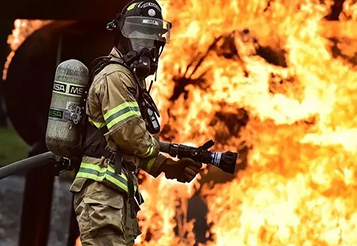
firefighting operations face high-temperature flames, thermal radiation, and hot smoke. The heat-resistant and flame-retardant properties of firefighting helmets directly determine whether firefighters can continue to operate in high-temperature fires.High-quality fire helmets need to have strong high temperature resistance, flame retardant, and thermal radiation resistance. Long-term exposure to high-temperature flames and high-temperature air currents will not cause the shell to melt, deform, crack, and fade. At the same time, it can effectively block heat conduction and avoid head burns.Professional head manufacturers use special flame-retardant and high-temperature-resistant raw materials, with a multi-layer thermal insulation buffer structure, which can withstand the extreme high temperature environment of the fire site, and at the same time has excellent self-extinguishing performance from the fire, will not aid combustion, and no open flame remains.Low-end manufacturers use ordinary plastics and low-quality composite materials with extremely low temperature resistance, which quickly soften and deform at high temperatures, not only losing their protective effect, but may also produce toxic and harmful gases, exacerbating the risk of rescue.At the same time, the masks, straps, liners and other accessories of high-quality firefighting helmets also need to meet the flame-retardant and heat-resistant standards simultaneously to achieve all-round protection without shortcomings.
Electrical and chemical protection
Modern fire rescue scenarios are complex and diverse. In addition to conventional fires, they also cover special scenarios such as chemical leaks, electric power fires, and explosions of hazardous chemicals. This requires that fire helmets must have professional anti-electric shock and anti-chemical corrosion capabilities.The high-quality and compatible firefighting helmet has stable insulation properties, can effectively resist the impact of high-voltage currents, avoid electric shock accidents among firefighters in power rescue, and is suitable for emergency power repair, live fire disposal and other operating scenarios.At the same time, the protective coating on the shell and surface of the fire helmet must have the characteristics of acid and alkali resistance, oil resistance, and corrosion resistance of various chemical solvents. In the face of corrosive liquids and flue gas spraying in chemical fires, there will be no shell corrosion, coating shedding, performance failure and other problems.Top manufacturers will optimize the protective formula of fire helmets for special rescue scenarios, strengthen the resistance to chemical erosion and electrical insulation stability, and adapt to the global multi-scene rescue needs, while most of the products of ordinary manufacturers are only suitable for conventional fire situations, unable to cope with special and complex rescue conditions, and the applicable scenarios have great limitations.
Materials and component quality
The overall protective performance, service life, and wearing comfort of fire helmets depend entirely on the quality of raw materials and core accessories. It is also the core key to distinguish between high-quality products from large manufacturers and inferior products from small manufacturers.The world's top fire helmet manufacturers use high-strength imported composite materials and special flame-retardant insulation raw materials. The original materials are of high purity and no waste doped to ensure the structural strength, stability and durability of fire helmets from the source.In terms of core accessories, the cushioning lining of high-quality fire helmets, high-density sponges, adjustable head circumference suspension system, flame-retardant straps, protective masks, waterproof and dust-proof frames and other accessories are all equipped with special high-quality components, which are strong in toughness, not easy to age, wear-resistant and durable, and are not easy to deform, break or fall off after long-term high-frequency use.In order to compress costs, low-end manufacturers will use recycled waste and low-quality ordinary materials. The accessories have rough workmanship, poor fit, and are easy to age and crack. Not only is the protection performance insufficient, but there will also be loose wear, protective gaps and other problems, greatly reducing rescue safety and equipment service life.Regular manufacturers will strictly control every quality inspection process of raw materials, and all accessories have undergone multiple rigorous tests to ensure the stable quality of the whole machine.
Safety Standards And Certifications
Safety certification and industry standards are authoritative endorsements for the compliance and safety of fire helmets, and they are also a hard threshold for products to open up the global market and adapt to the procurement of governments and enterprises in various countries.Fire helmets that do not have formal and authoritative certification, regardless of the publicity effect, have great safety risks and compliance risks, and cannot be used in professional fire rescue operations.To select high-quality manufacturers around the world, it is necessary to focus on verifying whether the products have a full set of mainstream international authoritative certifications and are fully in line with global safety standards.NFPA is an authoritative firefighting equipment standard formulated by the American Fire Protection Association, and it is also the core reference standard for global fire helmets. The products that meet the standards can be adapted to the North American market and the global high-standard procurement needs.EN 443 is the general safety standard for fire helmets in the European Union, which regulates the protective performance, structural design, and testing requirements of fire helmets.EN 16471 focuses on the safety specifications of emergency rescue fire helmets, and sets strict standards for multi-function rescue scenarios.At the same time, regular export-grade firefighting helmets must have CE EU compulsory safety certification and ISO quality management system certification, and some high-end products can also have a number of international special testing and certification.
A reliable global manufacturer, all mass-produced fire helmets have passed the above-mentioned full set of authoritative testing and certification. The certificates are authentic and verifiable, the qualifications are complete and effective, and complete qualification documents, test reports, and certification certificates can be provided for procurement verification, project bidding, and overseas customs clearance.However, most of the small factories and OEM manufacturers only have basic ordinary certifications, lack core international standard qualifications, and their products cannot meet the global professional procurement needs, and there is no guarantee of compliance and safety.
Fire Helmet Supplier Experience And Industry Reputation
Manufacturing experience
Fire helmets are special security equipment. The production process is complex and the quality control is strict. It requires long-term technical precipitation and process accumulation. Production experience directly determines the maturity and stability of the product.A senior manufacturer who has been deeply engaged in the industry for many years, with a perfect production process system, mature technical processes and rich experience in quality control, can accurately control every detail of the material ratio, molding process, protective structure, accessories assembly, etc. of fire helmets, to avoid quality defects in the mass production process.Companies that have long focused on the research and development and production of firefighting helmets will continue to iterate their product technology, optimize their product structure according to the upgrading needs of global rescue scenarios, and solve industry pain points such as bulky wearing of traditional firefighting helmets, blind spots for protection, and poor adaptability.On the other hand, emerging small factories lack the accumulation of core technology and imperfect technological processes. Mass-produced products are prone to uneven quality and unstable performance, and cannot be adapted to the high standards of professional fire and rescue.When purchasing, priority is given to the source factory with more than ten years of professional fire helmet production experience, which is the basic prerequisite to ensure product quality.
Global market experience
Manufacturers with global market service experience, better understand the firefighting equipment standards, procurement specifications, usage scenarios and compliance requirements of different countries and regions, and can adapt to the procurement needs of various regions around the world.A leading manufacturer in the global market, its products are exported to Europe, America, Southeast Asia, the Middle East, Africa and other countries and regions. It is familiar with the certification thresholds, product adaptation standards, and delivery specifications of different regions, and can accurately match the customized procurement needs of overseas governments, enterprises, and traders.At the same time, rich global market experience means that manufacturers have a mature cross-border delivery, customs declaration, and performance system, which can properly handle various issues of overseas bulk orders and avoid compliance risks and delivery risks in cross-border procurement.However, small manufacturers limited to the local market lack experience in global trade services, are not familiar with international standards and overseas procurement rules, and are prone to problems such as product non-compliance, delivery delays, and non-compliance, which seriously affect the implementation of the project.
Customer and project references
Real customer cases and large-scale project cooperation resumes are the most intuitive basis for verifying the strength of manufacturers.A high-quality global supplier of fire helmets, long-term service to fire rescue agencies, emergency management departments, large government and enterprise units, and international security engineering companies in various countries. It has a large number of successful cases of large-scale bidding projects, bulk equipment procurement, and overseas complete sets of supply, and can provide real project resumes, customer feedback, and cooperation supporting evidence.When purchasing and selecting models, we can focus on verifying manufacturers' benchmarking cooperation cases, batch supply records, and customer reputation evaluations, and give priority to manufacturers with national and international firefighting equipment supporting project experience.The products of such manufacturers have undergone dual inspections in actual combat scenarios and large-scale projects, and their quality, reliability, adaptability, and practicality are more guaranteed.For manufacturers without high-quality project cases and famous customer cooperation resumes, product quality and service capabilities cannot be effectively verified, and procurement risks are extremely high.
Production Capacity And Customization
Factory scale and production capacity
The scale of the factory and the mass production capacity directly determine the efficiency of order delivery, the stability of product quality and the ability to accept large orders. They are the core considerations for long-term cooperative procurement.The world's top manufacturer of fire helmets, with a standardized and modern production base, a full set of automated production equipment, professional testing production lines, standardized plant layout, perfect production system, and large-scale mass production strength.Mature source factories can stably undertake large-volume and ultra-large-volume orders, with sufficient daily and monthly production capacity, and there will be no problems of insufficient production capacity of small factories, backlog of orders, and delayed delivery.At the same time, large-scale chemical plants have independent quality inspection workshops, testing equipment and quality control teams, and each batch of products can complete all tests to ensure uniform quality and zero defects in batch products.However, small workshop-style factories have limited production capacity and rudimentary equipment. Not only are they unable to undertake large orders, but they are prone to quality fluctuations during mass production, which seriously affects the progress of procurement, delivery and equipment distribution.
OEM/ODM capabilities
In the global firefighting equipment trade, OEM OEM and ODM customization are the mainstream cooperation models. Manufacturers with mature customized OEM capabilities can meet the brand OEM, product iteration, and exclusive R&D needs of different customers in all directions.High-quality suppliers have professional R&D and design teams and mold development teams, and can provide one-stop OEM/ODM services, covering brand OEM, logo customization, version optimization, function upgrade, exclusive formula debugging and other full-process services.At the same time, JIUAI fire helmet suppliers can provide exclusive product research and development and program design services according to customer market positioning, regional needs, and brand tone, to help customers CREATE differentiated products and enhance MARKET competitiveness.Reliable manufacturers have independent mold research and development capabilities, no need to rely on third-party OEM, short customization cycle, controllable cost, and high efficiency in program implementation.However, small factories that lack OEM/ODM strength can only produce general-purpose products, which cannot meet the personalized and branded customization needs of customers, and cooperation is extremely limited.
Custom designs and configurations
Different countries, different rescue scenarios, and different purchasing units have differentiated needs for the appearance, function, and configuration of fire helmets. Flexible custom design and configuration upgrade capabilities are the core advantages of head manufacturers.Professional manufacturers can support a full range of personalized customization services, including fire helmet appearance color, pattern printing, exclusive logo, font style customization, and function configuration can be upgraded according to rescue scenarios.Common configuration customization includes thickening the protective shell, upgrading the high-definition anti-fog mask, installing a lighting bracket, equipping the communication card slot, optimizing the heat insulation lining, adjusting the head circumference to adapt to the specifications, upgrading the flame-retardant harness, etc., which can be accurately adapted to the exclusive needs of different scenarios such as urban fire fighting, chemical rescue, power rescue, and forest fire fighting.Manufacturers can output customized solutions one-to-one according to customers' specific usage scenarios, procurement standards, and individual needs to achieve accurate product adaptation.However, ordinary manufacturers can only provide standardized general-purpose products, and cannot complete refined customization, making it difficult to match high-end and special procurement needs.
Large-order consistency and delivery
The quality consistency and stable delivery capacity of large orders are the core standards for measuring the comprehensive strength of manufacturers, and they are also the key prerequisites for bulk procurement and long-term cooperation between government and enterprises.High-quality helmet manufacturers have standardized production processes, digital quality control systems, and mature supply chain systems. From raw material procurement, production and processing, finished product testing to packaging and warehousing, the whole process is standardized and controlled to ensure that the material, performance, craftsmanship, and appearance of each batch of fire helmets are completely unified, and batch color differences, performance differences, process defects, etc. are eliminated.In terms of delivery, large-scale chemical plants have sufficient inventory of raw materials, efficient production lines, and a perfect warehousing and logistics system. They can complete production, delivery, and delivery in strict accordance with the contract cycle, support urgent orders and expedited production, and perfectly adapt to the construction period of large-scale projects and the needs of emergency equipment distribution.At the same time, manufacturers have mature cross-border logistics docking capabilities, which can ensure stable and on-time delivery of overseas orders.The supply chain of small factories is unstable and the production process is not standardized. It is prone to batch quality imbalances, delayed delivery, out-of-stock and out-of-supply problems, which seriously affect customer project promotion and market operations.
Service, Pricing And Long-Term Cooperation
Competitive pricing and total value
The procurement of fire helmets is not simply a competition for low prices. High cost performance and full cycle value are the core of long-term cooperation.High-quality source manufacturers adopt the factory direct supply model, eliminating the need for middlemen to make the difference, and under the premise of the same quality, the same certification, and the same technology, they have a very competitive price advantage.At the same time, manufacturers uphold the principle of cost-effective pricing, do not make low-cost and inferior products, and do not have inflated premiums, allowing customers to purchase high-quality fire helmets that meet international standards and are durable in actual combat at a reasonable cost.Judging from the full cycle value, high-quality fire helmets are made of durable materials, stable performance, low failure rate and long service life, which greatly reduces the cost of late replacement and maintenance.However, low-cost and low-quality firefighting helmets are easily damaged and frequently replaced, and long-term procurement costs are higher, and there are great safety risks.Top JIUAI PPE manufacturers can provide stepped discounts and exclusive long-term cooperation policies according to customer procurement volume and cooperation cycle, so as to maximize procurement cost savings for customers and achieve a mutually beneficial and WIN-win long-term cooperation model.
Quality assurance and inspection
A perfect quality assurance and testing system is the core support for product safety and compliance.Regular global-level manufacturers have established a full-process quality control system, from sampling of raw materials into the warehouse, inspection of the production process, and full inspection of finished products out of the factory. Each process has strict testing standards and control processes to prevent unqualified products from flowing into the market.JIUAI fire helmet manufacturers are equipped with professional testing equipment and quality inspection team, which can independently complete all performance tests such as impact testing, PUNCTURE testing, flame retardant testing, INSULATION TESTING, corrosion RESISTANCE testing, and high and low temperature tolerance TESTING. Each batch of products comes with a complete quality inspection report and certificate of conformity.At the same time, the product enjoys formal warranty service throughout the process, with a clear warranty period and perfect warranty terms. If there is a non-human quality problem, it can enjoy free repair, replacement, and reissue services.When purchasing, on-site factory inspections or video inspections of production and quality inspection processes can be carried out to fully confirm the manufacturer's quality control strength.
Technical support
Professional technical support capabilities are the key to ensuring product adaptation and continuous iteration.High-quality fire helmet manufacturers have a senior R&D technical team, with independent research and development, technology upgrading, and problem optimization capabilities, and can provide customers with full-cycle professional technical support.Pre-sales can provide professional product selection solutions, technical parameter docking, and customized program design services according to customer procurement scenarios and standard requirements.During the sale, the production, customization, and testing processes can be followed up throughout the process, and technical issues can be connected in time to optimize product solutions.After-sales can provide customers with product use guidance, installation and commissioning, technical Q&A, troubleshooting and other services. At the same time, it can continuously optimize product technology and technology according to market technology iteration and standard updates, and provide product upgrade support for long-term cooperative customers.For overseas customers, multilingual technical docking services can be provided to break down communication barriers.However, small manufacturers do not have a professional technical team, can only sell general-purpose products, and cannot provide any in-depth technical support. After purchasing, customers encounter adaptation, use, and upgrade problems that cannot be effectively solved.
After-sales service and spare parts
A perfect after-sales service system and sufficient spare parts reserves are important guarantees for long-term stable cooperation.Top brand manufacturers have established a global after-sales service system with fast response speed and standardized service processes, which can quickly connect with customers' after-sales needs and solve various problems such as product use, damage, and adaptation in a timely manner.At the same time, manufacturers always have all kinds of original accessories, including masks, straps, liners, buckles, suspension systems, etc., and can provide customers with replacement and replacement services at any time, greatly reducing equipment maintenance costs and extending the service life of fire helmets.For overseas cooperative customers, it can provide cross-border after-sales docking, remote technical guidance, and batch spare parts supporting services to ensure the long-term stable use of customer equipment.In contrast, the after-sales system of small factories is lacking, the spare parts reserves are insufficient, and there is no follow-up guarantee after the product is sold, and it cannot be repaired and replaced in time after damage occurs, which seriously affects the normal use and equipment allotment.
Conclusion
In the global procurement of fire helmets, safety standards, protective performance and stable delivery are always the core considerations of buyers, and they are also the key to distinguishing high-quality manufacturers from ordinary suppliers.Deeply engaged in the field of R&D and manufacturing of fire helmets, JIUAI Safety has always adhered to strict international safety regulations, from the selection of raw materials, performance testing to mass production delivery, the whole process strictly controls the quality.Relying on mature production technology and rich global supply experience, our helmets can be adapted to various complex rescue scenarios, ensuring the safety of front-line firefighters in all directions, and eliminating the safety risks caused by inferior equipment.
Request A Quote
Related News
Quick Consultation
We are looking forward to providing you with a very professional service. For any
further information or queries please feel free to contact us.