
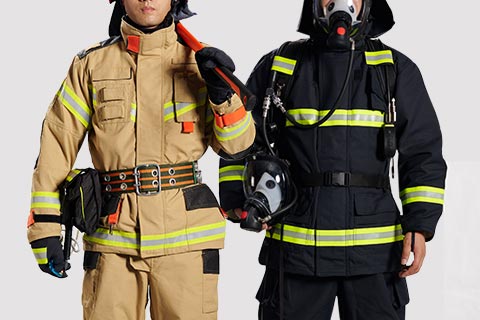

Firefighting Hoods: Must-Have Gear for Firefighters
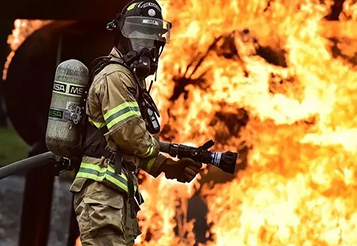
Fire hood is the core personal protective equipment (PPE) required by firefighters. It is mainly used to protect the exposed skin of firefighters 'head, neck and face from extreme high temperature, open fire, smoke particles and toxic and harmful pollutants in fire fighting and emergency operations.In the statistics of global fire safety accidents, head and neck burns and carcinogenic dust inhalation contact injuries are the two most common types of operation injuries for front-line firefighters, and most of these injuries can be completely avoided by compliant and high-quality fire hoods.
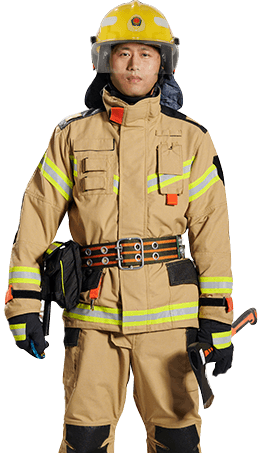
Many fire brigade procurement personnel, front-line firefighters have cognitive misunderstanding, relying on fire helmets and fire fighting clothing can complete the whole body protection.However, in complex fire environment, helmet and fire-fighting suit alone cannot realize full-dimensional protection. There are a large number of blind areas for protection at the lower hem of helmet, collar of protective clothing and mask. These gaps in head and neck are the weak parts where high temperature airflow, open flame splash and toxic smoke are most likely to invade, and they are also the most vulnerable areas for firemen's body protection.
Throughout the development history of global fire protection equipment, the fire resistant hood has completed leap-forward iteration, upgrading from the traditional thermal protection mask with basic heat insulation in the early years to multi-layer composite high-end protective equipment integrating heat insulation and flame retardant, particulate barrier, anti-virus and ventilation and perspiration.Under the multiple toxic and harmful risks of modern fire scenes, the firefighter hood is no longer optional auxiliary equipment, but the standard protective equipment for all firefighters entering and leaving the fire scene.
The new generation of high-end custom firefighter hood adds a dedicated particle barrier protective layer, relying on nano-microporous barrier technology to intercept micron-level carcinogenic dust under the premise of ensuring ventilation.This kind of barrier structure will not affect normal skin respiration, but it can reduce the penetration of toxic substances into blood circulation through skin from the source, and reduce the occupational disease risk of firefighters working for a long time from the source.
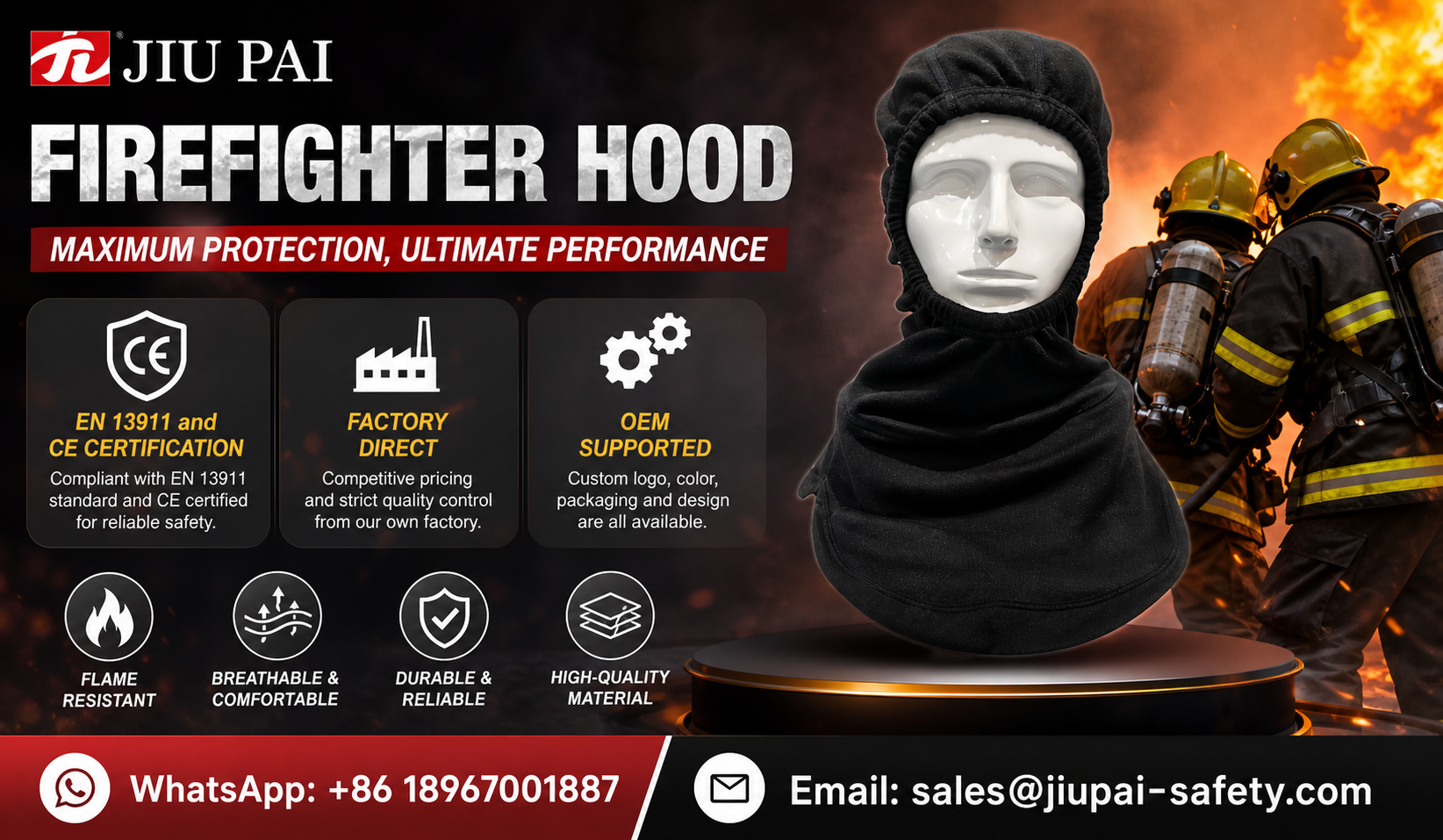
The standardized version can perfectly fit the dead corner of equipment connection, realize seamless linkage of three main protective equipment, completely eliminate the exposed skin gap of the whole head protection system, which is also the professional equipment adaptation ability that ordinary knitted mask cannot realize.
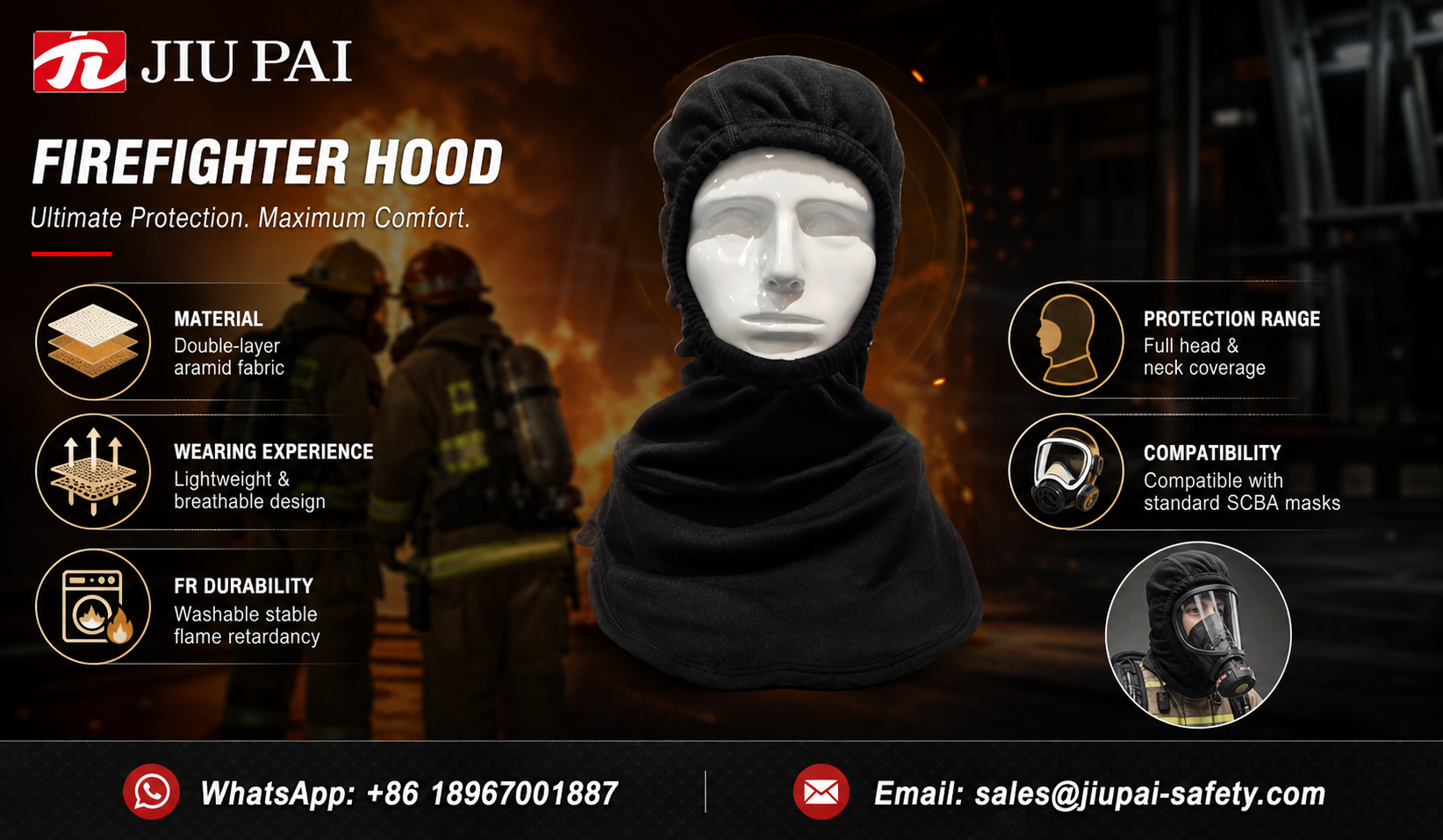
JIUPAI is a domestic large-scale one-stop fire protection equipment source manufacturer, all categories of firefighter protective hood support EN/CE international standard certification, OEM customization, bulk procurement, global door-to-door export deliveryProtect the life safety of firefighters, choose compliance high quality fire hood, consult JIUPAI immediately for exclusive procurement plan!
Many fire brigade procurement personnel, front-line firefighters have cognitive misunderstanding, relying on fire helmets and fire fighting clothing can complete the whole body protection.However, in complex fire environment, helmet and fire-fighting suit alone cannot realize full-dimensional protection. There are a large number of blind areas for protection at the lower hem of helmet, collar of protective clothing and mask. These gaps in head and neck are the weak parts where high temperature airflow, open flame splash and toxic smoke are most likely to invade, and they are also the most vulnerable areas for firemen's body protection.
Throughout the development history of global fire protection equipment, the fire resistant hood has completed leap-forward iteration, upgrading from the traditional thermal protection mask with basic heat insulation in the early years to multi-layer composite high-end protective equipment integrating heat insulation and flame retardant, particulate barrier, anti-virus and ventilation and perspiration.Under the multiple toxic and harmful risks of modern fire scenes, the firefighter hood is no longer optional auxiliary equipment, but the standard protective equipment for all firefighters entering and leaving the fire scene.
What Is a Firefighting Hood?
Definition and purpose of a firefighter hood
The custom firefighter hood is a close-fitting flame-retardant protective clothing worn inside the fire helmet and close to the body surface. It belongs to the second level personal protection PPE for firefighters.Different from external protective equipment, its inner layer fits the skin, the outer layer accepts the helmet and air respirator mask, and the standard compliance fire resistant hood fully covers three high-risk protection areas of the human body:- All scalp and cranial skin
- The whole neck area (back neck, side neck, throat weak area)
- Exposed areas of cheeks and chin not covered by air respirator mask and helmet shield
Why do firefighters need protective hoods?
In combination with fire operation conditions and fire occupational health standards, firefighters wearing professional fire resistant hoods have four irreplaceable core values, which are also the rigid requirements for fire brigade safety control:- Reduce the risk of radiant heat burns: large-scale open fire in buildings and radiant heat from high-temperature equipment will quickly burn exposed skin. The fire hood can greatly attenuate environmental radiant heat and avoid superficial and deep thermal burns.
- Prevent direct contact injury of open fire: splash flame, molten debris and burning residue in fire easily enter helmet and collar gap, and fire hood blocks open fire from contacting skin from inner layer.
- Isolate toxic smoke and carcinogenic particles: The combustion of buildings and chemical materials will produce a large amount of carcinogenic particles such as dust and polycyclic aromatic hydrocarbons. The hood prevents particles from adhering to the skin and infiltrating into the human body through pores, reducing the incidence of occupational cancer among firefighters.
- Perfect the whole set of PPE closed-loop protection: fill up the gaps between helmet, SCBA air respirator and fire-fighting protective clothing, and build a closed-loop protection without dead angle from head to upper trunk.
How Does a Firefighting Hood Protect Firefighters?
High-quality industrial-grade fire hood is not ordinary flame-retardant fabric. Relying on multi-layer composite fabric structure and professional industrial design, it protects fire operators from three dimensions in an all-round way and adapts to the full-scene operation conditions such as building fire, chemical fire and forest fire fighting.Thermal protection against extreme heat
Heat resistance and flame retardancy are the core performance of fire hood.It uses essential flame retardant fiber fabric, no combustion, no melt drops, high temperature does not carbonize.Built-in insulation interlayer forms air insulation layer, physically blocking heat conduction.Even if it withstands the instantaneous fire temperature above 1000℃, it can stably maintain the body surface temperature, effectively prevent the risk of heat shock and deep burn.Protection against fireground contaminants
The modern fire protection industry attaches great importance to the prevention and control of firefighters 'occupational chronic diseases. The combustion products in the fire scene are the biggest hidden killers of firefighters' occupational health, including solid smoke particles, volatile toxic combustion byproducts, chemical carcinogenic particles and heavy metal dust.The new generation of high-end custom firefighter hood adds a dedicated particle barrier protective layer, relying on nano-microporous barrier technology to intercept micron-level carcinogenic dust under the premise of ensuring ventilation.This kind of barrier structure will not affect normal skin respiration, but it can reduce the penetration of toxic substances into blood circulation through skin from the source, and reduce the occupational disease risk of firefighters working for a long time from the source.
Protection at the helmet and SCBA interface
Most of the fire skin injuries occurred in the intersection gaps of helmet edge, air respirator mask rubber ring and fire protection clothing collar.The fire resistant hood is ergonomically tailored to fit the contours of mainstream brand fire helmets and SCBA facemasks.The standardized version can perfectly fit the dead corner of equipment connection, realize seamless linkage of three main protective equipment, completely eliminate the exposed skin gap of the whole head protection system, which is also the professional equipment adaptation ability that ordinary knitted mask cannot realize.
What Materials Are Firefighting Hoods Made Of?
JIUPAI as a professional manufacturer of large-scale fire fighting equipment, we based on years of mass production and export customization experience, sorting out the market four types of mainstream custom firefighter hood special fabrics, convenient for buyers to quickly select, distinguish between high and low matching product material differences.Nomex firefighter hoods
Nomex Aramid is the most mature flame retardant fabric used in the global fire protection industry and is also the standard hood material for most grassroots fire brigades.It can be permanently inherently flame retardant, no burning droplets, lightweight soft fabric, wear without binding.Long time operation without sultry weight feeling.The global fire protection industry has been verified for decades, with stable performance and adaptability to all conventional fire fighting scenarios.Washing resistance, repeated cleaning after flame retardant performance does not decay.Suitable for large-scale standardized fire equipment procurement, cost-effective and optimal balance of safety.Aramid fiber firefighter hoods
It is woven from composite modified aramid fiber and upgrades the physical structure based on Nomex's basic properties.The outstanding advantages are high tear strength, wear resistance, scratch resistance and friction resistance.High temperature threshold is higher.For emergency rescue, demolition operations and other conditions that are easy to scratch and wear, the adaptability is stronger.It is mostly used for high-frequency operation scenes of emergency rescue special class and full-time fire brigade in industrial park.PBI firefighter hoods
PBI belongs to the top special fabric of fire protection, which is the top material for high temperature and high risk scenes.Core performance is ultra-high temperature resistance, extreme thermal radiation protection performance industry top; open fire long-term burning non-carbonization, non-hardening.In the refinery, chemical plant, kiln high-risk fire scenarios, the protective performance is far superior to ordinary aramid fabric.The disadvantage is that the material cost is high, and it is mainly used in high-end procurement projects of petrochemical fire protection, special industrial fire protection, and emergency assault commando teams.Particulate blocking barrier materials
In recent years, a new functional composite fabric is composed of a nano polymer barrier film on a flame retardant aramid substrate.The core technology highlight is the precise interception of carcinogenic soot particles.Synchronized with moisture transmission and perspiration bottom layer structure, solve the hot and sweaty pain point of multi-layer protective fabric.It has three properties: particle barrier, heat insulation and flame retardant, air permeability and moisture conductivity.Balance protection level and wearing comfort, is the mainstream of European and American fire procurement upgrade material.Types of Firefighting Hoods
Traditional thermal protection hoods
The first generation of standardized fire protection hood, single layer or simple double layer structure, product core positioning only focus on heat resistance, flame retardant, open fire prevention.Overall lightweight, excellent air permeability, low price.It is applicable to daily fire drills and routine fire fighting operations in low-risk cities, and only meets the basic national safety access protection standards.Particulate blocking firefighter hoods
Multi-layer composite structure, built-in exclusive particle barrier function layer, retain basic flame retardant and heat insulation ability, superimposed toxic dust, carcinogenic pollutant protection properties.It focuses on occupational health protection for firefighters, adapts to urban building fire, smoke rescue in confined space, long-term fire duty and other high-pollution operation scenarios. At present, domestic and foreign fire protection government procurement priority selection categories.Single-layer vs multi-layer firefighter hoods
We collate intuitive selection comparison tables to facilitate engineering procurement and quick benchmarking of fire fighting materials bidding Parameters:| Key Features | Single-Layer Firefighting Hood | Multi-Layer Firefighting Hood |
| Weight | Lightweight, no wearing burden | Slightly heavier with minor bulkiness |
| Breathability & Heat Dissipation | Excellent air permeability, suitable for long-duration missions | Depends on barrier layer design; high-grade styles keep breathable |
| Overall Protection Level | Basic flame & thermal resistance, no particulate protection | Enhanced full-scale protection: heat, flame, toxin and particulate blocking |
| Applicable Scenarios | Routine drills, low-risk general fire emergencies | High-risk fire, chemical dense smoke and emergency rescue missions |
Firefighter Hood Standards: NFPA, EN, and CE Certification Requirements
Fire protection equipment belongs to the national compulsory access labor protection articles. Fire protection hoods without formal certification are strictly prohibited from being put into fire operation and official project procurement. Two sets of authoritative industry standards are used globally, and they are also the core qualification threshold for foreign trade export and domestic bidding.NFPA 1971 standard
NFPA 1971 is the highest mandatory standard for fire protection equipment in North America, which clearly stipulates the four rigid indicators of fire hood flame retardant threshold, thermal radiation protection index, fabric tear strength and washing stability.All fire fighting materials exported to North America and the Middle East must pass NFPA 1971 full inspection, which is the highest industry qualification for international fire fighting equipment recognition.EN 13911 and CE certification
The EU market implements EN 13911 special testing standard for fire protection hoods, and simultaneously complies with EU 2016/425 PPE personal protection regulations. The finished product must be issued with CE official certification.EU standards focus on the examination of confined space smoke protection, skin affinity, equipment multi-equipment adaptability, is the product export Europe, Africa European standard project essential qualifications.Why certification matters
First, ensure the personal safety of frontline firefighters and avoid failure safety accidents of inferior fabric equipment; second, meet the rigid threshold of domestic and foreign fire bidding and government procurement qualification review; third, formally certify the traceability test report of products, which facilitates the filing of fire warehouse materials and safety supervision and verification.
Key Factors When Choosing a Firefighting Hood
Combined with the experience of mass supply of tens of thousands of sets of fire hoods, we summarize the four most important selection dimensions of the purchaser and avoid the inferior product routine of the industry:Heat protection performance
Priority shall be given to the verification of limit heat resistance parameters, open flame non-ignition time and heat conduction attenuation data.Under high-risk conditions, PBI material or nano-barrier multi-layer composite style shall be preferred. Price shall not be used as the purchasing judgment standard. Protective performance is the bottom line of fire fighting equipment.Comfort and breathability
First-line firefighters can often work for 1-4 hours in a single fire scene, and sultry sweating on their heads will affect their judgment and cause fatigue.The selection focuses on the permeability of the fabric, moisture absorption and perspiration of the bottom layer process, and the overall lightweight design.Priority is given to finished products that balance protection levels and air circulation structures, balancing safety and wearing experience.Fit and coverage
Focus on checking the face opening cut, lengthening and widening the neck cover version.It must be adapted to mainstream positive pressure air respirators and all kinds of fire helmets on the market; the fit degree of the model directly determines whether there is a protective blind area at the joint of the equipment, which is a key parameter that is easy to be ignored.Durability and maintenance
Pay attention to the sewing reinforcement process, high strength fireproof sewing line.Verify the flame retardant performance attenuation data of fabrics after repeated washing; give priority to products that support special cleaning for industrial fire protection and have longer service life, so as to reduce the replacement and operation and maintenance costs of materials in the later period.Firefighting Hood vs Balaclava: What Is the Difference?
A large number of purchasers are easy to confuse fire protection hoods and ordinary flame retardant balaclava caps, which are not interchangeable. The following parameters are clearly distinguished:| Comparison Items | Professional Firefighting Hood | Flame-Resistant Balaclava |
| Core Purpose | Dedicated fireground PPE for firefighter safety protection | General head covering for cold protection & basic civilian heat insulation |
| Industry Compliance Standard | Comply with mandatory NFPA / EN fire PPE standards | No mandatory fire protection standards; uneven material performance |
| Heat & Flame Resistance Level | Ultra-high rating, applicable for high-risk extreme fire scenarios | Performance depends on raw materials, unable to withstand long-term open flame burning |
How to Choose a Reliable Firefighter Hood Manufacturer?
For manufacturers, we inform industry buyers to screen four hard core standards for quality factories, avoiding middlemen and small workshops. Source:Manufacturing capability
Priority shall be given to the source factories with their own weaving workshops, finished sewing workshops and third-party testing laboratories.It has the ability of centralized production and supply in large quantities; through ISO full-process quality management system, it has independent quality control from fabric to finished product to ensure that there is no deviation in batch parameters.Certification documentation
Firefighter hood supplier can provide full material inspection report, NFPA, CE, EN full set of certification certificates, fire bidding access qualifications, factory compliance traceability documentsSupport the qualification verification of the whole process of project bidding.Customization options
JIUPAI supports full-dimensional customization services, including fire brigade LOGO embroidery printing, multi-specification size customization, fabric grade selection, multi-color appearance customization, project special parameter revision.Adapt to the personalized procurement needs of government enterprises and overseas projects.Export experience
It is preferred to have many years of experience in cross-border export of fire equipment, familiar with customs, overseas fire access regulations and international standard benchmarking procedures.One-stop to complete customs declaration, documents, overseas door-to-door delivery of the whole process services.FAQ
What does a firefighter hood protect?
A: It mainly protects against extreme high temperature, open fire burns, physical splash debris on head and neck, toxic smoke dust, carcinogenic combustion particles, and fills all protective gaps of helmet and respirator.Are firefighter hoods flame resistant?
A: Compliance industrial-grade firefighter protective hood all use essential flame retardant fiber, permanent non-flammable, no melt drops.Civil ordinary knitted hood does not have fire resistance, it is strictly prohibited to use in fire.What is the best material for a firefighter hood?
A: Normal working condition optimization high cost performance Nomex material.High-risk chemical fire protection is preferably made of high-end PBI material.Pay attention to occupational health and optimize nano multilayer barrier composite fabric.How often should a firefighter hood be replaced?
A: Regular 12 months regular replacement.Fabric blackening, wear, hardening after washing, line damage must be immediately scrapped and replaced.High-risk high-frequency operation 6 months cycle recheck replacement.Can firefighter hoods be customized?
A: Regular source manufacturers support personalized customization of full size, appearance, LOGO and fabric formula, and support OEM/ODM batch OEM production.Conclusion
From basic insulation protection to modern occupational health protection, fire hoods have become irreplaceable equipment in the entire fire PPE system.No matter whether the fire brigade is on duty five times a day, the industrial park is on full-time fire duty, or the overseas project material procurement, only by recognizing the formal certification, high-quality materials and reliable source manufacturers can the operation safety of the front-line firefighters be truly guaranteed.JIUPAI is a domestic large-scale one-stop fire protection equipment source manufacturer, all categories of firefighter protective hood support EN/CE international standard certification, OEM customization, bulk procurement, global door-to-door export deliveryProtect the life safety of firefighters, choose compliance high quality fire hood, consult JIUPAI immediately for exclusive procurement plan!
Request A Quote
Related News
Quick Consultation
We are looking forward to providing you with a very professional service. For any
further information or queries please feel free to contact us.