

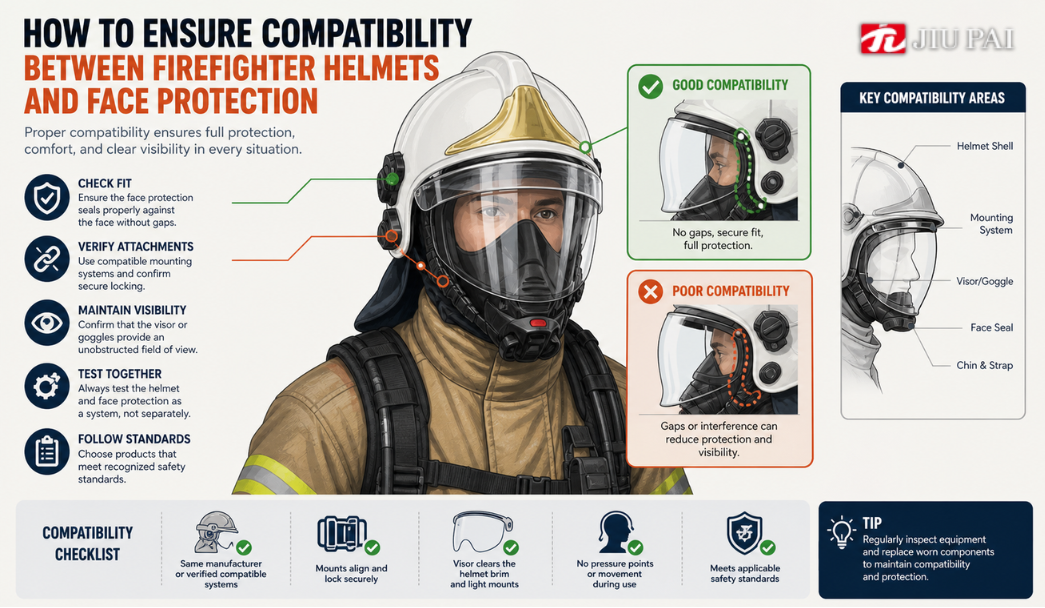
How to Ensure Compatibility Between Firefighter Helmets and Face Protection
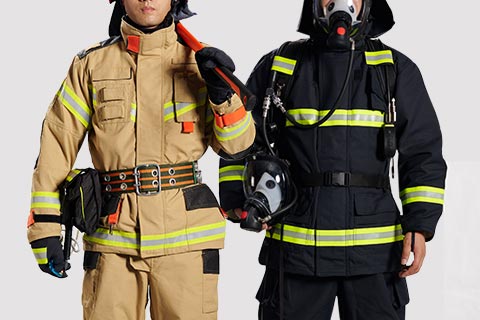
In fire rescue, fire fighting, emergency rescue and disaster relief operations, fire helmets need to be used in conjunction with masks, goggles and respiratory protective equipment to meet the protection needs in different scenarios.The impact resistance and high temperature resistance of fire helmets are of course important, but whether they are adapted between various types of equipment will also affect the actual use effect.If the mask is not installed firmly, the goggles interfere with the fire helmet, or affect the field of vision and head movement after wearing it, it may cause inconvenience to the firefighters' on-site operations and even affect the protective effect.Therefore, when choosing a fire helmet, in addition to paying attention to the performance of the fire helmet itself, it should also be confirmed whether it can be stably matched with other facial protective equipment.
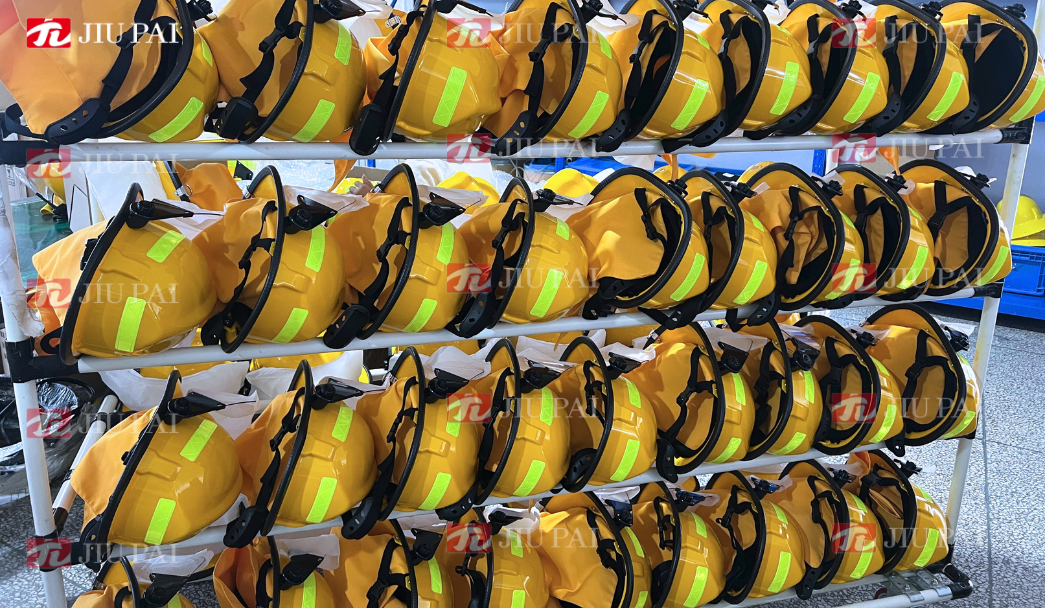
Ignoring the compatibility of equipment, no matter how high-quality protective equipment is, it will not be able to exert its due value.Only by strictly following standardized adaptation specifications, accurately matching operation scenarios, compliance standards and operation and maintenance requirements, and selecting the original factory-adapted, fully qualified, and versatile combination of fire helmet and facial protection can a seamless, stable, and efficient complete protection system be built to protect the safety of firefighters in every rescue operation in all directions.
Why Is Fire Helmet Compatibility Important?
The compatibility of fire-fighting helmets with facial protective equipment is the core prerequisite for the stable entry into force of the entire head protection system.Multiple and complex risks such as high temperature, thick smoke, high-speed splashing of particulate matter, chemical fumes, and impact debris in the fire field have extreme requirements for the fit, sealing, and stability of protective equipment.Protection combinations with substandard adaptability will directly break the closed loop of protection and reduce the safety factor of operations in all directions. The specific core values are reflected in three dimensions.Preventing gaps in protection
In fire field operations, subtle protective gaps may cause safety accidents.If the adaptation of the fire helmet and the facial protective equipment is misplaced and the fit is not strict, there will be gaps in the edge of the fire helmet, the junction of the mask, and the fitting position of the goggles.High-temperature heat waves, toxic fumes, scorching mars, high-speed splashing building debris, and slag will invade through the gaps, causing facial burns, respiratory tract injuries, eye foreign body injuries and other problems.The junction between the facial protective equipment and the fire helmet must form an effective overlap seal, and the overlap length must not be less than 10mm to completely eliminate open protection loopholes.The highly compatible equipment combination can achieve a seamless fit, build a full range of closed protective barriers, accurately adapt to the protection needs of various extreme fire scenes, emergency rescue scenes, and avoid the risk of protection failure from the root cause.Maintaining clear vision
The efficiency and safety of fire rescue depend entirely on the clear vision of firefighters.Incompatible facial protective equipment will cause problems such as distortion of the mask, squeezing and deformation of the goggles, lens offset, and blocking of the field of vision.Some equipment with poor adaptability will compress the frame, causing the lens to blur and the light transmittance to decrease, or the structure of the fire helmet will block the field of view at the corners, allowing firefighters to have visual blind spots in the rescue of heavy smoke and complex buildings, which can easily cause dangerous situations such as collisions, falls, and rescue errors.The combination of fire-fighting helmet and facial protection that meets compatible standards has been optimized for professional vision. On the basis of comprehensive protection, it can ensure unobstructed horizontal and vertical vision, no extrusion distortion of the lens, and no fog accumulation interference, allowing firefighters to maintain a clear vision throughout the process, accurately judge the on-site environment, and efficiently complete rescue operations.At the same time, it fully complies with the XF44—2015 fire helmet field of vision test standard to ensure the visual safety of operations.Ensuring a secure fit
The environment at the rescue site is complex, and firefighters need to run, climb, lean over, turn their heads, and lower their heads quickly. The stability of wearing protective equipment is essential.When the fire helmet is not compatible with the facial protective equipment, the mask will loose and shake, the goggles will shift, the buckle will fall off, and the fit will be unbalanced.Frequent displacement of equipment during operation will not only distract firefighters and affect rescue efficiency, but also instantly lose their protective ability due to equipment falling off and offset.The high-compatibility adaptation system can achieve precise clamping of accessories and uniform force. No matter how the head moves, the facial protective equipment can maintain a stable fit, no loosening, no offset, and no sense of compression, taking into account wearing comfort and protective stability, allowing firefighters to focus on rescue work and eliminate safety risks caused by equipment adaptation problems.What Types of Face Protection Work With Firefighter Helmets?
Fire-fighting operation scenarios are divided into various types such as conventional fire-fighting, high-temperature attack, emergency rescue, chemical protection, and smoke search and rescue. The facial protective equipment corresponding to different scenarios is different.Not all facial protective equipment can be adapted to a universal fire helmet. Only protective equipment that matches the structure, installation interface, and space size of the fire helmet can be safely compatible.At present, the mainstream facial protective equipment adapted to fire helmets in the industry is mainly divided into three categories.Helmet face shields
Fire-fighting helmet protective mask is the most adaptable and most widely used standard facial protective equipment. It is specially designed for all kinds of standard fire-fighting helmets. It can be installed directly through the preset interface, card slot, and screw buckle of the fire-fighting helmet. It is divided into transparent anti-impact masks, high-temperature-resistant brown masks, anti-chemical corrosion masks and other styles.The core advantage of this type of mask is its integrated adaptation. The overall curvature, size, and installation point exactly match the curve of the fire helmet shell, the lifting and closing are smooth, and it will not conflict with the structure of the fire helmet. After closing, it can completely cover the facial area, realizing the protective effect of high temperature, debris, and heat wave protection.At the same time, it complies with international fire helmet protection standards such as EN 443 and ISO 16073, and its impact resistance and high-speed particle impact resistance are up to standard. It is the core facial protection configuration for fire fighting operations.Protective goggles
Fire protection goggles are refined eye protection equipment, which are mainly suitable for smoke search and rescue, dust rescue, demolition operations, and chemical smoke scenes, focusing on protecting the eyes from dust, smoke, fine debris, and chemical mist.The goggles adapted to the fire helmet are all lightweight, narrow-frame, and fit-in design, which can be perfectly stored in the internal space of the fire helmet, and will not interfere with the lining, buckle, and mask structure of the fire helmet.The high-quality compatible goggles have adjustable temples and elastic fit design. There is no extrusion and no offset after wearing the fire helmet. The sealing sponge can fit around the eyes to form a closed protection, while retaining breathable space to avoid fog and block the field of vision.It should be noted that the structure and size of ordinary industrial goggles are too large to be adapted to fire helmets, and they are prone to extrusion deformation and loosening. Mixing is strictly prohibited.Respiratory protection equipment
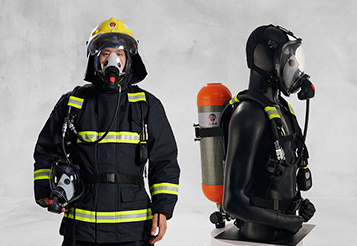
Respiratory protective equipment such as positive pressure air respirators and filter-type fire-fighting self-rescue respirators are the core equipment for anti-poisoning and anti-suffocation in fire areas. The compatibility of masks and fire helmets is a top priority.The respiratory protective mask needs to fit the contours of the face, and at the same time accurately connect with the lower edge, lining, and shawl of the fire helmet, so that there can be no squeezing, gaps, and card conflicts.According to fire-fighting industry standards, the junction between the mask of respiratory protective equipment and the fire-fighting helmet must be guaranteed to overlap and seal, with no gaps and no compression. Wearing the fire-fighting helmet will not cause the respirator mask to shift or leak air, and the fit of the breathing equipment is always stable when the head is active.At the same time, the fire helmet reserves sufficient space to adapt to the respirator pipeline and buckle structure to avoid bending and squeezing of the pipeline to affect the air supply, ensure the normal operation of the respiratory protection system, and fully meet the ISO/TS 20141 personal protective equipment adaptation test specifications.How to Check Fire Helmet and Face Shield Compatibility?
Many hidden dangers of equipment adaptation cannot be intuitively judged by the naked eye, and blindly putting it into use can easily cause safety accidents.Before equipment procurement, warehousing acceptance, and daily use, the compatibility of fire helmets and facial protective equipment must be verified through a standardized process, and the four dimensions of installation structure, size coverage, space reservation, and manufacturer specifications must be fully verified to ensure compliance.Mounting system compatibility
Installation system matching is the basic core of equipment compatibility.There are obvious differences in the installation interface, fixing buckle, screw point, and card slot structure of different brands and models of fire helmets.Some fire-fighting helmets are installed with side buckles, some are fixed with top screws, and the new modular fire-fighting helmets use quick-release interfaces.During the verification, it is necessary to focus on confirming that the installation accessories of the facial protective equipment can accurately match the interface of the fire helmet. After installation, the buckle is firmly locked, there is no loosening, no misalignment, and the opening and closing operation is smooth. There will be no problems such as stagnation, falling off, and inability to fix.It is strictly prohibited to forcibly modify perforation and violent buckle fixation. Temporary modification will destroy the structural stability of the fire helmet, reduce the impact resistance and high temperature resistance of the fire helmet, and lay a double safety hazard.The modular interface needs to be matched with original accessories to ensure structural integrity and adaptation safety.
Face shield size and coverage
Mismatched mask sizes are the most common compatibility problem.Being too small in size can lead to incomplete facial protection coverage, and there are protective blind spots on the cheeks, jaw, and forehead.The size is too large, it will exceed the adaptation range of the fire helmet, the edges are floating, the fit is not strict, it is easy to shake and deform during operation, and it will block the field of vision and affect the movement of the head.The width, height, and curvature of the standard-conforming face mask must exactly match the size of the fire helmet shell. After closing, it can completely cover all the facial areas from the forehead to the lower jaw. There are no protective dead corners on the left and right, and the edges fit seamlessly with the fire helmet. , No floating, no warped edges.At the same time, it is necessary to meet the optical performance standards, the lens has no distortion, the light transmittance is up to standard, and the field of vision is guaranteed to be clear, which meets the requirements of the XF44—2015 mask field of vision and impact resistance test.Clearance for other PPE
Firefighters need to wear multiple equipment such as fire helmets, masks, goggles, respirators, and protective headgear at the same time when operating. Verification of compatibility cannot only focus on the adaptation of a single equipment, but the space adaptation margin of a full set of PPE needs to be considered.Some masks and fire helmets are well adapted separately, but after superimposing respirators and protective headgear, there will be insufficient space, mutual squeezing, and failure to fit.Verification points, after wearing a full set of protective equipment, the fire helmet and facial protective equipment are not squeezed and deformed, the seal of the respirator mask is not destroyed, the goggles can be opened and closed normally, the protective headgear and the mask are connected and overlapped to the standard, all equipment can maintain an independent and stable working state, no mutual interference, no space crowding problems, to ensure that the full set of protective systems take effect in concert.Manufacturer compatibility guidelines
Major fire-fighting equipment manufacturers will issue exclusive adaptation lists and installation specifications for their own fire-fighting helmet models.When different brands of equipment are mixed across models, there is a high probability that there will be compatibility problems such as mismatched interfaces, dimensional deviations, and inconsistent protection standards, which are also one of the main reasons for equipment failure in the industry.During verification, it is necessary to strictly control the official adaptation manual of the manufacturer, give priority to the use of facial protective equipment of the same brand, the same series, and the original factory, and strictly avoid cross-brand and cross-model random collocation.For bulk procurement of equipment, it is necessary to unify the model specifications, complete the installation and commissioning in accordance with the manufacturer's specifications, and check the equipment certification parameters to ensure compliance with national standards, industry standards and international ISO fire protection adaptation standards.How to Test Fire Helmet and Face Protection Fit?
After completing the preliminary verification of compatibility, it is necessary to pass standardized practical tests, simulate real rescue operation scenarios, and verify the stability and protection effectiveness of equipment adaptation in all directions.The following test processes can be used for routine acceptance, daily inspection, and annual equipment inspection. The operation is simple and the data is intuitive, and various adaptation hidden dangers can be accurately investigated.Checking attachment security
Installation firmness is the basic index of adaptation safety.During the test, wear and fix the fire helmet standard, lock all inner lining buckles and jaw straps, install facial protective equipment such as masks and goggles in turn, and confirm that all buckles and interfaces are completely locked.Then manually gently push and pull all parts of the protective equipment to test whether there are problems such as loosening, displacement, shaking, and buckle slippage.At the same time, the scene of slight vibration and bumps is simulated to observe whether the equipment has shifted and fallen off.The eligibility criteria are that all facial protective equipment is firmly fixed, there is no visible shaking and displacement to the naked eye, the buckle is not loose after being subjected to force, the interface does not fall off, and the opening and closing structure operates smoothly, fully meeting the XF44—2015 wearing device stability test requirements.Testing head movement
In real rescue operations, the head of a firefighter needs to move frequently and from multiple angles. Qualified static adaptation does not mean that the dynamic adaptation is up to standard.The test mainly simulates the actual combat operation status and verifies the stability of dynamic adaptation.During the test process, wear a full set of adapted equipment and fix it securely. Complete the actions of raising your head, lowering your head, turning your head left and right, turning your head sideways, and swinging your head quickly for 3-5 minutes, and observe the status of facial protective equipment throughout the process.The eligibility criteria are that the equipment has no offset, no squeezing, no caton, no blocking of the field of vision, no obvious compression and discomfort in wearing, no restriction on head movement, and the masks and goggles will not loose, warped, or fall off due to changes in the amplitude of movement. Problems.Inspecting gaps and interference
Gaps and equipment interference are the hidden dangers of adaptation with the highest concealment, and they are also the core cause of protection failure.After the head activity is completed in the test, it is necessary to investigate the connection position of the equipment at close range and in all directions, focusing on the connection gap between the fire helmet and the mask, the mask and the respirator, and the fire helmet and the goggles.At the same time, investigate whether there are problems such as mutual extrusion, interference, friction and caton of each equipment structure, and focus on verifying whether the overlapping length of the facial opening is not less than the industry standard of 10mm.The qualified adaptation status is that there are no excessive protection gaps, no equipment structure interference, extrusion, and friction problems, and the entire set of protective equipment fits tightly and runs smoothly in coordination without any protection loopholes.What Should Buyers Consider When Choosing Compatible Firefighter Helmets?
The purchase of fire helmets cannot only look at a single protective performance, but must take global compatibility as the core procurement index.High-quality compatible fire-fighting helmets can be adapted to full-scene facial protective equipment, reducing equipment replacement costs, improving protective safety, and simplifying operation and maintenance management. Five core dimensions need to be considered when purchasing.Firefighting tasks and applications
The requirements for the compatibility of fire helmets in different job scenarios vary greatly, and the procurement needs to be matched on demand.For conventional urban fire extinguishing operations, standard protective masks and basic goggles need to be adapted to meet daily fire protection.For high-temperature and heavy-smoke search and rescue scenes, it is necessary to be compatible with positive-pressure respirators, anti-fog high-definition goggles, and thickened high-temperature-resistant masks.For emergency demolition and earthquake rescue scenes, it is necessary to adapt to anti-impact large-field masks and closed protective goggles.In chemical rescue and chemical fire scenes, it is necessary to be compatible with anti-corrosion masks and a full set of respiratory protective equipment to ensure the adaptability of sealing.Before purchasing, it is necessary to clarify the operation scenario and core protection requirements, and select a modular and highly compatible fire helmet model in a targeted manner to avoid insufficient equipment adaptation or redundant functions, and achieve accurate adaptation and efficient protection.Safety standards and certifications
Compatibility must be based on compliance and safety. All purchased fire helmets and facial protective equipment must have authoritative certification qualifications and meet domestic and foreign industry standards.International adaptation must comply with general protection adaptation standards such as EN 443, ISO 16073, ISO/TS 20141, etc.For equipment that is certified for compliance, its interface size, structural design, and adaptation parameters have been standardized and tested, and its compatibility and protection are guaranteed by authority.It is strictly prohibited to purchase unqualified, non-standard modified fire helmets and accessories. Not only is the adaptability of such equipment not guaranteed, but the protective performance is not up to standard, and it cannot pass the fire-fighting acceptance. There are great safety and compliance risks.Maintenance and replacement parts
Fire-fighting helmets and facial protection accessories are consumables. After long-term high temperature, impact, and friction use, masks, buckles, interfaces, goggles and other accessories need to be replaced regularly.When purchasing, priority should be given to fire helmet models with strong versatility of accessories, easy to purchase on the market, and support for individual replacement.Some niche customized fire helmet accessories are exclusive and have poor versatility. After the accessories are damaged, they cannot be replaced quickly. The fire helmet can only be replaced as a whole, which greatly increases the operation and maintenance costs.Highly compatible with standardized fire helmets, high versatility of accessories, easy replacement, low maintenance costs, can match all kinds of conventional facial protective equipment for a long time, long-lasting adaptation stability, greatly improve the service life of equipment and cost-effective use.Compatibility for bulk orders
When fire-fighting units purchase fire-fighting helmets in bulk, compatibility and uniformity are the core points that can easily be ignored.If the models of the batch of fire helmets are messy and the interface specifications are not uniform, there will be problems such as parts that cannot be universal, equipment adaptation is chaotic, and operation and maintenance management is cumbersome, which will seriously affect daily training and emergency rescue use.When purchasing in bulk, priority should be given to products of the same brand, series, and specifications to ensure the adaptability of equipment and the unification of use standards.Unify the interface standards, structural dimensions, and adaptation parameters of fire-fighting helmets to ensure that all fire-fighting helmets can use the same masks, goggles, and respiratory protective equipment to achieve the exchange of accessories, convenient replacement, and unified management.At the same time, manufacturers need to provide batch adaptation test reports to ensure stable compatibility and compliance of the entire batch of equipment.Conclusion
The compatibility of fire-fighting helmets and facial protective equipment is the core key to the safety and effectiveness of the fire-fighting head protection system, which is directly related to the safety of firefighters' operations and rescue efficiency.From eliminating protection loopholes, ensuring a clear vision, and wearing protection steadily, to matching all kinds of masks, goggles, and respiratory protective equipment, to standardized verification, practical testing, and scientific procurement, every link determines the final effect of the protection system.Ignoring the compatibility of equipment, no matter how high-quality protective equipment is, it will not be able to exert its due value.Only by strictly following standardized adaptation specifications, accurately matching operation scenarios, compliance standards and operation and maintenance requirements, and selecting the original factory-adapted, fully qualified, and versatile combination of fire helmet and facial protection can a seamless, stable, and efficient complete protection system be built to protect the safety of firefighters in every rescue operation in all directions.
Request A Quote
Related News
Quick Consultation
We are looking forward to providing you with a very professional service. For any
further information or queries please feel free to contact us.