
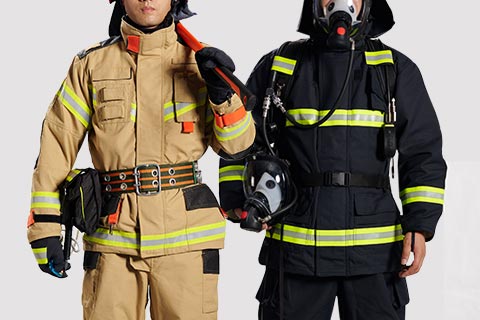

SCBA Selection for Fire Departments: Carbon Fiber vs. Steel Cylinders
When the fire department purchases or updates the SCBA, the material of the gas cylinder is an issue that needs to be considered.Carbon fiber composite gas cylinders and traditional steel cylinders have their own advantages, and there are obvious differences in weight, pressure bearing capacity, service life and maintenance costs.For the person in charge of fire-fighting equipment procurement and fire station managers, how to take into account operational mobility, gas supply requirements and long-term use costs under the premise of ensuring the safety of firefighters is the key to the selection of gas cylinders.
What Is an SCBA Cylinder?
Role of the cylinder in SCBA
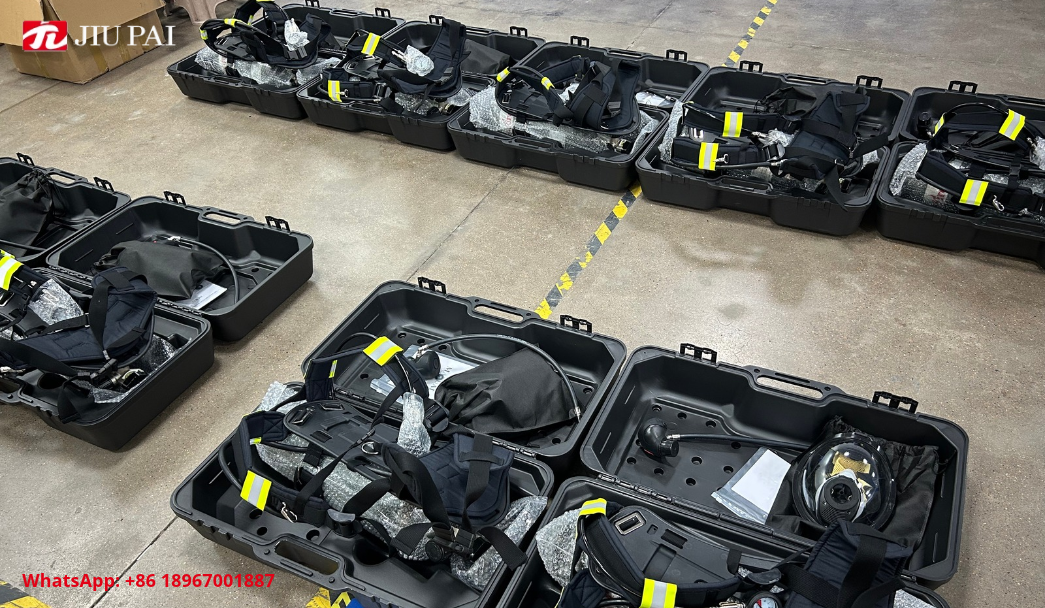
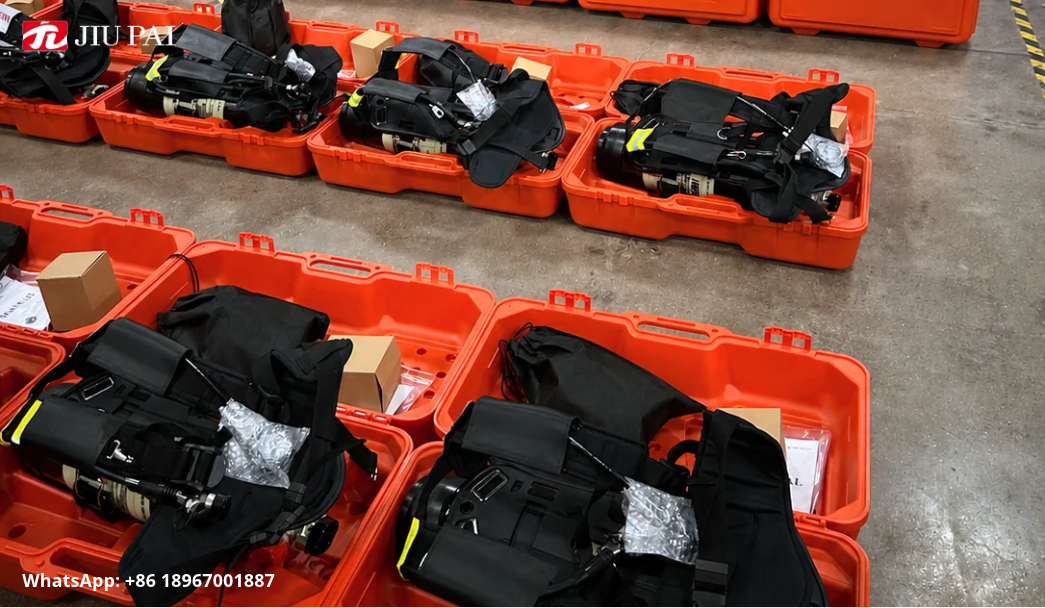
The SCBA gas cylinder is a high-pressure gas storage unit of a positive-pressure air respirator. It continuously supplies clean compressed air to firefighters who enter a smoky, toxic, and hypoxic environment. It is the core carrier to ensure breathing safety.The mask, air supply valve, and backrest of the complete set of respirators all rely on the high-pressure air stored in the gas cylinder to achieve stable air supply. Once the gas cylinder fails, the air source will be directly interrupted, bringing fatal risks to rescuers.The stability, air tightness, and pressure bearing capacity of the gas cylinder directly determine the safety bottom line of the SCBA machine. It is also a key item for the acceptance and regular inspection of fire-fighting equipment. All gas cylinders must comply with the fire-fighting pressure vessel specifications, and it is strictly prohibited to put them into the fire site for overpressure and overdue use.Common cylinder materials
At present, the mainstream gas cylinder materials of firefighting SCBA are divided into two categories, that is, the steel gas cylinder and the carbon fiber composite gas cylinder compared this time. The industry will also be divided into type III and Type IV composite gas cylinders according to the liner structure.The cylinder belongs to an all-metal pressure vessel with mature technology and is the standard configuration of early fire breathing apparatus.Carbon fiber gas cylinders use metal or polymer materials as the inner liner, and the outer layer is wrapped with a high-strength carbon fiber and resin curing layer, taking into account the lightweight and high-pressure carrying capacity.In addition, there are a small number of aluminum alloy gas cylinders, but because of shortcomings such as self-weight and upper pressure limit, they have been gradually eliminated in the first-line fire-fighting scene. At present, the selection of fire-fighting procurement is basically concentrated in the two directions of steel cylinders and carbon fiber composite gas cylinders.Cylinder capacity and pressure
The commonly used volume specifications of firefighting SCBA gas cylinders cover 3L, 4.7L, 6.8L, and 9L, of which 6.8L is the most widely used standard capacity for fire departments in the world, and it is suitable for most search and rescue and fire-fighting operations.In terms of pressure specifications, the mainstream nominal pressure of carbon fiber gas cylinders is 300bar, most of the cylinders are 200bar and below, and the high-pressure gas cylinders of the same volume store more air.The actual air supply time is affected by the breathing rate of firefighters and the intensity of operations. The air consumption is faster during heavy physical search and rescue. The purchase and selection cannot only look at the nominal time. It is necessary to combine the building type and rescue scene in the jurisdiction to match the corresponding volume and pressure level of the gas cylinder, while ensuring that the gas cylinder valve and pressure reducer interface are compatible with the complete set of SCBA equipment.Carbon Fiber vs. Steel SCBA Cylinders: Key Differences
Weight and portability
The weight difference is the most intuitive difference between carbon fiber gas cylinders and cylinders. For 6.8L gas cylinders of the same specification, the no–load capacity of the carbon fiber model is about 3.5-4.5kg, and the cylinders generally reach 11-13kg, and the weight gap is very obvious.Firefighters carrying a full set of protective equipment and demolition tools into the fire, the weight will continue to consume physical energy, heavier cylinders will accelerate fatigue, affecting ladder climbing, creeping search and rescue in small spaces, rapid transfer and other actions.Lightweight carbon fiber gas cylinders can effectively reduce the risk of muscle strain and improve the mobility of long-term operations. For high-consumption rescue scenarios such as high-rise buildings, underground pipe corridors, and confined spaces, the advantages of portability will continue to be magnified, which is also an important reason for the priority upgrade of fire fighting units in recent years.Strength and durability
Under rated operating conditions, both types of gas cylinders meet the safety standards of pressure vessels, but there are obvious differences in damage resistance characteristics.The cylinder matrix is one-piece metal, which has stronger resistance to scratches and blunt shocks. It is not easy to have structural hidden dangers after minor bumps, and it is resistant to extensive handling and storage in warehouses.Carbon fiber gas cylinders rely on the outer carbon fiber winding layer to carry the pressure. Once the surface resin is scratched, hit the pits, and the fiber is peeled off, it will directly destroy the pressure-bearing structure. It is difficult to judge the internal damage with the naked eye, and the hidden risk is higher.However, the carbon fiber material itself has a higher specific strength than steel. Under the premise of compliance and no damage, carbon fiber gas cylinders can withstand higher working pressure, and safety redundancy is more dominant in the high-pressure range.Service life and inspection
Carbon fiber composite gas cylinders have a clear design and service life. Most models are marked with a 15-year compulsory scrap cycle. After expiration, regardless of whether the appearance is intact or not, they must be replaced offline.There is no fixed life of the cylinder, as long as each hydrostatic test and air tightness test are qualified, it can be continuously put into use.Both need to be sent for inspection in accordance with regulatory cycles, but the inspection items and judgment standards are not the same. The cylinder inspection is mainly based on hydrostatic testing and inner wall corrosion inspection. The process is simple and most local testing institutions can undertake it.In addition to water pressure and air tightness testing, carbon fiber gas cylinders also need to visually inspect the fiber layer and resin cracks. Some damage determination requires professionals. The threshold for testing is higher and the determination of nonconformity is more stringent. The production date and end-of-life period must be recorded separately in the management of the equipment ledger.Corrosion resistance
The corrosion resistance of carbon fiber composite gas cylinders is significantly better than that of steel cylinders. The outer layers of carbon fiber and resin have strong chemical stability. The type III aluminum alloy liner is anodized and the type IV plastic liner itself does not rust. It is not prone to corrosion and perforation in humid, seaside salt spray, chemical leakage, and acid-base flue gas environments.The essence of the cylinder is carbon steel. Long-term exposure to water vapor, fire flue gas, and saline media will slowly oxidize and rust the inner and outer walls. The rust residue will not only corrode the wall thickness of the bottle, but may also enter the air supply valve with the air flow, causing the parts to become stuck. Regular internal drying, rust removal, and anti-rust maintenance are required. The use of cylinders in fire stations in humid areas will significantly increase the maintenance workload.Cost and long-term value
The purchase unit price is lower than the initial investment in the cylinder, and the single purchase cost is much lower than that of the carbon fiber cylinder of the same specification. It is suitable for units with limited budgets and large quantities of spare bottles.However, when calculating the cost of the whole life cycle, it is necessary to synthesize the risk of injury and illness caused by self-weight, maintenance working hours, corrosion loss, and scrap rules.The purchase price of carbon fiber gas cylinders is high, but the operation and maintenance are simple and the corrosion loss is low. It is suitable for full-time fire brigades with high-frequency attendance and high-intensity rescue.Although steel cylinders are cheap, anti-rust maintenance, regular rust removal, and early scrap of rust will continue to generate hidden expenses. In some coastal and chemical park sites, the frequency of cylinder replacement will be higher than that of ordinary inland fire stations, and the long-term cost advantage will be continuously compressed.Carbon Fiber SCBA Cylinders
Main advantages
The core advantages of carbon fiber SCBA gas cylinders are concentrated in the three directions of lightweight, high-pressure storage, and strong corrosion resistance. The weight of the same volume is greatly reduced, which directly reduces the load on firefighters, delays physical overdrafts, and improves the efficiency of fire search and rescue.Support 300bar high pressure design, larger gas storage capacity, longer gas supply time under the same working conditions, reduce the frequency of on-site replacement of gas cylinders, and reduce the safety risk of bottle replacement in hazardous areas.The outer layer of carbon fiber is resistant to rust and chemical erosion. It has better stability in chemical, coastal, and underground humid environments. It does not need to be rust-proof and rust-proof frequently in daily life, and the maintenance pressure is low. It is also the mainstream upgrade choice for full-time fire-fighting and industrial emergency rescue teams at home and abroad, which is suitable for modern fire-fighting operations.Potential limitations
The most prominent shortcoming of carbon fiber gas cylinders is that the initial procurement cost is too high, and the batch renewal of equipment will bring greater budget pressure to the fire department.The surface structure is very sensitive to impact and sharp scratches. Once the fiber layer is bumped and scratched during handling, transportation, and storage, there is a hidden danger of pressure failure. It is necessary to use a separate protective sleeve and store it in a standardized manner, and it cannot be stacked at will.At the same time, it has a fixed design life, and it is mandatory to be scrapped after 15 years. Even if the gas cylinder has almost no traces of use, it must be eliminated and replaced.The inspection link requires high professionalism of inspectors, and it is difficult for grassroots sites to independently judge surface microcracks. It is necessary to connect with institutions qualified for the inspection of composite gas cylinders, and the inspection arrangements are more complicated.Best applications for fire departments
Carbon fiber gas cylinders are more suitable for full-time fire-fighting teams with high attendance frequency and high task intensity. High-rise buildings, underground garages, pipe corridors, tunnels, and large commercial complexes are preferred for scenes that require long-term heavy-duty search and rescue.In chemical parks, ports, and coastal fire stations, there are many environmental salt spray and corrosive fumes, and the corrosion of steel cylinders is prominent. Carbon fiber gas cylinders can greatly reduce corrosion failures.The city's main combat vehicles and emergency rescue vehicles are equipped with SCBA as standard, and carbon fiber gas cylinders are given priority to ensure the mobility of firefighters.In addition, for special weight-sensitive tasks such as emergency rescue, confined space operations, and high-altitude rescue, carbon fiber gas cylinders have higher comprehensive benefits and are the preferred solution to improve the safety of front-line operations.Steel SCBA Cylinders
Main advantages
The biggest advantage of steel SCBA gas cylinders is that the procurement threshold is low, the structure is solid and durable, the integrated metal structure has strong impact resistance and friction resistance, and the fault tolerance rate is higher during handling, warehouse turnover, and spare bottle rotation. Minor bumps are not easy to leave hidden damage.The testing system is mature, and most domestic pressure vessel testing stations can undertake cylinder water pressure and air tightness testing. The inspection channels are convenient and the testing costs are lower.There is no mandatory life limit. As long as each regular inspection is qualified, it can be used continuously. It is suitable as a spare reserve gas cylinder. The financial pressure for large-scale stocking is small. For grassroots sites with tight equipment budgets, routine inspections and initial fire response, cylinders are a cost-effective and safe choice.Potential limitations
The core shortcoming of the cylinder is that its own weight is too large. Carrying it for a long time will quickly consume the physical fitness of firefighters, increase the probability of lower back and joint strain, and is not conducive to long-term in-depth search and rescue.The upper pressure limit is low, the mainstream specifications are mostly 200bar, and the gas storage capacity of the same volume is less than 300bar carbon fiber gas cylinders, the gas supply duration is shorter, and the gas cylinders need to be rotated more frequently in the fire field.Carbon steel is extremely easy to rust. Humid environments, fire fumes, and stagnant water will accelerate corrosion. Corrosion of the inner wall will also pollute the air supply circuit. It requires regular drying, rust removal, and spraying of anti-rust coatings. The maintenance process is cumbersome. Once the maintenance is neglected, there will be safety hazards such as wall thickness thinning and leakage, and it is easy to bury risks if the management is not in place.
Best applications for fire departments
The cylinder is suitable for fire stations with low attendance frequency, routine fire inspections in villages and towns, and initial small fire disposal. The task intensity is low, the operation is short-term, and the negative impact of self-weight is limited.It is suitable as a spare reserve gas cylinder and a special gas cylinder for training. It has high-frequency bumps and losses in daily exercises and training and teaching. The use of cylinders can reduce the cost of equipment loss.Simple duty stations in dry inland areas, non-chemical, and non-coastal areas have low corrosion risks and controllable long-term operation and maintenance pressure of cylinders.There are also temporary standby and remote small duty stations, which have insufficient testing resources and convenient cylinder testing channels, which can stably guarantee the gas supply and meet the basic emergency protection needs.How to Choose the Right SCBA Cylinder for Your Fire Department
Consider firefighter workload
The first step in the selection is to evaluate the intensity of the task in the jurisdiction and the daily weight-bearing pressure of firefighters, high-load search and rescue scenarios, give priority to reducing the weight, and choose carbon fiber gas cylinders to reduce fatigue and sports injuries.If the short-term alert, fire investigation, and routine drills are the main focus, and the intensity of the operation is low, the cylinder can be fully satisfied.At the same time, it is necessary to count the injury status of the team. For fire brigades with high incidence of low back strain, lightweight is an important consideration, not just the unit price of gas cylinders.It is also necessary to combine the total weight of a full set of equipment such as protective helmets, thermal insulation suits, and demolition tools to comprehensively judge the impact of the weight of the gas cylinder on the overall combat, so as to avoid a single equipment from increasing the burden on firefighters, and to protect the health of personnel and the bottom line of combat safety.Match cylinder capacity to operation time
According to the type of building in the jurisdiction and the rescue plan, the estimated operating time for a single entry into the hazardous area is calculated, and the volume and pressure specifications of the gas cylinder are matched.The 6.8L 300bar carbon fiber gas cylinder is a universal type, suitable for most 30-45–minute search and rescue missions.The large capacity of 9L is suitable for rescue in large factories and long-distance tunnels.The small capacity of 3L and 4.7L is suitable for short-term investigation.It should be noted that the nominal duration is the data of low-intensity working conditions. The air consumption speed will be significantly accelerated during high temperature and strenuous exercise in the fire site. Sufficient air supply margin should be reserved for selection to avoid early air depletion. At the same time, the specifications of the gas cylinders in the station are unified to facilitate rapid exchange and replenishment, and simplify the on-site gas cylinder rotation process.Check pressure and compatibility
Check the existing SCBA backrest, bottle valve, and pressure reducer interface specifications before purchasing, and confirm that the pressure level of the gas cylinder matches the whole machine to avoid situations where the interface is incompatible and the pressure parameters are not matched and cannot be assembled.There are differences between the air supply valves and inflation joints of carbon fiber high-pressure 300bar cylinders and traditional 200bar cylinders. When replacing in batches, the pressure-bearing capacity of the air pumps and inflation stations should be evaluated simultaneously to confirm that the inflation equipment can be stably adapted to high-pressure cylinders.At the same time, verify the qualifications, testing standards, and certification documents of gas cylinders. All equipment must comply with domestic fire-fighting pressure vessel specifications and have a complete factory report to prevent non-standard and unqualified gas cylinders from flowing into the on-duty equipment warehouse.Evaluate maintenance and replacement costs
Jump out of the purchase price of a single product and calculate the cost of the whole life cycle for 3-10 years, including inspection costs, maintenance consumables, anti–rust materials, replacement cycles, and scrap rules.Carbon fiber gas cylinders are expensive in the early stage, simple maintenance and corrosion resistance, but they are compulsory to be scrapped in 15 years and must be replaced when they expire.Cylinders are cheap to purchase, but anti-rust, drying, and rust removal continue to produce labor and material costs, and they will be scrapped in advance when the corrosion is serious.It is also necessary to evaluate local testing resources, whether there is a composite gas cylinder testing institution near the site, and whether it is convenient to send for inspection. If testing resources are scarce, blindly purchasing carbon fiber gas cylinders in large quantities will become a great burden in the later stage of testing and management, disrupting the equipment maintenance plan.Carbon Fiber or Steel: Which Is Better for Fire Departments?
When carbon fiber is the better choice
When the fire station belongs to the city's main full-time team and high-frequency police, the jurisdiction includes high-rise buildings, underground spaces, chemical parks, and port salt spray areas, carbon fiber gas cylinders are preferred.The team often carries out long-term in-depth search and rescue and confined space rescue. It is necessary to control the weight and extend the air supply time. The advantages of carbon fiber lightweight, high-pressure air storage, and corrosion resistance can be fully utilized.The budget can support long-term equipment upgrades, and local qualified institutions can complete regular inspections of composite gas cylinders, and the equipment ledger can standardize and manage the production date and end-of-life period of gas cylinders. In this scenario, the safety benefits and combat efficiency improvements brought by carbon fiber gas cylinders can cover higher procurement costs, which is a better solution.When steel may be the better choice
Towns and small duty stations, with low frequency of police, mainly focus on initial fire response, fire inspection, and daily training. The operating time is short, and the cylinder is more suitable.The equipment budget is limited, and it is necessary to purchase training cylinders and spare turnover cylinders in large quantities, hoping to reduce the initial investment, and the site is located in a dry inland area, the corrosion risk is low, and the local cylinder testing channels are mature and convenient.The maintenance personnel of the team have no experience in determining the damage of composite gas cylinders, and they also lack supporting testing resources. The cylinder structure is simple, the fault tolerance rate is high, and the management difficulty is lower.In such scenarios, the cylinder can stably meet the basic respiratory protection needs, and while controlling the budget, it can ensure the basic emergency protection capabilities.Conclusion
There is no absolute distinction between the advantages and disadvantages of carbon fiber gas cylinders and steel cylinders. The core differences are concentrated in weight, pressure bearing capacity, corrosion resistance, service life, procurement and operation and maintenance costs.Carbon fiber is mainly lightweight, high-pressure and corrosion-resistant, and is suitable for high-intensity and high-risk full-time fire rescue.Cylinders are better at low prices and easy to detect. They are suitable for low-frequency duty, training reserves and simple sites in dry environments.The selection of fire departments cannot blindly follow the trend. They should not simply pursue high-end equipment or just look at low prices. They must be based on the risks of their own jurisdiction, the operating load of firefighters, the demand for gas supply time, and local testing conditions. Safety is the first criterion, balancing combat needs and long-term operation and maintenance costs, and selecting SCBA gas cylinder solutions adapted to the unit's combat system to ensure the breathing safety of every firefighter in the fire.
Last Article:
Request A Quote
Related News
Quick Consultation
We are looking forward to providing you with a very professional service. For any
further information or queries please feel free to contact us.