
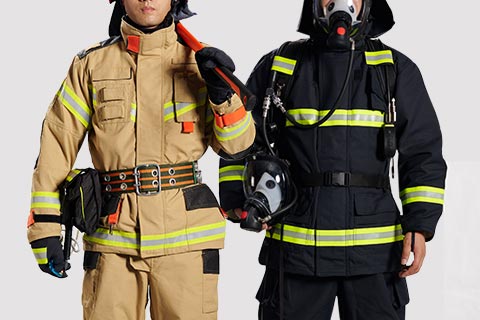

How to Properly Clean and Maintain Structural Fire Helmets
For firefighters fighting on the front line all year round, structural fire helmets are a key line of defense in guarding lives, and structural fire helmet cleaning is not only a simple hygiene task, but also a core part of safeguarding equipment performance and extending service life.
Many fire stations are prone to ignore the correct cleaning process, resulting in helmets due to sweat stains, soot accumulation of safety hazards, but instead of affecting the safety of duty. Today from the perspective of professional fire equipment manufacturers, to bring you to master the structure of the fire helmet cleaning method, so that every protection are foolproof.
Be careful not to use a high-pressure water gun to rinse, high-pressure water flow will enter the internal crevices of the lightweight structural fire helmet, damaging the internal parts; and do not soak the entire helmet in water, otherwise it will lead to the liner, headband and other parts of the moisture and mold, affecting the use of the helmet.
For the non-removable lining part, gently wipe with a dampened soft cloth, focusing on cleaning the parts that sweat more. After cleaning, rinse gently with water, then gently press to drain the water, avoid high temperature drying or sun exposure, natural draining can be, otherwise it is easy to lead to deformation and hardening of the lining.
First, use a soft brush to gently sweep away the dust on the surface of the mask, and then gently wipe it with a soft cloth dipped in a neutral cleaning solution. For stubborn soot stains, spray the cleaning solution on the lenses and let it sit for 1-2 minutes before wiping. Finally, dry with a clean special lens cloth to ensure that the mask is free of scratches and stains and has a clear view.
After rinsing, place the lightweight structural fire helmet shell upside down on a drying rack, the liner and headband flat on a ventilated area, and place it in a cool, dry, ventilated environment to dry naturally. Avoid placing in direct sunlight or near heating and air conditioning vents, high temperatures will lead to aging and deformation of the fire helmet material, affecting the protective performance.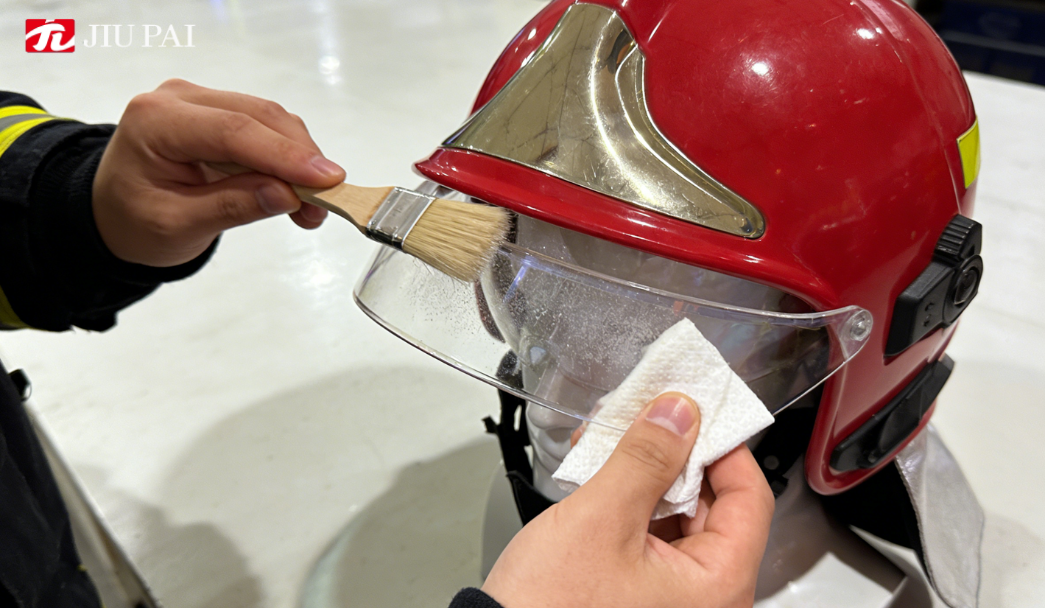
First check the helmet shell for cracks, softening, paint loss or deformation, focusing on the previously marked suspect areas. Then check whether the mask connection is firm, whether the opening and closing is smooth, whether the lens has scratches and blurring. Then check whether the elasticity of the headband is normal and whether the buckle can be firmly locked to ensure that it will not loosen when wearing. Finally, check whether the reflective strip is loose, reflective effect is good, reflective strip is an important security for night duty, if there is damage need to be replaced in time.
If you find any aging or damaged parts, it is recommended to replace them immediately. Any small defects in firefighting equipment may cause serious consequences at critical moments.
It is recommended that each fire station establish a fixed helmet cleaning process, clear cleaning frequency, responsible person and operating standards, cleaning and inspection into the daily management of equipment. If the heat-resistant fire helmets appear obvious aging, broken, or after professional testing performance is not up to standard, must be replaced in a timely manner, do not ignore safety due to cost savings. The life safety of firefighters is always the first priority.
Many fire stations are prone to ignore the correct cleaning process, resulting in helmets due to sweat stains, soot accumulation of safety hazards, but instead of affecting the safety of duty. Today from the perspective of professional fire equipment manufacturers, to bring you to master the structure of the fire helmet cleaning method, so that every protection are foolproof.
Why Cleaning Structural Fire Helmets Matters
As firefighters work side by side every day, the cleanliness of structural fire helmets is directly related to the safety of duty and the experience of using them. Many firefighters feel that the helmet does not look dirty on the line, but in fact, ignoring cleaning will bring a series of hidden problems.Safety hazards of dirt accumulation
Fire scene soot contains a lot of corrosive substances, coupled with a long time to wear the sweat stains, oil, will gradually erode the heat-resistant fire helmet shell and internal structure. According to firefighting equipment testing data, not regularly cleaned firefighter helmets for sale, the shell impact resistance will be reduced by 15% -20% within 6 months, the critical moment may not be able to effectively resist falling objects or high temperature impact.Risk of obstructed vision
The smoke and dust from the fire scene easily adheres to the helmet visor, forming a layer of dirt that is difficult to remove. This dirt will seriously affect the clarity of vision, especially in the smoke environment, the blurred mask may lead to firefighters misjudgment, missing the best rescue time.Odors and bacteria affect comfort
Heat-resistant fire helmet liner in a long time in a wet, closed environment, sweat and soot mixed with bacteria, mold and mildew, not only produces unpleasant odor, but also may cause skin allergies, itching and other problems. Wearing such a firefighter's helmet for a long time will distract the firefighter's attention and affect the duty status.Fire Helmet Safety Check Before Cleaning
Never skip the safety check step before you start cleaning. This step will help you detect potential problems with heat-resistant firefighter helmets in time and avoid secondary damage during the cleaning process.Check fire helmet for cracks and deformation
Start by observing the shell of the impact resistant firefighter helmet for any visible cracks, dents or deformations, focusing on the edges and stress areas. Press the shell gently with your hand to feel whether there is any looseness or abnormal sound. If you find minor cracks, even if they do not affect the immediate use, it is recommended to replace them in time after marking to avoid the cracks from expanding.Removal of detachable parts
Remove the removable parts of the impact resistant firefighter's helmet one by one, including the liner, headband, visor and light clips. This ensures that there is no dead space for cleaning, and prevents water from entering the connections of the parts during the cleaning process, which may cause rust or damage to the parts. When disassembling, take care to hold it gently and do not pull hard to prevent the clips from breaking.Prohibit the use of corrosive cleaning agents
The shell and liner of the fire helmet are mostly made of special materials that are high temperature resistant and impact resistant. Strong acid and alkali cleaners such as toilet bowl cleaner and industrial alcohol will corrode the surface coating and cause the material to age and become brittle. It is recommended to check the manual of the structural fire helmet in advance to confirm the type of cleaning products suitable for it.Preparing the cleaning tools
Prepare the necessary tools for cleaning. Warm water at 30-40°C is preferred, as high temperatures can damage the material. Also need to prepare soft cotton cloth or sponge, fire equipment special neutral cleaning fluid, you can also choose a mild soap and water, brush bristles fine soft bristle brush used to clean the crevice dirt, as well as a well-ventilated drying rack, to avoid placing it directly on the ground or in a humid environment.Step by Step: How to Clean a Structural Fire Helmet
After making the pre-cleaning preparations, you can follow the steps below to clean the firefighter helmet, and pay attention to the operational details in each step to avoid damaging the helmet due to improper cleaning.Step 1: Shell pre-cleaning Remove loose dust and soot
First, use a dry soft cloth to gently wipe the shell of the impact-resistant firefighter helmet to remove loose dust, floating dust and large pieces of soot attached to the surface. For dust in crevices, gently sweep out with a soft-bristled brush; do not scrape hard with a stiff brush to avoid scratching the shell coating. The purpose of this step is to avoid subsequent scrubbing, dust particles rubbing shell damage.Step 2: Neutral cleaning solution warm water scrubbing shell
Dilute the neutral cleaning solution in warm water at a ratio of 1:50, stir well, and then gently wipe the surface of the shell with a dampened soft cloth. Follow the order from top to bottom and from front to side when wiping to make sure every part is cleaned.Be careful not to use a high-pressure water gun to rinse, high-pressure water flow will enter the internal crevices of the lightweight structural fire helmet, damaging the internal parts; and do not soak the entire helmet in water, otherwise it will lead to the liner, headband and other parts of the moisture and mold, affecting the use of the helmet.
Step 3: Clean the liner and headband
If the liner and headband are removable and washable, you can put them directly into the diluted neutral cleaning solution and rub them gently to remove sweat stains and odors. Be gentle and do not twist the material to avoid damaging the elasticity of the material.For the non-removable lining part, gently wipe with a dampened soft cloth, focusing on cleaning the parts that sweat more. After cleaning, rinse gently with water, then gently press to drain the water, avoid high temperature drying or sun exposure, natural draining can be, otherwise it is easy to lead to deformation and hardening of the lining.
Step 4: Clean the mask or goggles
The mask is a key component to safeguard the field of vision, and extra care should be taken when cleaning. Do not use strong solvents such as alcohol, acetone, etc. These substances will corrode the mask coating, resulting in blurred and yellowed lenses.First, use a soft brush to gently sweep away the dust on the surface of the mask, and then gently wipe it with a soft cloth dipped in a neutral cleaning solution. For stubborn soot stains, spray the cleaning solution on the lenses and let it sit for 1-2 minutes before wiping. Finally, dry with a clean special lens cloth to ensure that the mask is free of scratches and stains and has a clear view.
Step 5: Rinse thoroughly and air dry naturally
After all parts have been cleaned, rinse the shell, mask, liner, etc. one by one with clean water to make sure there is no residual cleaning solution. Residual cleaning solution will attract dust and may also corrode the material.After rinsing, place the lightweight structural fire helmet shell upside down on a drying rack, the liner and headband flat on a ventilated area, and place it in a cool, dry, ventilated environment to dry naturally. Avoid placing in direct sunlight or near heating and air conditioning vents, high temperatures will lead to aging and deformation of the fire helmet material, affecting the protective performance.
Deep Cleaning: When Your Helmet Needs Extra Care
If the firefighting helmet with visor is seriously contaminated with smoke, oil or exposed to chemicals after a major mission, it needs to be deep cleaned, and professional help should be sought if necessary.After contact with chemicals
If the custom structural fire helmet comes into contact with strong acid, alkali and other corrosive chemicals, it needs to be rinsed immediately with a large amount of water for at least 15-20 minutes to dilute the concentration of the chemicals and avoid corrosion of the material. Afterwards, wipe it carefully with neutral cleaning solution, and after rinsing it clean, focus on checking whether the shell has discoloration, softening, etc. If there is any abnormality, it needs to be replaced in time.Smoke and oil special cleaning
When encountering smoke and heavy oil stains, add a small amount of enzyme cleaner into the neutral cleaning solution, the dilution ratio is 1:30, use a soft brush to gently scrub the stained area, let it stand for 5 minutes and then rinse it off with clean water. For stubborn oil stains on the liner of custom structural fire helmets, repeat the cleaning 2-3 times to ensure complete removal.Professional Cleaning or Part Replacement Timing
It is recommended that fire helmets be referred to a professional fire equipment maintenance organization for cleaning or replacement of parts if the fire helmets exhibit any of the following conditions The outer shell has deep scratches, coating peeling, the inner liner is seriously moldy and cannot be removed, the visor is cracked, light transmission is reduced, and the parts are loose and damaged at the joints. The professional organization will use special equipment and cleaners to ensure the cleaning effect and at the same time, comprehensively test the performance of the helmet.Common Wrong Fire Helmet Cleaning Methods
In daily cleaning, many improper operations will damage the helmet, shorten the service life, the following wrong practices must be avoided:- The use of strong acid or alkali cleaner, this type of cleaner will corrode the fire helmet shell coating and liner material, resulting in brittle shell, liner aging, reducing the protective performance.
- Use a hard brush to scrape the surface, the hard bristles of the hard brush will scratch the structural fire helmet shell and visor, affecting the appearance at the same time, may damage the protective structure.
- Soak the whole fire helmet in water, prolonged soaking will lead to rusting of internal parts, moldy lining, and may also affect the waterproof performance of the fire helmet.
- Using a dryer, high temperature drying will deform and shrink the material of the customized structural fire helmet, especially the plastic parts, which may be cracked or broken.
- Exposure in the hot sun, the ultraviolet rays of the sun will accelerate the aging of the material of the fire helmet with visor, making the shell brittle, fading color and reducing the impact resistance.
- Neglecting to check after cleaning, checking after cleaning is the last line of defense to ensure safety, neglecting to check may lead to hidden breakage undetected, leaving hidden safety hazards.
Fire Helmet Safety Check After Cleaning
After cleaning and drying, a comprehensive safety check must be conducted on the custom structural fire helmet to confirm that there are no problems before it can be put into use again.First check the helmet shell for cracks, softening, paint loss or deformation, focusing on the previously marked suspect areas. Then check whether the mask connection is firm, whether the opening and closing is smooth, whether the lens has scratches and blurring. Then check whether the elasticity of the headband is normal and whether the buckle can be firmly locked to ensure that it will not loosen when wearing. Finally, check whether the reflective strip is loose, reflective effect is good, reflective strip is an important security for night duty, if there is damage need to be replaced in time.
If you find any aging or damaged parts, it is recommended to replace them immediately. Any small defects in firefighting equipment may cause serious consequences at critical moments.
How Often Should You Clean Your Firefighter Helmet
The frequency of cleaning of durable firefighting helmets used by professional firefighters needs to be flexible and adjusted according to the use of the helmet. You should neither neglect cleaning nor over-clean it, but follow the following principles:- Quick cleaning after each mission, after each duty, wipe the shell and visor with a dry cloth to remove surface dust and soot, briefly clean the liner of sweat stains, and keep the helmet basically clean.
- Weekly or deep cleaning after a major mission, a weekly fixed time for the firefighter helmet helmet for a comprehensive cleaning, including disassembling parts, cleaning the liner, etc.. After performing major fire rescue missions, deep cleaning is required regardless of the degree of helmet contamination.
- The contamination must be cleaned immediately. If the firefighting helmet comes into contact with special contamination such as chemicals, oil or large amounts of mud, it needs to be cleaned immediately to avoid the contaminants from adhering to and corroding the material for a long period of time.
- Cleaning cycle in line with the equipment maintenance specification, in accordance with the requirements of the fire and rescue team equipment management regulations, at least once a month for a comprehensive cleaning and inspection, quarterly performance testing to ensure compliance with the maintenance specification.
Professional Advice from Fire Equipment Manufacturers
As a manufacturer of firefighting equipment for many years, JIUPAI has accumulated a lot of hands-on experience in production and customer service, and these professional recommendations can help you better maintain your helmet:Differences in cleaning of helmets made of different materials
Structural fire helmets currently on the market are mainly made of acrylonitrile-butadiene-styrene copolymer, fiberglass and carbon fiber. Acrylonitrile-butadiene-styrene copolymer fire helmets are more resistant to corrosion and can be cleaned with conventional neutral cleaning solutions. Fiberglass materials need to avoid hard brushing to prevent fiber breakage. Carbon fiber material is more expensive, it is recommended to use special cleaning fluid, after cleaning can be applied a small amount of special protective agent, to extend the service life.How to extend the life of fire helmet
In addition to proper cleaning, daily storage is also very critical. Helmets should be placed in a dry, ventilated, cool special storage rack, avoid contact with sharp objects, do not stack placed to prevent extrusion and deformation. When not in use, desiccant can be placed inside the heat-resistant fire helmet to absorb moisture and prevent the liner from mold.How to avoid structural damage due to improper cleaning
Be sure to control the water temperature when cleaning and avoid high temperatures. Do not hit or scratch the helmet with hard objects. When removing and installing parts, follow the principle of light disassembly and light installation, and do not operate violently. If you are unsure of the suitability of the cleaning method, contact the fire helmet manufacturer for advice or refer to the product manual.Selection of fire helmets with high dirt
JIUPAI structural fire helmet can effectively reduce soot, oil and dirt adhesion, cleaning can be removed by simply wiping stains, greatly reducing the difficulty of cleaning. Meanwhile, the selection of high quality materials with high temperature resistance and anti-aging resistance, after 8,000 times of impact resistance test and 1,000 hours of weather resistance test, even if frequently cleaned for a long period of time, it can still maintain stable protective performance, which is a high-quality choice for fire stations.Conclusion
Cleaning of structural firefighting helmets is never a face-saving task, but an important part of keeping firefighters safe on duty. A proper cleaning process can effectively remove dirt, prevent material deterioration and significantly extend the helmet's service life, while ensuring that the equipment meets maintenance specifications and maximizes protection in critical moments.It is recommended that each fire station establish a fixed helmet cleaning process, clear cleaning frequency, responsible person and operating standards, cleaning and inspection into the daily management of equipment. If the heat-resistant fire helmets appear obvious aging, broken, or after professional testing performance is not up to standard, must be replaced in a timely manner, do not ignore safety due to cost savings. The life safety of firefighters is always the first priority.
Request A Quote
Related News
Quick Consultation
We are looking forward to providing you with a very professional service. For any
further information or queries please feel free to contact us.