

Chile Wildfires 2026: Uncontrolled Fires Force Mass Evacuations
Since mid-January 2026, large-scale wildfires have been raging in the central and southern regions of Chile, spreading rapidly under conditions of extreme heat and strong winds, posing a serious threat to life and property. To date, official figures indicate that at least 20 people have died, dozens more have been injured, and more than 50,000 residents have been evacuated as the situation continues.
The fires have not only affected forests, agricultural land and peri-urban areas, but have also caused enormous damage to infrastructure. Rescue operations are under way across the country, with firefighters and volunteers risking their lives to ensure the evacuation of residents and to fight the fire.
The fires have spread to several residential and peri-urban areas, causing the burning of large areas of forest and agricultural land and threatening the security of local communities. Smaller towns, such as Lirquén, Penco and Laja, were particularly affected, and roads near the fires were covered in smoke, making visibility extremely poor and making evacuation and rescue difficult.
Main reasons for the fire's lack of containment include:
In addition, the complex terrain of the fire area, including hills, ravines and river valley areas, also increased the difficulty of fighting the fire. Some firefighters need to carry heavy equipment when working on the front line, and it is extremely risky to walk through the hot fire for a long time.
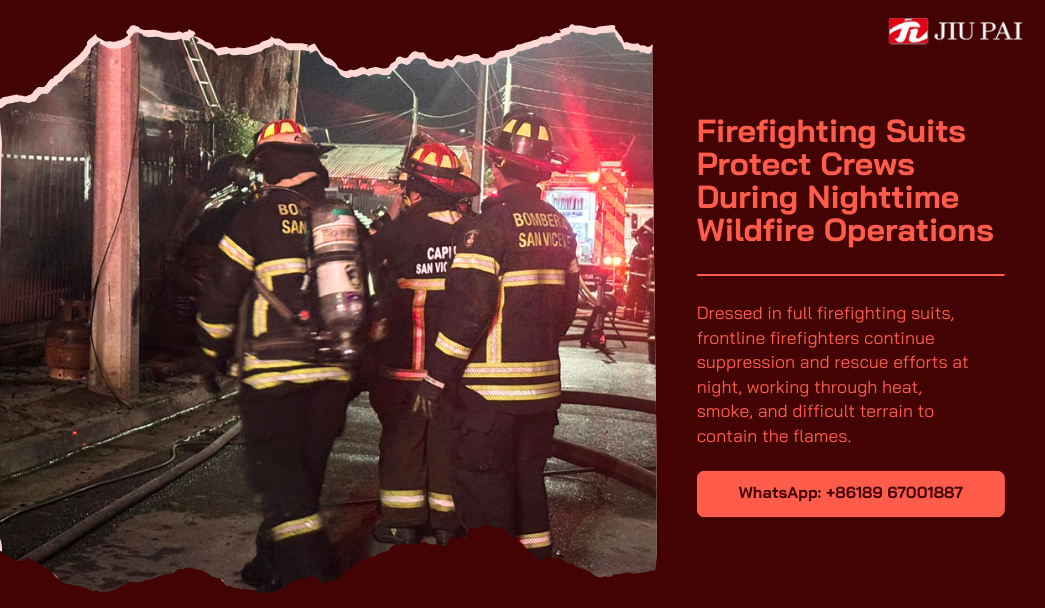
More than 50,000 residents were forced to evacuate their homes in the worst affected areas. The Government quickly activated a state of disaster and placed residents in temporary shelters or settlements to ensure basic livelihoods and safety.
The scale of the evacuation operation was so large that many families were barely able to take their belongings with them during the nighttime emergency evacuation and had to leave quickly. The shelters included not only the elderly, women and children, but also injured residents who were assisted by teams of firefighters, paramedics and volunteers to receive medical and livelihood assistance.
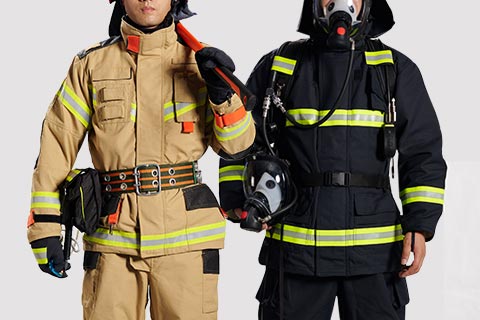
In the line of fire rescue, local firefighters dressed in professional JIUPAI firefighting uniforms continued to assist residents in evacuating and extinguishing fires in hot and smoky conditions, safeguarding their own safety while fully supporting the rescue operation. Rescue teams used drones, satellite imagery and ground patrols to monitor changes in the fire line in real time and plan safe evacuation routes to minimize casualties and protect residents' property as much as possible.
Thousands of professional firefighters and volunteers are currently involved in the fight against the fire, while some support teams from neighboring countries have also arrived at the frontline in Chile. The fire environment is complex, with high temperatures and thick smoke. Rescuers need to work under heavy load for a long time, and face high temperatures, changes in wind direction and complex terrain, which is extremely risky.
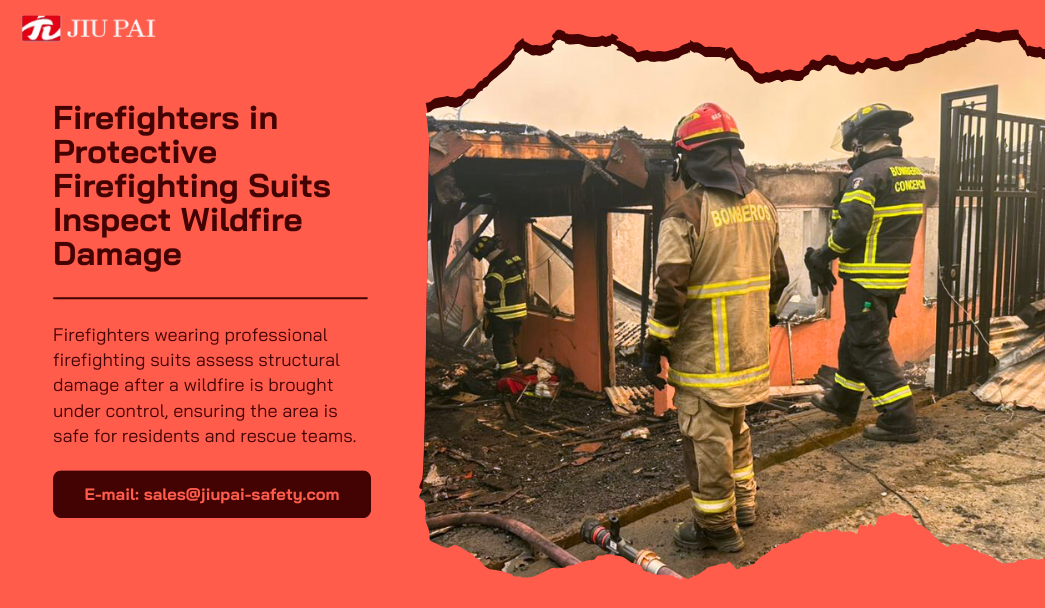
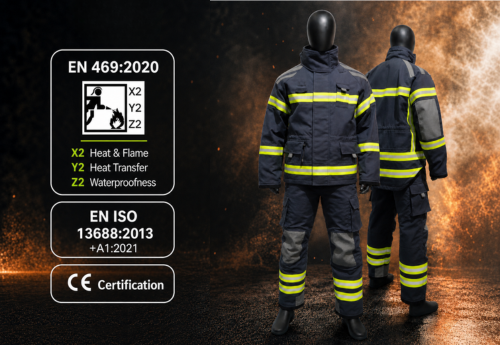
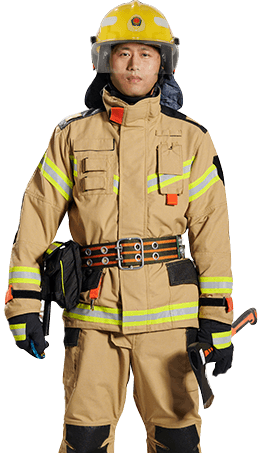
Local firefighters are wearing JIUPAI firefighting suits for firefighting and rescue operations. Designed with high-performance flame retardant materials and thermal insulation, these suits are not only able to withstand the heat of the fire scene, but also provide comfort and flexibility during long hours of heavy physical work. Thanks to the advanced protective equipment, firefighters are able to be more efficient during fire fighting and rescue operations, while reducing heat stress and smoke damage to the body.
The use of firefighter clothing plays a key role in the current complex fire situation, not only to improve the rescue efficiency, but also to protect the front-line firefighters themselves, so that they can continue to deal with the challenges posed by large-scale wildfires.
The government issued a number of emergency measures:
Meanwhile, local communities organized their own charitable donations, material collections and temporary accommodation, working closely with government departments to support affected residents.
Teams of volunteers not only provided food and water, but also engaged in psychological assistance and medical aid to help evacuees ease their fears and anxieties and ensure order and safety during the evacuation process.
Frontline rescue is not only a test of skills and physical strength, but also a challenge to psychological and teamwork ability. With the efficient protection provided by JIUPAI firefighting uniforms, firefighters are able to safely and continuously engage in firefighting and rescue operations in high-risk environments, maximizing their own safety, while doing their best to protect residents and property.
This wildfire reminds people that no matter how unpredictable nature is, unity, professionalism and responsibility, as well as scientific protective equipment, are the most solid guarantee against disasters. Rescue operations are continuing, and every effort is guarding life and hope.
The fires have not only affected forests, agricultural land and peri-urban areas, but have also caused enormous damage to infrastructure. Rescue operations are under way across the country, with firefighters and volunteers risking their lives to ensure the evacuation of residents and to fight the fire.
Fire Overview: Active Fires in Multiple Areas
The wildfires initially erupted on January 16th in the Bío Bío and Nuevo Brío regions of south-central Chile. It then spread rapidly under the influence of dry, hot weather and strong winds. Official figures show that 24 fires are still active nationwide, burning more than 34,000 hectares and destroying the equivalent of dozens of cities.The fires have spread to several residential and peri-urban areas, causing the burning of large areas of forest and agricultural land and threatening the security of local communities. Smaller towns, such as Lirquén, Penco and Laja, were particularly affected, and roads near the fires were covered in smoke, making visibility extremely poor and making evacuation and rescue difficult.
Main reasons for the fire's lack of containment include:
- Extreme heat: Temperatures reached 37-38 degrees Celsius in some areas, providing ideal conditions for the fire to spread.
- Strong winds: High winds accelerate the spread of fire lines, making it significantly more difficult to fight fires.
- Prolonged drought: Dry vegetation is highly combustible and keeps the fire active.
In addition, the complex terrain of the fire area, including hills, ravines and river valley areas, also increased the difficulty of fighting the fire. Some firefighters need to carry heavy equipment when working on the front line, and it is extremely risky to walk through the hot fire for a long time.
Fire Statistics and Emergency Response: Deaths, Evacuations and Damage
To date, the massive wildfires in central and southern Chile have killed at least 19 people and injured about 75 others, including residents and frontline rescue workers. The Bío Bío region, where the fires are most intense, has been the hardest hit.More than 50,000 residents were forced to evacuate their homes in the worst affected areas. The Government quickly activated a state of disaster and placed residents in temporary shelters or settlements to ensure basic livelihoods and safety.
The scale of the evacuation operation was so large that many families were barely able to take their belongings with them during the nighttime emergency evacuation and had to leave quickly. The shelters included not only the elderly, women and children, but also injured residents who were assisted by teams of firefighters, paramedics and volunteers to receive medical and livelihood assistance.
In the line of fire rescue, local firefighters dressed in professional JIUPAI firefighting uniforms continued to assist residents in evacuating and extinguishing fires in hot and smoky conditions, safeguarding their own safety while fully supporting the rescue operation. Rescue teams used drones, satellite imagery and ground patrols to monitor changes in the fire line in real time and plan safe evacuation routes to minimize casualties and protect residents' property as much as possible.
Firefighters on the Frontline: Equipment Ensures Safety
Firefighters, volunteers and rescue teams across the country have been working around the clock to endure extreme weather and dangerous conditions during the fires that have been raging for days. They are traveling through the fire to protect people's lives and property.Thousands of professional firefighters and volunteers are currently involved in the fight against the fire, while some support teams from neighboring countries have also arrived at the frontline in Chile. The fire environment is complex, with high temperatures and thick smoke. Rescuers need to work under heavy load for a long time, and face high temperatures, changes in wind direction and complex terrain, which is extremely risky.
Local firefighters are wearing JIUPAI firefighting suits for firefighting and rescue operations. Designed with high-performance flame retardant materials and thermal insulation, these suits are not only able to withstand the heat of the fire scene, but also provide comfort and flexibility during long hours of heavy physical work. Thanks to the advanced protective equipment, firefighters are able to be more efficient during fire fighting and rescue operations, while reducing heat stress and smoke damage to the body.
The use of firefighter clothing plays a key role in the current complex fire situation, not only to improve the rescue efficiency, but also to protect the front-line firefighters themselves, so that they can continue to deal with the challenges posed by large-scale wildfires.
Government and Community Coordination: Emergency Support
Faced with the severity of the disaster, the Chilean government mobilized a full range of personnel, including the military, police, ambulance crews, and volunteers, to participate in firefighting and evacuation operations. The President personally oversaw the response and declared a state of disaster in the fire zone, allowing all necessary resources to be used for rescue and resettlement.The government issued a number of emergency measures:
- Night curfew to control public order and guarantee the smooth operation of rescue efforts.
- Activation of multiple shelters to provide meals and medical care for evacuated residents.
- The military was deployed to help control the fire and protect critical infrastructure.
Meanwhile, local communities organized their own charitable donations, material collections and temporary accommodation, working closely with government departments to support affected residents.
Teams of volunteers not only provided food and water, but also engaged in psychological assistance and medical aid to help evacuees ease their fears and anxieties and ensure order and safety during the evacuation process.
Conclusion
The Chilean wildfires are still raging, but relief efforts across the country never let up. Firefighters, the military, volunteers, and community organizations work closely together on the front lines around the clock, demonstrating a high degree of professionalism and selflessness.Frontline rescue is not only a test of skills and physical strength, but also a challenge to psychological and teamwork ability. With the efficient protection provided by JIUPAI firefighting uniforms, firefighters are able to safely and continuously engage in firefighting and rescue operations in high-risk environments, maximizing their own safety, while doing their best to protect residents and property.
This wildfire reminds people that no matter how unpredictable nature is, unity, professionalism and responsibility, as well as scientific protective equipment, are the most solid guarantee against disasters. Rescue operations are continuing, and every effort is guarding life and hope.
Request A Quote
Related News
Quick Consultation
We are looking forward to providing you with a very professional service. For any
further information or queries please feel free to contact us.